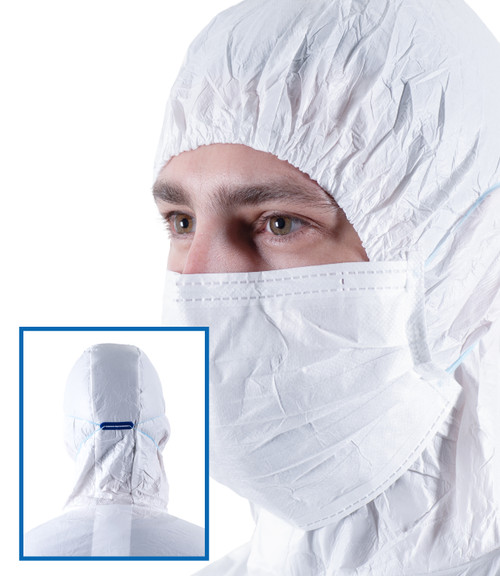
Ansell MEA210-1 BioClean Sterile Looped Face Mask Class 10 (ISO 4)

$707.25
SKU: MEA210-1 CASE 7 - 10 Business Days
(No reviews yet)
Availability:
7 - 10 Business Days
Shipping:
Calculated at Checkout
Sterile:
Yes

Important Availability Notice: Ansell and Kimberly-Clark items, including stock items and those with 7–10 day lead times, may be delayed up to 30 days. Please contact us to confirm availability. Normal shipping is expected to resume by 1st Nov 2026

Ansell BioClean MEA210-1 Sterile Looped Face Mask with Blue Clip - Class 10 / ISO 4 - 600 Masks/Case

Ansell BioClean™ MEA210-1 is a sterile, three-layer cleanroom face mask designed for critical contamination-controlled environments where facial coverage, low particle contribution, and controlled aseptic gowning are essential. Featuring non-latex polyurethane headloops and a blue plastic clip connector, the mask provides secure fastening behind the head while supporting compatibility with appropriate cleanroom hoods and gowning systems.

The flat-pleated white mask combines a soft polypropylene/polyethylene inner facing, meltblown polyester filtration layer, and hydrophobic spunbonded polyester outer facing. Ultrasonically sealed construction and an enclosed, adjustable plastic-coated steel noseband support consistent positioning, controlled handling, and wearer comfort.

BioClean MEA210-1 is suitable for Class 10 / ISO Class 4 cleanrooms and EU GMP Grade A/B controlled environments, subject to facility qualification. Each mask is gamma sterilized to a Sterility Assurance Level (SAL) of 10-6 and individually packaged with its blue clip connector. Manufacturer packaging contains 600 sterile masks per case.

Sterile Cleanroom Mask Advantage: BioClean MEA210-1 combines sterile presentation, Class 10 / ISO 4 cleanroom compatibility, documented particle, bacterial, and viral filtration performance, and a secure headloop-and-clip fastening system. Its individually sealed packaging and adjustable noseband support repeatable gowning procedures for critical pharmaceutical, biotechnology, laboratory, and sterile manufacturing operations.

Specifications:
  • Manufacturer: Ansell
  • Brand: BioClean™
  • Manufacturer Part Number: MEA210-1
  • Product Type: Sterile Looped Cleanroom Face Mask
  • Mask Shape: Flat pleated
  • Mask Color: White
  • Cleanroom Classification: Class 10 / ISO Class 4
  • EU GMP Applications: Grade A/B and other sterile cleanrooms, subject to facility qualification
  • Sterility: Sterile
  • Sterilization Method: Gamma irradiation
  • Minimum Sterilization Dose: 25 kGy
  • Sterility Assurance Level: 10-6
  • Mask Construction: Three-layer nonwoven and filtration material system
  • Inner Facing Layer: Nonwoven polypropylene/polyethylene, hygroscopic
  • Filtration Layer: Meltblown polyester
  • Outer Facing Layer: Nonwoven spunbonded polyester, hydrophobic
  • Fastening Style: Headloop
  • Headloop Material: Non-latex polyurethane
  • Connector: Blue plastic clip for fastening behind the head
  • Noseband: Plastic-coated steel, malleable
  • Nominal Mask Width: 210 mm (8.27 inches)
  • Nominal Mask Height: 95 mm (3.74 inches)
  • Dimensional Tolerance: ±5 mm
  • Particle Filtration Efficiency (PFE): 89.3% at 0.1 µm
  • Bacterial Filtration Efficiency (BFE): 92.3% at 0.3 µm
  • Viral Filtration Efficiency (VFE): 93.8% at 3.0 µm
  • Differential Pressure: 3.8 mm H2O/cm²
  • Referenced Standards: ASTM F2101, ISO 2859, ISO 9001:2015
  • Manufacturing Quality-System Standard: ISO 9001
  • Manufacturer Cleanroom Processing: NEBB-certified ISO Class 4 cleanroom environment
  • Natural Rubber Latex: No natural rubber latex in the specified fastening construction
  • Available Size: Universal
  • Respirator Classification: Not a NIOSH-approved N95 respirator
  • Reuse: Disposable, single-use product
  • Individual Packaging: One sterile mask and blue clip per sealed polyethylene inner bag
  • Outer Packaging: 50 individually sealed inner bags per sealed polyethylene outer bag
  • Case Packaging: 12 outer bags per lined carton
  • Case Quantity: 600 individual sterile masks
  • Country of Origin: China
  • Published Shelf Life: Five years from date of manufacture
  • Storage Temperature: Below 40°C (104°F)
  • Storage: Dry, cool conditions away from direct sunlight and fluorescent light
  • Ordering Configuration: MEA210-1; universal size; case of 600 masks
About the Manufacturer:

Ansell develops protective gloves, apparel, facemasks, and contamination-control products for pharmaceutical manufacturing, biotechnology, medical devices, laboratory research, and other critical environments. Its BioClean™ product family includes sterile and non-sterile protective equipment designed to support facility gowning and contamination-control programs.

The BioClean MEA210-1 mask combines specialized nonwoven materials, ultrasonic construction, gamma sterilization, and protective packaging for controlled cleanroom applications. Ansell emphasizes the mask's filtration performance and blue clip connector, which provides an alternative to tie-on fastenings and conventional earloop configurations.

SOSCleanroom supports customers with Ansell cleanroom face-covering selection, manufacturer documentation, sterile material-transfer requirements, mask packaging information, and procurement assistance for critical environments.

BioClean MEA210-1 Features:
  • Sterile three-layer cleanroom face mask
  • Class 10 / ISO Class 4 cleanroom compatibility
  • EU GMP Grade A/B application suitability
  • Gamma sterilized to SAL 10-6
  • Minimum 25 kGy sterilization dose
  • Flat-pleated white mask design
  • Soft, moisture-absorbing polypropylene/polyethylene inner facing
  • Meltblown polyester filtration layer
  • Hydrophobic spunbonded polyester outer facing
  • Non-latex polyurethane headloops
  • Blue plastic clip connector for rear-head fastening
  • Fully enclosed malleable plastic-coated steel noseband
  • Ultrasonically sealed construction
  • Published PFE of 89.3% at 0.1 µm
  • Published BFE of 92.3% at 0.3 µm
  • Published VFE of 93.8% at 3.0 µm
  • Manufacturer-reported differential pressure of 3.8 mm H2O/cm²
  • Manufactured using cleanroom-compatible materials
  • Individually packaged with clip connector
  • Multilayer protective polyethylene packaging
  • Five-year published shelf life
  • 600 sterile masks per case
BioClean MEA210-1 Benefits:
  • Sterile Presentation: Gamma sterilization and individual protective packaging support approved aseptic gowning procedures.
  • Critical Cleanroom Compatibility: Designed for Class 10 / ISO 4 and applicable EU GMP Grade A/B environments.
  • Documented Filtration Performance: Separate PFE, BFE, and VFE values support technical product selection.
  • Secure Fastening: Non-latex polyurethane headloops and the blue connector allow the mask to be fastened behind the head.
  • Adjustable Noseband: Plastic-coated steel can be shaped for comfortable and consistent placement.
  • Breathability: Published differential-pressure performance supports assessment of airflow resistance and wearer comfort.
  • Moisture Management: Hygroscopic inner facing helps manage moisture near the wearer.
  • Outer Surface Design: Hydrophobic polyester facing provides a moisture-repellent exterior.
  • Controlled Construction: Ultrasonic sealing helps limit loose material at construction joints.
  • Hood Integration: Rear-head clip fastening can support compatible cleanroom hood and mask combinations.
  • Standardized Gowning: Universal sizing and individually packaged units support repeatable personnel-entry procedures.
  • Lot-Controlled Supply: Manufacturer packaging supports controlled receiving, stock rotation, and material issuance.
Common Applications:
  • Aseptic pharmaceutical manufacturing
  • ISO Class 4 cleanroom gowning
  • EU GMP Grade A/B controlled environments
  • Sterile filling and pharmaceutical packaging support
  • Biotechnology manufacturing operations
  • Medical device manufacturing and sterile assembly
  • Controlled laboratory activities
  • Critical material preparation and handling
  • Cleanroom entry procedures requiring sterile masks
  • Routine cleanroom gowning with compatible hoods
  • Contamination-sensitive manufacturing and inspection
  • Sterile operations where individually packaged facial coverings are required
  • Personnel contamination-control programs using headloop fastening systems
Best-Practice Use:
  • Follow the Gowning SOP: Use the mask in the approved sequence with the facility's hood, coverall, gloves, and other required apparel.
  • Verify Product Identification: Confirm MEA210-1 and the manufacturer expiration date.
  • Inspect Packaging: Check the sealed inner polyethylene bag before opening.
  • Use Aseptic Opening: Present the mask without contacting its intended clean exterior or interior with unqualified surfaces.
  • Handle the Headloops: Minimize touching the main mask material during donning.
  • Position Correctly: Place the mask over the nose and mouth area according to the approved procedure.
  • Fasten the Clip: Bring the headloops together and secure the blue connector behind the head.
  • Adjust the Noseband: Shape the enclosed metal strip gently around the bridge of the nose.
  • Verify Pleat Position: Expand the pleats sufficiently to provide the intended coverage.
  • Confirm Hood Compatibility: Ensure the fastening arrangement remains secure with the selected hood.
  • Avoid Repeated Adjustment: Limit unnecessary contact with the face mask once properly donned.
  • Replace When Compromised: Change the mask if wet, damaged, displaced, or contaminated.
  • Observe Area Changes: Follow required mask-change procedures when moving between work zones.
  • Remove by the Fastenings: Avoid touching the front surface when doffing.
  • Dispose After Use: Follow the facility's applicable waste and contamination-control procedures.
Sterile Donning and Blue Clip Fastening:

MEA210-1 uses non-latex polyurethane loops with a separate blue plastic clip fastener. The fastening arrangement helps secure the mask at the back of the head, making correct loop tension and connector positioning important elements of the gowning process.

  1. Prepare: Complete the required hand hygiene and preliminary gowning steps.
  2. Inspect: Confirm the sterile bag is intact and contains the mask and blue clip.
  3. Open: Open the sealed inner bag using the facility-approved aseptic technique.
  4. Present the Mask: Hold by the fastening components or approved handling areas without touching the primary filtration surface.
  5. Position: Arrange the mask over the nose and mouth, expanding the pleats for suitable coverage.
  6. Fasten: Bring the headloops behind the head and secure them using the supplied blue clip.
  7. Adjust: Shape the noseband to improve positioning and reduce unintended gaps.
  8. Integrate: Complete the hood and other gowning steps according to the approved sequence.
  9. Check: Turn the head and perform normal work movements to confirm the mask remains stable.
  10. Maintain: Avoid touching or repositioning the mask during critical operations unless required by the facility's corrective gowning procedure.

Headloop Fastening Guidance: The blue connector secures the polyurethane loops behind the head. Position the clip so the loops remain stable without excessive tension, and confirm that the mask and hood do not interfere with one another. Correct fastening supports gowning consistency but does not establish a respirator-grade facial seal.

Filtration Performance: PFE, BFE and VFE Explained:

Ansell publishes three separate filtration-efficiency results for MEA210-1. Each measurement addresses a different test challenge and should be interpreted using the manufacturer's stated particle size and testing conditions.

Measurement Manufacturer Result What It Measures
Particle Filtration Efficiency (PFE) 89.3% at 0.1 µm Filtration of particles under the specified particle-efficiency test conditions
Bacterial Filtration Efficiency (BFE) 92.3% at 0.3 µm Manufacturer-reported efficiency against the specified bacterial filtration challenge
Viral Filtration Efficiency (VFE) 93.8% at 3.0 µm Manufacturer-reported efficiency against the specified viral filtration challenge
  • Different Particle Sizes: Each value corresponds to a different reported test condition and should not be compared as if all three were measured using the same challenge.
  • Laboratory Performance: Filtration results describe performance under defined testing conditions rather than actual total inward or outward leakage during wear.
  • Mask Fit: The headloop fastening and noseband affect position, but the mask is not designed to form a certified tight-fitting respirator seal.
  • Filtration Material: The meltblown polyester layer provides the primary filtration structure.
  • Airflow Resistance: The manufacturer reports a differential pressure of 3.8 mm H2O/cm².
  • Breathability Assessment: Differential pressure characterizes resistance to airflow under the specified method and is distinct from filtration efficiency.
  • Contamination Control: Gowning discipline, correct placement, replacement frequency, and appropriate room controls remain essential.

Filtration Selection Guidance: MEA210-1 has documented PFE, BFE, and VFE results, but these are different measurements obtained under specified laboratory conditions. They do not establish N95 respirator certification, a guaranteed percentage of protection for the wearer, or equivalent performance against every airborne hazard.

Three-Layer Material Construction:

MEA210-1 incorporates three functional layers that contribute to wearer comfort, filtration, and surface handling. The overall mask construction should be evaluated for both cleanliness and compatibility with critical-area gowning procedures.

  • Inner Facing: Hygroscopic nonwoven polypropylene/polyethylene intended to provide a comfortable surface against the wearer.
  • Filtration Layer: Meltblown polyester supporting the published particle, bacterial, and viral filtration performance.
  • Outer Facing: Hydrophobic nonwoven spunbonded polyester forming the exterior layer.
  • Pleated Geometry: Allows the mask to expand for appropriate nose, mouth, and chin-area coverage.
  • Ultrasonic Construction: Supports construction integrity and reduces reliance on loose stitched edge materials.
  • Headloops: Non-latex polyurethane fastenings secure behind the head with the blue connector.
  • Noseband: Malleable plastic-coated steel supports contouring around the nose.
  • Single-Use Design: Material and mask construction are intended for disposal after the approved use period.
Sterile Packaging and Controlled Material Transfer:

Each MEA210-1 mask is individually sealed in polyethylene packaging together with its blue clip connector. The manufacturer uses additional protective bags and a lined carton to support controlled receiving, storage, and material transfer into sterile areas.

  • Individual Inner Bag: One sterile mask and blue clip connector.
  • Outer Bag: 50 individually sealed inner bags.
  • Case: 12 sealed outer bags per lined carton.
  • Total Case Quantity: 600 individually packaged sterile masks.
  • Receiving Inspection: Confirm part number MEA210-1, lot identification, expiration date, and package integrity.
  • Outer Carton Removal: Remove corrugated shipping materials at the approved receiving or staging area.
  • Protective-Layer Transfer: Follow the facility's procedures for removing or sanitizing outer packaging layers before introducing materials into more critical areas.
  • Individual Issue: Transfer a sealed inner bag for each operator according to the gowning procedure.
  • Aseptic Opening: Open the sterile package without contacting the mask's intended clean surfaces.
  • Clip Handling: Maintain control of the blue fastener during donning; do not place it on uncontrolled surfaces.
  • Damaged Packaging: Reject masks from open, torn, wet, or otherwise compromised sterile bags.
  • Material Traceability: Retain the required manufacturer lot and receiving records.
  • After Opening: Use or discard the mask according to the approved sterile gowning procedure.

Sterile Transfer Guidance: Individual inner packaging supports one-mask-at-a-time issue while protective outer bags provide additional transfer layers. Maintain package integrity until the correct opening stage, and follow approved aseptic handling procedures for both the mask and supplied clip connector.

Face Mask, Face Veil and Respirator Selection:

Sterile cleanroom face masks, non-sterile face veils, and certified respirators serve different purposes. The appropriate product should be selected according to required sterility, cleanroom classification, fastening design, filtration properties, and any workplace respiratory hazards.

  • MEA210-1 Sterile Looped Face Mask: Class 10 / ISO 4 sterile mask with polyurethane headloops, blue clip connector, and published PFE, BFE, and VFE performance.
  • MTA210-1 Sterile Tie-On Face Mask: Alternative sterile cleanroom mask using a tie-on fastening arrangement.
  • BFV05 Non-Sterile Face Veil: Headloop face veil designated by Ansell for Class 10,000 / ISO 7 applications, with published PFE of 85%.
  • BDBS Sterile Pouch-Style Face Mask: Alternative sterile mask configuration for controlled gowning procedures requiring its specific mask design.
  • Hood Compatibility: Verify fastening position, coverage, and interaction with the selected cleanroom hood.
  • Sterility Requirements: Use sterile mask configurations when required by the facility's aseptic gowning procedures.
  • Respiratory Hazards: A conventional cleanroom mask is not a replacement for approved respiratory protective equipment.
  • NIOSH Respirators: Where the hazard assessment requires respiratory protection, select an appropriately certified respirator within the required respiratory protection program.
  • Fit Testing: Occupational use of tight-fitting respirators requires applicable training, medical evaluation, and fit-testing procedures.
  • Filtration Comparisons: Compare PFE, BFE, and VFE only with attention to the relevant testing methods and conditions.

Product Selection Guidance: Choose MEA210-1 when the process requires a sterile ISO Class 4 cleanroom mask with a headloop-and-clip fastening system. Consider tie-on or pouch-style sterile alternatives when the gowning configuration requires a different fastening or coverage design. For inhalation hazards requiring respiratory protection, use a properly selected and approved respirator instead of treating the cleanroom mask as an N95 equivalent.

Cleanroom Personnel Contamination Control:
  • Facial Coverage: Cover the nose and mouth according to the approved gowning procedure.
  • Operator-Generated Contamination: Speaking, breathing, facial contact, and excessive movement can contribute to contamination risk.
  • Sterile Presentation: Keep each mask sealed until the appropriate point in the gowning sequence.
  • Headloop Handling: Handle fastening components carefully to reduce contact with the main mask surface.
  • Clip Security: Position the blue connector so headloop tension remains stable throughout the task.
  • Noseband Position: Shape the enclosed metal strip gently and minimize subsequent adjustment.
  • Hood and Mask Interface: Confirm that the hood does not displace the mask during movement.
  • Gloved-Hand Contact: Follow the facility's glove-change or sanitization procedure if a worn mask must be adjusted.
  • Wetness and Damage: Replace masks if they become wet, torn, or otherwise compromised.
  • Routine Replacement: Follow the site-defined time- or event-based mask-change SOP.
  • Personnel Training: Include correct sterile opening, clip fastening, fit checks, replacement, and doffing in gowning qualification.
Sterility, Shelf Life and Storage:
  • Gamma Irradiation: Manufacturer-identified sterilization process.
  • Minimum Dose: 25 kGy.
  • SAL: 10-6 under the manufacturer's validated sterilization process.
  • Shelf Life: Five years from date of manufacture.
  • Lot-Specific Expiration: Follow the expiration date on the supplied packaging.
  • Storage Environment: Cool and dry.
  • Temperature: Below 40°C (104°F).
  • Sunlight: Protect from direct sunlight.
  • Fluorescent Light: Avoid prolonged fluorescent light exposure as directed by Ansell.
  • Original Packaging: Keep unused masks protected inside their sealed manufacturer packaging.
  • Physical Protection: Avoid crushing, excessive compression, wetting, and damage to the noseband or loops.
  • Receiving Control: Inspect outer and inner packaging for evidence of damage or loss of seal integrity.
  • Stock Rotation: Follow first-expiring-first-out inventory procedures where applicable.
  • Single Use: Do not launder, reprocess, or reuse masks as sterile face coverings after wearing.
  • Disposal: Follow applicable facility contamination-control and waste-management requirements.
Manufacturer Technical Documents:

Ansell BioClean MEA210-1 Manufacturer Product Information: Click Here

Ansell BioClean MEA210-1 U.S. Technical Data Sheet - Sterilization, Packaging and Filtration Performance (PDF): Click Here

BioClean MEA210-1 Product Data Sheet (SOSCleanroom PDF): Click Here

SOSCleanroom BioClean MEA210-1 Product Information: Click Here

Other Similar Products Available From SOSCleanroom.com

Sterile Cleanroom Face Mask Alternatives

Non-Sterile Cleanroom Face Veil

Notes: Need assistance selecting sterile cleanroom masks, comparing headloop and tie-on configurations, or interpreting PFE, BFE, and VFE data? Open the SOSCleanroom Technical Vault tab above for additional guidance on sterile mask selection, cleanroom gowning, material transfer, hood compatibility, contamination control, and filtration testing.

SOSCleanroom.com supports pharmaceutical, biotechnology, semiconductor, medical device, laboratory, and other critical environments with sterile face masks, cleanroom hoods, protective apparel, gloves, and specialized contamination-control supplies. Our team provides manufacturer documentation, product-selection assistance, packaging information, and procurement support.

Product description updated: October 23, 2026 (SOS Technical Staff)

© 2026 SOS Supply. All rights reserved.

The Technical Vault By SOSCleanroom
Class 10 / ISO 4 EU GMP Grade A/B Sterile • SAL 10-6 PFE 89.3% BFE 92.3% Blue Clip Headloops 600 Masks / Case

Ansell BioClean™ MEA210-1: sterile looped face mask for ISO 4 cleanroom gowning and contamination control

Ansell BioClean™ MEA210-1 Sterile Looped Face Mask is a white, flat-pleated, disposable cleanroom face mask designed to support personnel contamination control in critical manufacturing and aseptic environments.

The mask features a multilayer filtration construction, ultrasonically sealed edges, a fully enclosed malleable noseband, and non-latex polyurethane headloops secured by a distinctive blue plastic clip connector at the back of the head.

MEA210-1 is gamma-irradiation sterilized to a published Sterility Assurance Level (SAL) of 10-6. Ansell identifies it for Class 10 / ISO Class 4 cleanrooms, EU GMP Grade A/B environments, and other appropriately qualified sterile cleanroom applications.

Each mask is individually sealed with its blue clip connector to support controlled dispensing and material transfer. The standard case contains 600 sterile masks, packaged in twelve outer bags of fifty individually wrapped masks.

Operations takeaway: MEA210-1 combines sterile presentation, cleanroom-compatible construction, published particle and microbial filtration testing, and a secure headloop-and-clip fastening arrangement. Its effectiveness depends on correct selection, aseptic transfer, proper positioning, and compliance with the facility's gowning procedures.


ISO-first context: face masks within critical cleanroom gowning

ISO 14644-5:2025 establishes an operational framework for maintaining cleanroom performance through documented controls involving personnel, gowning, material transfer, cleaning, equipment, maintenance, and contamination management.

Personnel can release particles and respiratory droplets through breathing, speaking, movement, and contact with gowning materials. Face masks form part of the broader contamination-control strategy for limiting the transfer of personnel-generated contamination into controlled environments.

Ansell identifies MEA210-1 for ISO Class 4 / Class 10 cleanroom use, including EU GMP Grade A/B applications. The product is processed in a NEBB-certified ISO Class 4 cleanroom environment and packaged for controlled introduction into sterile processing areas.

Control point: A sterile face mask is one component of a qualified gowning system. Cleanroom suitability also depends on the hood, gown or coverall, gloves, footwear, material-transfer procedures, personnel training, and the facility's overall contamination-control strategy.


Specifications (SKU controls for RFQs, SOPs, and receiving)
  • Product: Ansell BioClean™ Sterile Looped Face Mask
  • Manufacturer: Ansell
  • Manufacturer reorder code: MEA210-1
  • Product type: Sterile disposable cleanroom face mask
  • Design: Flat-pleated, headloop fastening
  • Color: White
  • Size: Universal
  • Nominal width: 210 mm ±5 mm
  • Nominal height: 95 mm ±5 mm
  • Inner facing layer: Nonwoven polypropylene/polyethylene, hygroscopic
  • Filtration layer: Meltblown polyester
  • Outer facing layer: Nonwoven spunbonded polyester, hydrophobic
  • Fastening: Non-latex polyurethane headloops
  • Fastener: Blue plastic clip connector
  • Noseband: Plastic-coated steel
  • Edge construction: Ultrasonically sealed
  • Natural rubber latex: Not used in the headloop construction
  • Cleanroom classification: Class 10 / ISO Class 4
  • Additional manufacturer designation: EU GMP Grade A/B and other sterile cleanrooms
  • Sterility: Sterile
  • Sterilization method: Gamma irradiation
  • Minimum irradiation dose: 25 kGy
  • Sterility Assurance Level: 10-6
  • Particle Filtration Efficiency (PFE): 89.3% at 0.1 µm
  • Bacterial Filtration Efficiency (BFE): 92.3% at 0.3 µm
  • Viral Filtration Efficiency (VFE): 93.8% at 3.0 µm
  • Differential pressure: 3.8 mm H2O/cm2
  • Published test and audit references: ASTM F2101, ISO 2859, ISO 9001:2015
  • Manufacturing quality system: ISO 9001
  • Country of origin: China
  • Published shelf life: 5 years from manufacture
  • Storage: Dry, cool environment below 40°C; protect from direct sunlight and fluorescent light
  • Individual packaging: 1 sterile mask with blue clip per sealed inner PE bag
  • Outer packaging: 50 inner bags per sealed outer PE bag
  • Case packaging: 12 outer bags per lined carton
  • Case quantity: 600 individual sterile masks
  • Unit of measure: Case of 600 masks

Ordering control: Manufacturer part number MEA210-1 is supplied as 600 individually packaged sterile masks per case. The blue clip connector is included with each individually packaged mask.


Three-layer mask construction and filtration characteristics

MEA210-1 uses a multilayer construction that combines a moisture-managing inner layer, a central filtration layer, and a hydrophobic outer layer.

  • Inner layer: Nonwoven polypropylene/polyethylene material with hygroscopic characteristics.
  • Central layer: Meltblown polyester filtration material.
  • Outer layer: Hydrophobic nonwoven spunbonded polyester.
  • Ultrasonically sealed edges: Provide bonded perimeter construction without conventional stitched edge seams.
  • Flat-pleated design: Provides material expansion to accommodate appropriate coverage of the nose and mouth.
  • Plastic-coated steel noseband: Supports controlled shaping at the bridge of the nose.
  • Polyurethane headloops: Provide a non-latex fastening arrangement.
  • Blue rear clip: Connects the loops behind the head to help retain mask positioning.

Construction distinction: The combination of filtration media, hydrophobic exterior, pleated design, and sealed edges supports the mask's intended cleanroom function. Actual performance during wear also depends on positioning, fit, moisture accumulation, and operator handling.


Headloops and blue clip: securing the mask behind the head

The distinctive blue clip connector allows the non-latex polyurethane loops to be fastened behind the head rather than relying on conventional earloop positioning.

  • Rear fastening: Connects the loops behind the head for controlled retention.
  • Non-latex loops: Avoid natural rubber latex in the fastening material.
  • Included clip: Each individual MEA210-1 mask is packaged with its blue connector.
  • Hood compatibility: The configuration should be evaluated with the facility's approved cleanroom hood.
  • Operator movement: Confirm stable mask positioning during speaking, turning, and representative tasks.
  • Fit consistency: Establish a repeatable fastening and adjustment method during gowning.
  • Replacement: Change the mask if the loop or connector becomes damaged or fails to maintain the intended position.

Clip placement: Position and fasten the loops according to the facility's approved gowning sequence. The clip should retain the mask without displacing the hood or requiring repeated adjustments during critical operations.


Malleable enclosed noseband: fit and facial coverage
  • Material: Plastic-coated steel.
  • Construction: Fully enclosed within the mask.
  • Purpose: Allows adjustment of the mask's upper edge at the nose.
  • Positioning: Shape gently to follow the bridge of the nose.
  • Facial movement: Confirm that coverage remains acceptable during speaking and normal head movement.
  • Eyewear compatibility: Check that the noseband does not interfere with the facility's approved goggles or glasses.
  • Handling discipline: Complete necessary adjustments before entering the critical work area whenever possible.

Fit distinction: The noseband improves positioning but does not make MEA210-1 a tight-fitting respirator or establish a respiratory seal. Use separately qualified respiratory protection whenever the workplace hazard assessment requires it.


Understanding PFE, BFE, and VFE performance

Ansell publishes three different filtration measurements for MEA210-1. Each reflects a distinct laboratory challenge and should be interpreted using the relevant test method.

  • Particle Filtration Efficiency (PFE): 89.3% at the manufacturer's reported 0.1 µm particle challenge.
  • Bacterial Filtration Efficiency (BFE): 92.3% at the manufacturer's reported 0.3 µm challenge.
  • Viral Filtration Efficiency (VFE): 93.8% at the manufacturer's reported 3.0 µm challenge.
  • ASTM F2101: Identified by Ansell among the product's test standards.
  • Test conditions: Published percentages describe performance under applicable laboratory conditions.
  • Actual wear: Mask position, leakage around the edges, moisture, and operator movement can affect performance.
  • Product selection: Use the performance requirement and test evidence relevant to the actual application.

Filtration interpretation: PFE, BFE, and VFE are different measurements. The published percentages cannot be directly compared as though they were obtained using one identical aerosol, particle size, or test procedure. The VFE result is not a claim of universal protection against airborne viruses during wear.


Differential pressure and breathing comfort

Ansell reports a differential pressure of 3.8 mm H2O/cm2 for MEA210-1. Differential pressure is a laboratory measure related to airflow resistance through the mask material.

  • Published value: 3.8 mm H2O/cm2.
  • Purpose: Provides an indication of material airflow resistance under the reported conditions.
  • Wearer comfort: Breathability, facial fit, heat, humidity, and working conditions all influence comfort.
  • Moisture accumulation: A wet mask may have different performance and handling characteristics.
  • Change-out: Replace according to the facility's approved schedule and if the mask becomes wet or compromised.

Performance distinction: Differential pressure is not a respiratory protection rating. It provides useful material-performance information but does not establish a fit factor, assigned protection factor, or airborne-hazard protection level.


Sterile versus nonsterile face coverings

MEA210-1 is supplied sterile and is intended for facilities requiring controlled sterile mask presentation. Sterility should be distinguished from cleanroom classification and filtration performance.

  • MEA210-1: Sterile, gamma-irradiated face mask for qualified ISO 4 operations.
  • Nonsterile face coverings: May be suitable for other cleanroom applications but do not provide sterile supply.
  • SAL 10-6: Manufacturer-published sterility assurance associated with the validated processing method.
  • Package integrity: Sterile presentation depends on intact protective packaging.
  • Donning: Incorrect handling can contaminate a sterile mask after opening.
  • Required classification: Select according to the facility's environmental and gowning requirements.
  • Respiratory protection: A sterile cleanroom mask does not replace a certified respirator where one is required.

Sterility distinction: Sterile supply and cleanroom compatibility serve different functions. A mask may be cleanroom-compatible without being sterile, and a sterile mask still requires correct handling to maintain the intended contamination-control conditions after opening.


MEA210-1 is not an N95 respirator

BioClean™ MEA210-1 is designed as a sterile cleanroom face mask. Its manufacturer filtration values do not establish NIOSH respiratory certification.

  • MEA210-1: Sterile cleanroom face mask with headloops and a blue clip.
  • N95: A NIOSH-approved filtering facepiece respirator classification.
  • Face-seal assessment: MEA210-1 is not represented as a tight-fitting, fit-tested respirator.
  • Particle testing: The manufacturer's PFE result does not establish N95 compliance.
  • Airborne hazards: Select appropriate respiratory protection when required by the occupational exposure assessment.
  • Respiratory programs: Follow applicable OSHA respiratory protection requirements and facility procedures.

Critical distinction: MEA210-1 is not a NIOSH-approved N95 respirator. Do not use its PFE, BFE, VFE, or sterile status as a substitute for required respirator certification, medical evaluation, fit testing, or respiratory protection procedures.


Gamma irradiation and Sterility Assurance Level
  • Sterilization process: Gamma irradiation.
  • Minimum dose: 25 kGy.
  • Sterility Assurance Level: 10-6.
  • Individual packaging: One mask per sealed inner PE bag.
  • Protected transfer: Outer packaging supports staged material introduction.
  • Integrity inspection: Confirm the individual sterile packaging remains intact before opening.
  • Traceability: Retain applicable lot and sterile-processing information where required.
  • Aseptic use: Follow the facility's validated or qualified gowning procedures.

Sterility interpretation: SAL 10-6 relates to the validated sterilization process and should not be interpreted as a guarantee that a mask remains sterile after incorrect opening, environmental contact, or improper donning.


Sterile packaging hierarchy and material transfer

MEA210-1 uses a three-stage packaging structure consisting of individually sealed masks, grouped outer bags, and a lined shipping carton.

  • Individual mask: One MEA210-1 face mask with blue clip connector.
  • Inner bag: One mask per sealed polyethylene bag.
  • Outer bag: Fifty individually sealed inner bags.
  • Case: Twelve sealed outer bags per lined carton.
  • Total: 600 sterile masks per case.
  • Shipping-carton removal: Follow the facility's approved receiving and material-transfer sequence.
  • Outer bag handling: Use approved practices before introducing materials into cleaner zones.
  • Individual package opening: Open at the designated point of use using appropriate aseptic technique.
  • Package damage: Do not use a mask with compromised sterile packaging.
  • Traceability: Record product lot and associated information when required by the quality system.

Transfer control: Individually sealed packaging allows masks to be dispensed as needed without exposing the entire case. The facility's material-transfer process determines where outer packaging is removed and how the sterile mask is presented for use.


Best-practice sterile donning: headloops and blue clip connector
  1. Confirm product identity: Verify MEA210-1 and the required sterile configuration.
  2. Inspect packaging: Check the product label, lot, expiration, and sealed inner bag.
  3. Prepare for gowning: Follow the facility's hand-hygiene, hair-covering, and preliminary gowning procedures.
  4. Open aseptically: Remove the mask using the approved technique while minimizing contact with the filtration material.
  5. Check orientation: Identify the inner and outer layers and locate the enclosed noseband.
  6. Position the mask: Cover the nose and mouth and extend the pleats as intended.
  7. Arrange the loops: Guide the polyurethane headloops behind the head.
  8. Connect the blue clip: Secure the loops according to the facility's approved mask-fastening method.
  9. Adjust the noseband: Shape gently to support stable positioning over the bridge of the nose.
  10. Check lower coverage: Ensure the mask remains correctly positioned beneath the chin.
  11. Integrate the hood: Confirm that the mask, loops, and connector do not interfere with the approved hood arrangement.
  12. Perform movement checks: Verify stability while turning, speaking, and performing representative work movements.
  13. Complete gowning: Follow the remaining gowning steps and required glove procedures.

Donning practice: Handle the mask primarily by its loops and designated edges, minimize direct contact with the filtration surface, and complete necessary adjustments before entering critical operations whenever practical.


Mask and hood integration in ISO 4 gowning
  • Hood compatibility: Confirm the headloop and rear clip arrangement works with the approved cleanroom hood.
  • Hair containment: Ensure required hair and facial-hair coverage is maintained.
  • Mask coverage: Position the material correctly over the nose, mouth, and chin.
  • Noseband: Adjust to the intended contour without damaging the material.
  • Loop positioning: Avoid excessive tension or interference with the hood.
  • Eyewear: Confirm compatibility with protective glasses or goggles.
  • Movement: Verify that talking, reaching, and turning do not displace the mask.
  • Glove contamination: Follow hand-hygiene or glove-change procedures after touching or adjusting a worn mask.

Gowning control: Correct mask placement should be evaluated as part of the complete hood, garment, eyewear, and glove configuration. Improperly positioned components can create avoidable contamination-transfer paths or require repeated adjustment during work.


What MEA210-1 is designed to do (typical use cases)
  • Sterile gowning in approved ISO Class 4 cleanroom operations
  • EU GMP Grade A/B personnel contamination-control programs
  • Aseptic pharmaceutical manufacturing support activities
  • Biotechnology manufacturing and controlled laboratory procedures
  • Sterile medical device manufacturing environments
  • Contamination-sensitive material transfer and equipment handling
  • Cleanroom personnel procedures requiring individually packaged sterile masks
  • Facilities using a headloop and rear clip fastening system
  • Controlled manufacturing where published PFE, BFE, and VFE data support product qualification
  • Cleanroom gowning systems requiring low-linting disposable face coverings
  • Operator procedures requiring repeatable mask placement and fastening
  • Qualified sterile processing environments using documented material-entry controls

Application selection: MEA210-1 is intended for sterile cleanroom face covering applications. Use the facility's gowning requirements to determine whether its filtration data, fastenings, sterility, packaging, and physical construction meet the process needs.


In-use contamination control and mask replacement
  • Maintain position: Keep the mask appropriately covering the nose and mouth.
  • Avoid unnecessary touching: Minimize contact with the outside mask surface.
  • Moisture: Replace when wet or excessively damp.
  • Damage: Replace if the mask material, edge bonds, noseband, loops, or clip become compromised.
  • Contamination: Follow the approved replacement process after contact with unqualified surfaces.
  • Displacement: Replace or correct according to the facility's gowning procedure if stable coverage cannot be maintained.
  • Change-out intervals: Follow defined routine and event-based replacement criteria.
  • Single use: Do not assume the disposable mask can be washed, resterilized, or reused.
  • Doffing: Remove using the loops and clip while avoiding unnecessary contact with the outer mask surface.
  • Disposal: Follow the facility's applicable waste classification and disposal procedure.

Replacement principle: The mask's sterile condition and published filtration data cannot compensate for poor positioning, excessive moisture, damaged material, or improper handling. Use the facility's approved inspection and change-out criteria throughout the shift.


Five-year shelf life, storage, and receiving controls
  • Published shelf life: Five years from date of manufacture.
  • Actual expiration: Verify the labeled expiry date of the supplied lot.
  • Temperature: Store below 40°C (104°F).
  • Environment: Keep in a dry, cool location.
  • Sunlight: Protect from direct sunlight.
  • Fluorescent lighting: Avoid prolonged direct exposure.
  • Original packaging: Keep masks protected until approved material transfer or use.
  • Mechanical protection: Prevent crushing, piercing, or damaging bags and mask components.
  • Sterile barrier: Inspect individual seals before release to the gowning area.
  • Inventory rotation: Apply first-expiring-first-out procedures when required.
  • Lot traceability: Retain manufacturer lot and applicable processing documentation.

Shelf-life control: The manufacturer specifies a five-year shelf life from manufacture, not five years remaining upon receipt. Confirm actual lot and expiration information during receiving and before use.


Common mask failure modes and prevention
  • Improper clip fastening: Secure the connector as specified by the gowning procedure.
  • Loose headloops: Inspect the loops and positioning before entering the controlled area.
  • Noseband misalignment: Adjust gently without damaging the enclosed component.
  • Insufficient face coverage: Expand the pleats and verify appropriate nose, mouth, and chin positioning.
  • Mask displacement: Confirm stability during representative movements.
  • Repeated adjustments: Complete fitting before critical work and follow hygiene requirements after touching a worn mask.
  • Moisture accumulation: Replace the mask when wet.
  • Compromised sterile packaging: Do not use the affected mask for required sterile operations.
  • Damaged seal or material: Replace rather than attempting an unqualified repair.
  • Incorrect respiratory protection: Select a certified respirator when required by the workplace exposure assessment.

Misuse controls & when not to use MEA210-1
  • If N95 respiratory protection is required: Use an appropriately certified NIOSH-approved respirator.
  • If the sterile packaging is compromised: Do not release the mask for a process requiring sterile supply.
  • If a different mask filtration specification is required: Select the product supported by the applicable test evidence.
  • If the workplace involves hazardous chemical vapors: Do not use MEA210-1 as a substitute for respiratory protective equipment.
  • If splash-rated eye or face protection is needed: Use suitable protective eyewear or face protection.
  • If the mask is wet or damaged: Replace it.
  • If the blue clip is damaged: Do not continue use with unreliable fastening.
  • If the mask has contacted an unqualified surface: Follow the facility's contamination-control replacement procedure.
  • If sterilization or laundering for reuse is proposed: Do not assume repeated processing preserves mask properties or sterility.
  • If the mask interferes with the required hood or respirator: Select a compatible qualified configuration.

MEA210-1 versus BFV05 and sterile tie-on face masks

Ansell offers several cleanroom facial-covering styles. The correct selection depends on required sterility, environmental classification, filtration characteristics, and attachment design.

  • BioClean™ MEA210-1: Sterile, headloop face mask with blue clip; Class 10 / ISO 4; individually sealed; published PFE, BFE, and VFE results.
  • BioClean™ BFV05 Microflow Face Veil: Nonsterile headloop-style face veil; manufacturer specifies Class 10,000 / ISO 7 and 85% PFE.
  • BioClean™ MTA210-1 Sterile Tie-On Mask: Alternative sterile mask style using a tie-on fastening system for appropriately qualified processes.
  • Cleanroom hood compatibility: Headloops, clips, and ties may require different gowning arrangements.
  • Sterile presentation: Confirm individual packaging and processing evidence where required.
  • Filtration requirements: Review the exact manufacturer filtration metrics for each model.
  • Respirator requirement: Where occupational respiratory protection is necessary, select a properly certified respirator instead of relying on a cleanroom mask or veil.

Selection principle: MEA210-1 and BFV05 are not interchangeable. MEA210-1 is a sterile ISO 4 face mask, while BFV05 is a nonsterile ISO 7 face veil. Sterility, filtration performance, packaging, and fastening design must each meet the intended procedure.


Recommended related cleanroom consumables

System compatibility: The mask, hood, gloves, coverall, and related protective garments should be selected and qualified together. A sterile mask performs its intended contamination-control role only when properly handled and integrated into the complete gowning system.


Why purchase Ansell BioClean™ MEA210-1 from SOSCleanroom
  • Exact manufacturer product identification: SOSCleanroom supports purchasing the correct MEA210-1 sterile mask and 600-count case configuration.
  • Cleanroom-focused procurement: Coordinate sterile face masks with compatible hoods, gloves, apparel, and contamination-control materials.
  • Manufacturer technical resources: Product data supports evaluation of sterility, filtration performance, construction, packaging, and storage.
  • Repeat-order consistency: Ordering by exact manufacturer reorder code helps avoid substitution between headloop, tie-on, sterile, and nonsterile products.
  • Customer support: Contact SOSCleanroom for current product information, availability, and purchasing assistance.

Manufacturer documentation (authoritative references)
  • SOSCleanroom MEA210-1 product page: Click Here
  • Ansell BioClean™ MEA210-1 official U.S. product information: Click Here
  • Ansell BioClean™ MEA210-1 U.S. Technical Data Sheet: Click Here
  • MEA210-1 Technical Data Sheet — SOSCleanroom PDF Library: Click Here
  • Ansell MEA210-1 product information and supporting documentation: Click Here
  • ISO 14644-5:2025 Cleanroom Operations Standard: Click Here
  • EU GMP Annex 1: Manufacture of Sterile Medicinal Products: Click Here
  • OSHA Respiratory Protection Standard — 29 CFR 1910.134: Click Here

Technical documentation: The Ansell MEA210-1 data sheet establishes sterile status, Class 10 / ISO 4 suitability, filtration characteristics, construction, and 600-piece packaging. Use the current manufacturer documentation, actual lot labeling, and facility-approved gowning requirements when qualifying this mask for critical cleanroom operations.


If you have any questions please email us at Sales@SOSsupply.com or give us a call at (214)340-8574. OR check out the AI ChatBot powered by SOSCleanroom data libraries - give it a try! THIS IS NEW FOR 2026! © 2026 SOSCleanroom. All rights reserved.