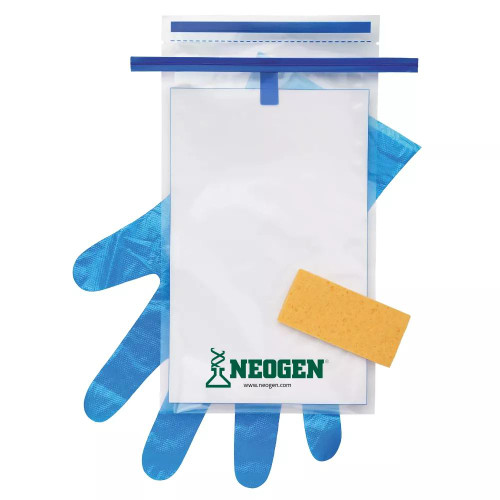
3M / Neogen Sponge-Stick SSL10NB with 10 mL Neutralizing Buffer

$290.20
SKU: SSL10NB 7 - 14 Business Days
(No reviews yet)
Availability:
7 - 14 Business Days
Shipping:
Calculated at Checkout
Quantity Option (Case):
100 Sponge-Sticks

3M / Neogen SSL10NB Sponge-Stick with 10 mL Neutralizing Buffer

The 3M / Neogen SSL10NB Sponge-Stick is a ready-to-use microbiological environmental sampling device designed for collecting surface samples in food-processing facilities, sanitation monitoring programs, and other controlled sampling environments. It features a 1.5" x 3" biocide-free cellulose sponge mounted on an extended handle and pre-hydrated with 10 mL of Neutralizing Buffer to support sample recovery when compatible residual sanitizer or disinfectant chemistry may be present.

The sponge-stick configuration helps technicians reach difficult sampling locations, including drains, equipment framework, pipes, and other restricted-access surfaces. Its break-off handle allows the sponge to be deposited into the included sample collection bag without direct hand-to-sponge contact.

Environmental monitoring note: SSL10NB is commonly selected for microbiological surface sampling where access, sample integrity, and neutralization of compatible sanitation residues are important. The correct collection procedure, transport conditions, and laboratory testing method must be established by the facility's environmental monitoring program.

Specifications:
  • Manufacturer: Neogen, formerly part of the 3M Food Safety product line
  • Manufacturer Part Number: SSL10NB
  • Product Type: Pre-hydrated microbiological surface sampling Sponge-Stick
  • Sponge Material: Biocide-free cellulose
  • Sponge Size: 1.5" x 3" (3.8 cm x 7.6 cm) nominal
  • Hydration Medium: Neutralizing Buffer
  • Hydration Volume: 10 mL per sponge
  • Handle: Extended sampling stick with thumb-stop and break-off feature
  • Sample Collection Bag: Included; 30 oz (0.89 L) nominal capacity
  • Packaging: Individual sampling assemblies supplied in manufacturer packaging
  • Case Quantity: 100 Sponge-Sticks per case
  • Gloves Included: No; SSL10NB is the no-glove configuration
  • Product Treatment: Gamma-irradiated configuration for controlled microbiological sampling
  • Unused Product Storage: Follow the current manufacturer package label and applicable product instructions
  • Shelf Life: Refer to the manufacturer expiration date printed on the applicable package or lot labeling
  • Intended Use: Collection of microbiological environmental surface samples for laboratory analysis
About the Manufacturer:

Neogen provides food safety, microbiology, environmental monitoring, and laboratory testing products used by food manufacturers, processing facilities, laboratories, and quality assurance teams. Following its combination with the former 3M Food Safety business, Neogen offers established environmental sample collection technologies, including Sponge-Sticks, hydrated sponges, swabs, and microbiological testing systems.

These products are designed to support structured sampling procedures, repeatable collection techniques, and laboratory workflows. SOSCleanroom provides Neogen sampling products and procurement support to help customers identify the appropriate sampling configuration, medium, and case quantity for their environmental monitoring requirements.

SSL10NB Features:
  • Pre-hydrated with 10 mL of Neutralizing Buffer
  • 1.5" x 3" biocide-free cellulose sampling sponge
  • Stick-mounted sponge for sampling difficult-to-access surfaces
  • Integrated thumb-stop to support controlled handling
  • Break-off handle for depositing the sponge into the sample bag
  • Included sample collection bag with approximately 30 oz (0.89 L) capacity
  • Ready-to-use configuration that reduces preparation at the sampling location
  • Gamma-irradiated sampling assembly
  • Glove-free configuration for facilities using their own approved PPE
  • Standard case packaging of 100 Sponge-Sticks
SSL10NB Benefits:
  • Neutralization support: Neutralizing Buffer helps reduce interference from compatible sanitizer residues that could otherwise continue suppressing microbial recovery after sample collection.
  • Extended sampling access: The stick design allows collection from drains, piping interfaces, equipment framework, and locations that may be difficult to reach with a conventional handheld sponge.
  • Reduced direct handling: The handle and thumb-stop help operators avoid touching the sampling sponge during collection.
  • Consistent preparation: Pre-hydration eliminates the need to manually add the specified buffer volume before routine sampling.
  • Sample containment: The included collection bag supports handling and transfer of the sampled sponge for subsequent laboratory analysis.
  • Controlled sample transfer: The break-off handle allows the sponge to remain in the sample bag while the handle is discarded.
  • Program standardization: Consistent sponge dimensions and medium volume help facilities establish repeatable collection procedures across monitoring locations.
  • Case purchasing efficiency: The 100-unit case configuration supports recurring environmental monitoring programs and scheduled sampling activities.
Understanding Neutralizing Buffer and Microbial Recovery

Microbiological environmental monitoring often takes place on surfaces that have previously been cleaned or sanitized. Residual antimicrobial chemicals may remain on equipment, drains, processing surfaces, or surrounding infrastructure even after the normal sanitation procedure has been completed.

When these residues are collected with a microbiological sample, they may continue acting on microorganisms during handling and transportation. This activity can interfere with recovery and may affect the interpretation of laboratory results.

SSL10NB incorporates 10 mL of Neutralizing Buffer to support sampling methods that require neutralization of compatible residual sanitizing agents. However, successful neutralization depends on the particular chemical formulation, residual concentration, target organisms, and validated analytical procedure.

  • Neutralizer compatibility: Confirm that the selected buffer is appropriate for the sanitizer or disinfectant used at the sampling location.
  • Microbial recovery: Select collection media according to the organisms being monitored and the laboratory's validated recovery method.
  • Residual chemical interference: Evaluate the potential effects of sanitizer carryover, particularly in post-sanitation monitoring programs.
  • Medium selection: Neutralizing Buffer, Buffered Peptone Water, Letheen Broth, and D/E Neutralizing Broth are not interchangeable without appropriate method qualification.
  • Method suitability: Follow the laboratory's defined requirements for sample size, collection technique, holding time, and testing.

Technical clarification: The reviewed manufacturer safety documentation does not disclose a complete ingredient-by-ingredient Neutralizing Buffer formulation. Do not assume that SSL10NB neutralizes every sanitizer or disinfectant. Where precise formulation or neutralizer efficacy is a controlled requirement, obtain supporting documentation from Neogen and verify suitability through the applicable laboratory method.

Common Applications:
  • Routine microbiological environmental monitoring in food-processing facilities
  • Post-sanitation surface sampling where compatible chemical neutralization is required
  • Sampling of food-processing equipment and surrounding infrastructure
  • Environmental investigation of drains, pipe connections, and difficult-to-access areas
  • Collection from equipment framework, joints, and non-product-contact surfaces
  • Microbiological sampling of designated food-contact surfaces under an established SOP
  • Environmental monitoring programs evaluating sanitation trends over time
  • Corrective-action investigations and follow-up sampling after identified microbiological deviations
  • Sample collection for laboratory testing using compatible microbiological methods
Best-Practice Use:
  • Verify the sampling assembly: Inspect the package for damage and confirm that the labeled expiration date has not passed.
  • Prepare the operator: Use gloves and other PPE required by the facility SOP. SSL10NB does not include gloves.
  • Open aseptically: Position the stick at the end of the bag, open the packaging, and grasp the handle above the thumb-stop without touching the sponge.
  • Define the sampling area: Follow the established method for sample area, collection location, and acceptable contact surfaces.
  • Sample the surface: Swab the designated area using the pressure and technique defined by the applicable laboratory procedure.
  • Rotate the sponge: Turn the sponge over and change the sampling direction approximately 90 degrees when following the manufacturer's collection instructions.
  • Transfer without direct contact: Return the sponge to the sample bag, hold it in place, and break the handle at the designated point.
  • Seal the bag: Fold the opening closed and secure the closure wires according to the manufacturer instructions.
  • Maintain traceability: Record the location, sample identification, collection date and time, operator, and required laboratory information.
  • Control sample transportation: Follow the laboratory's established time and temperature requirements for collected microbiological samples.
  • Address sampling residues: Remove remaining neutralizing solution from the sampled surface as required by the manufacturer's instructions and facility procedures.
Storage, Shelf Life, and Transportation Considerations

Proper storage and handling are important to maintaining the integrity of pre-hydrated microbiological sample collection devices. Storage conditions for unused product must be distinguished from transportation requirements for samples that have already been collected.

  • Unused product storage: Follow the current manufacturer package label and supporting instructions. Neogen product information identifies a 2°C to 30°C storage range; confirm the requirements applicable to the received lot.
  • Protection from environmental exposure: Avoid conditions that could damage the packaging or compromise the sampling medium.
  • Expiration control: Check the manufacturer expiration date before use. Do not assume a fixed shelf-life duration without applicable manufacturer documentation.
  • Collected sample handling: Transfer collected samples according to the applicable validated analytical method and laboratory requirements.
  • Transport temperature: Do not use the unused-product storage range as a substitute for the laboratory's specimen transportation requirements.
  • Holding time: The maximum acceptable interval between collection and analysis depends on the microbiological method, target organisms, and laboratory procedure.
  • Disposal: Dispose of used sampling devices as potentially contaminated laboratory waste in accordance with applicable facility procedures and regulations.

Important distinction: The manufacturer product instructions direct users to the package label for storage information and expiration control. A universal sample holding time or validated shipping-temperature range should not be inferred from general product catalog descriptions.

Selection Notes (SSL10NB vs. Other Sampling Options)
  • SSL10NB vs. SSL10NB2G: Both use a stick-mounted cellulose sponge pre-hydrated with 10 mL Neutralizing Buffer. SSL10NB does not include gloves, while SSL10NB2G includes two gloves.
  • SSL10NB vs. SSL10BPW: SSL10NB contains Neutralizing Buffer. SSL10BPW contains Buffered Peptone Water Broth. Select the medium required by the target organism and laboratory method rather than treating the two products as direct equivalents.
  • SSL10NB vs. HS10NB: SSL10NB provides a stick-mounted sponge for extended access. HS10NB is a hydrated sponge format without the same extended sampling handle.
  • Neutralizing Buffer vs. D/E Broth: Different neutralizing formulations may be required for different sanitizer chemistries. Verify method compatibility before selecting or substituting a collection medium.
  • Sponge-Stick vs. conventional swab: A Sponge-Stick may be advantageous for larger or difficult-to-reach sampling surfaces, while swabs may be preferred for smaller, localized, or precision sampling sites.
  • Glove-inclusive vs. no-glove configuration: SSL10NB is appropriate where operators already use facility-approved PPE. The glove-inclusive configuration may be preferable where a complete sampling assembly is needed.
Environmental Monitoring and Sampling Program Considerations

A microbiological sampling device is one component of an effective environmental monitoring program. Consistent collection procedures are necessary for making results comparable across operators, processing lines, sampling locations, and monitoring periods.

  • Sampling location control: Establish defined monitoring points and distinguish food-contact surfaces from surrounding environmental locations.
  • Collection consistency: Standardize swabbing patterns, collection pressure, sample area, and handling procedures.
  • Sampling frequency: Determine frequencies according to facility risk assessments, historical results, and applicable monitoring requirements.
  • Sanitation timing: Document whether samples are collected before cleaning, after sanitation, before production, or during operations.
  • Method compatibility: Confirm the selected medium supports the required analytical test and target microorganisms.
  • Sample traceability: Maintain adequate records to associate laboratory results with specific equipment, surfaces, operators, and production conditions.
  • Corrective-action procedures: Establish investigation, cleaning, resampling, and verification requirements for results exceeding the facility's action limits.

Selection guidance: SSL10NB is designed for environmental sample collection, not surface disinfection or direct detection of microorganisms. The collection device alone does not establish sanitizer effectiveness, environmental cleanliness, or microbiological compliance. Those determinations require an appropriate sampling plan, analytical method, acceptance criteria, and documented review of test results.


Link to Neogen Sponge-Stick Product Instructions:
Click Here

Link to Neogen SSL10NB Safety Data Sheet: Click Here

Link to 3M Environmental Sample Collection Product Reference: Click Here

Link to 3M Sponge-Stick Instructions: Click Here

Other Similar Products Available From SOSCleanroom.com

Neogen Sponge-Stick Sampling Products

  • SSL10NB2G: Sponge-Stick with 10 mL Neutralizing Buffer and two gloves, 100 Sponge-Sticks per case
  • SSL10BPW: Sponge-Stick with 10 mL Buffered Peptone Water Broth, 100 Sponge-Sticks per case

Notes: Looking for additional guidance on the 3M / Neogen SSL10NB Sponge-Stick with 10 mL Neutralizing Buffer? The SOSCleanroom Technical Vault tab above provides additional educational information on environmental monitoring, sampling technique, buffer selection, microbiological sample handling, and manufacturer documentation considerations.

SOSCleanroom.com supports contamination-control and environmental monitoring programs with specialty sampling products, competitive pricing, and responsive customer service. Our team can assist with product configuration, case quantities, and manufacturer documentation inquiries.

Manufacturer documentation: Neogen Sponge-Stick Product Instructions FS00833A (January 2024) and Neutralizing Buffer Safety Data Sheet Version 4.0 (October 8, 2025) were identified for this product family. A separate current model-specific PDS/TDS establishing the complete buffer formula, universal shelf-life duration, and specimen transport holding limits was not confirmed. Those specifications require manufacturer verification before use in a controlled or validated procedure.

Product information reviewed: November 9, 2026 (SOS Technical Staff)

© 2026 Specialty Optical Systems, Inc. (dba SOSCleanroom). All rights reserved.

The Technical Vault By SOSCleanroom
Neogen SSL10NB Legacy 3M Food Safety Environmental Microbiological Sampling 10 mL Neutralizing Buffer Pre-Hydrated 1.5" × 3" Sponge Biocide-Free Cellulose Break-Off Handle 6" × 11" Sample Bag 30 oz Bag Capacity No Gloves Included 100 Units / Case

Neogen SSL10NB Sponge-Stick: environmental surface sampling with 10 mL Neutralizing Buffer

Neogen® Sponge-Stick with Neutralizing Buffer, SSL10NB, formerly supplied under the 3M™ Food Safety product line, is a pre-hydrated environmental sampling device designed for microbiological collection from food-processing, food-contact and general facility surfaces.

Each device features a 1.5" × 3" (3.8 × 7.6 cm) biocide-free cellulose sponge attached to a sampling handle and pre-hydrated with 10 mL Neutralizing Buffer.

The stick-mounted format helps operators reach difficult sampling locations, including equipment interfaces, drains, pipes, seams and other areas where direct handling of a sponge may be impractical.

After sampling, the sponge is returned to its collection bag and separated from the handle using the manufacturer's break-off procedure. The included 6" × 11" sampling bag has a published 30 oz (0.89 L) capacity and supports controlled transfer to the testing laboratory.

The standard SSL10NB configuration does not include gloves. SOSCleanroom offers the manufacturer case of 100 Sponge-Sticks.

Operations takeaway: SSL10NB is a microbiological sample-collection tool, not a surface-cleaning or disinfection product. Reliable results require appropriate sampling locations, aseptic technique, validated sanitizer neutralization, controlled sample handling and compliance with the laboratory's method-specific transport and holding requirements.


Manufacturer identification and exact SSL10NB specifications
  • Current manufacturer: Neogen Corporation
  • Legacy brand: 3M Food Safety
  • Manufacturer catalog number: SSL10NB
  • Neogen SKU: 700002003
  • Product type: Environmental microbiological sampling Sponge-Stick
  • Sponge material: Biocide-free cellulose
  • Nominal sponge dimensions: 1.5" × 3" (3.8 × 7.6 cm)
  • Handle: Stick-mounted, with break-off feature
  • Hydration medium: Neutralizing Buffer
  • Pre-hydration volume: 10 mL
  • Collection bag: Included
  • Bag dimensions: 6" × 11"
  • Bag capacity: 30 oz / 0.89 L
  • Bag closure: Fold-over closure with bendable wire ends
  • Gloves: Not included
  • Sampling device: Single use
  • SOS purchasing unit: Case
  • Case quantity: 100 Sponge-Sticks
  • Primary application: Environmental and surface microbiological collection
  • Current US SDS: Version 4.0, revised October 8, 2025
  • Original IFU: 3M Sponge-Stick Product Instructions, issued March 2013

SKU distinction: SSL10NB includes Neutralizing Buffer but no gloves. SSL10NB2G is a different configuration that includes two gloves. SSL10NB6X9 uses a different sample-bag format. Always select the exact catalog number.


Why neutralization matters in environmental monitoring

Residual sanitizer on a recently cleaned surface may continue to affect microorganisms after a sample is collected. This can reduce organism recovery and distort the interpretation of environmental monitoring results.

  • Sampling concern: Residual sanitizer may continue to act after collection.
  • Potential consequence: Reduced recovery of viable organisms.
  • Neutralizing Buffer purpose: Helps counteract specified residual sanitizer chemistries.
  • Pre-hydrated format: Reduces the need for field preparation of the sampling liquid.
  • Process verification: Must demonstrate compatibility with the sanitizer used at the facility.
  • Laboratory compatibility: Must be assessed against the intended culture or molecular method.
  • Result interpretation: Depends on the collection method, surface, timing and analytical procedure.

Neutralization principle: The presence of Neutralizing Buffer does not guarantee organism recovery from every sanitized surface. The laboratory must establish that the selected medium adequately neutralizes the relevant sanitizer without inhibiting its downstream detection method.


Neutralizing Buffer: manufacturer-described formulation

Neogen's Environmental Monitoring Handbook describes the typical Neutralizing Buffer formulation as an aqueous mixture containing an aryl sulfonate complex, sodium thiosulfate and monobasic potassium phosphate.

  • Neutralizing formulation: Manufacturer-defined Neutralizing Buffer.
  • Primary neutralizer component: Aryl sulfonate complex.
  • Additional component: Sodium thiosulfate.
  • Buffer component: Monobasic potassium phosphate.
  • SSL10NB delivered volume: 10 mL per pre-hydrated sponge.
  • Formulation source: Neogen Environmental Monitoring Handbook, second edition.
  • Lot-specific concentrations: Obtain controlled documentation where required.
  • Neutralizing performance: Depends on the sanitizer and validated analytical method.

Formulation distinction: The manufacturer's general Neutralizing Buffer formulation is not a batch-specific analytical certificate for the 10 mL medium in a particular SSL10NB lot. Obtain lot-specific quality documentation when the testing program requires it.


Sanitizer neutralization: supported and unsupported combinations
  • Quaternary ammonium compounds: Manufacturer handbook identifies Neutralizing Buffer neutralization capability.
  • Iodine-containing sanitizers: Manufacturer handbook identifies neutralization capability.
  • Chlorine-containing sanitizers: Manufacturer handbook identifies neutralization capability.
  • Phenolic sanitizers: Not identified as effectively neutralized by standard Neutralizing Buffer.
  • Mercurials: Not identified as effectively neutralized.
  • Formaldehyde: Not identified as effectively neutralized.
  • Glutaraldehyde: Not identified as effectively neutralized.
  • Peroxyacetic acid and hydrogen peroxide: Manufacturer comparison does not establish effective neutralization by standard Neutralizing Buffer.
  • Other cleaning chemicals: Require method-specific evaluation.

Critical selection limitation: Standard Neutralizing Buffer is not a universal neutralizer. Facilities using oxidizing or aldehyde-based sanitizers may require a different validated neutralization medium, such as an appropriate D/E or wide-spectrum formulation.


Neutralizing Buffer versus Letheen, D/E and BPW
  • Neutralizing Buffer: For sampling under conditions where its specified neutralization spectrum is suitable.
  • Letheen Broth: A distinct medium with its own sanitizer-neutralization and enrichment properties.
  • D/E Neutralizing Broth: A different formulation developed for broad disinfectant-neutralization applications.
  • Buffered Peptone Water: Common sampling or enrichment medium with limited sanitizer-neutralization capability.
  • Wide-spectrum neutralizers: Separate formulations that may be suited to additional sanitizer classes.
  • Selection: Match the medium to the actual sanitation program and validated detection method.
  • Substitution: Requires method review or qualification where the medium is specified.

Media distinction: SSL10NB, SSL10DE, SSL10LET and SSL10BPW are different manufacturer products. Similar Sponge-Stick hardware does not establish identical chemical composition or microbiological recovery performance.


Biocide-free cellulose sponge and sampling access
  • Sponge dimensions: 1.5" × 3".
  • Material: Cellulose.
  • Biocide-free description: Designed to avoid inhibiting microorganism viability.
  • Stick-mounted format: Helps reach surfaces without touching the sponge directly.
  • Typical access points: Drains, pipes, seams and equipment structures.
  • Sampling geometry: Larger sponge contact area than many small swabs.
  • Handle: Remains attached during surface sampling.
  • Break-off feature: Used after returning the sponge to its collection bag.
  • Sampling technique: Defined by the validated environmental-monitoring procedure.

Contamination prevention: Keep the sponge away from unintended surfaces, gloves and the bag exterior. Do not detach the sponge before completing surface collection.


Manufacturer original IFU: collection and closure sequence
  1. Stage the device: Verify the sample location, product expiration and required supplies.
  2. Position the stick: Shake the stick toward the end of its bag.
  3. Open the bag: Tear along the intended opening.
  4. Open the mouth: Gently squeeze the bag to separate its sides.
  5. Remove aseptically: Grasp the stick above the thumb-stop line.
  6. Sample the surface: Wipe the entire prescribed area using the approved method.
  7. Reverse the sponge: Turn it over and change sampling direction by 90 degrees.
  8. Return to bag: Insert the sponge into the bag up to the thumb-stop.
  9. Break the handle: Hold the sponge inside the bag, bend the stick and allow the sponge to detach into the bag.
  10. Discard the handle: Use the approved waste procedure.
  11. Close the sample bag: Fold the bag opening as directed.
  12. Secure the closure: Fold the ends of the blue wires inward.
  13. Address residues: Follow the site procedure for removing any remaining neutralizer solution from the sampled surface.
  14. Label and transport: Apply the validated sample-identification and transport requirements.

IFU handling point: The sponge must be returned to the bag before the handle is broken. Do not reach into the collection bag, touch unintended surfaces or reuse the device. The manufacturer's original IFU is the source for the collection and closure steps.


Environmental sampling locations and monitoring strategy
  • Food-contact surfaces: Select sampling times and areas under the monitoring plan.
  • Non-food-contact surfaces: Include appropriately designated environmental zones.
  • Equipment seams: Target difficult-to-clean interfaces where justified.
  • Drains and pipes: Use suitable safety and sampling controls.
  • Framework and supports: Consider locations where moisture or residues may accumulate.
  • Post-cleaning verification: Sample at a consistent, approved point in the sanitation cycle.
  • Preoperational monitoring: Follow the defined program timing.
  • During-production monitoring: Apply process-specific safety and contamination controls.
  • Site identification: Assign persistent location IDs for trending.
  • Investigation sampling: Use targeted sites when responding to an environmental finding.

Program design: Sample selection should reflect the facility's actual hazards and contamination pathways. A consistent monitoring strategy is generally more meaningful than simply collecting from easy-to-reach surfaces.


Sampling area and standardized coverage
  • Area definition: Follow the applicable test method.
  • Large surfaces: Sponge sampling can support broader area coverage.
  • Irregular locations: Record the sampled feature and approximate extent where required.
  • Surface contact: Use consistent pressure and strokes.
  • Multiple directions: Follow the original IFU and approved site method.
  • Operator variation: Control through training and observation.
  • Recovery efficiency: Depends on surface, organism, moisture and technique.
  • Sampling time: Standardize relative to cleaning and production.
  • Documentation: Retain location, area and any deviations.

Measurement limitation: The 1.5" × 3" sponge dimension is not the surface area that must be sampled. Sampling coverage is specified by the method and monitoring plan; different sample areas cannot necessarily be compared without appropriate normalization.


Collection bag: correct size, capacity and closure
  • SSL10NB standard bag dimensions: 6" × 11".
  • Published bag capacity: 30 oz / 0.89 L.
  • Purpose: Contain the sampled sponge for laboratory transfer.
  • Closure method: Fold-over bag with blue wire ends.
  • Bag hygiene: Avoid touching the inside during collection.
  • Handle separation: Perform inside the collection bag.
  • Leak prevention: Confirm closure and bag condition.
  • Bag capacity: Not a recommended fill volume for SSL10NB.
  • Additional media: Add only when prescribed by the approved laboratory method.

Bag distinction: SSL10NB uses a 30 oz bag. Do not substitute the alternate 6" × 9" bag configuration or a glove-inclusive SKU without confirming the manufacturer's exact part number.


Sterile collection and irradiation-related quality controls
  • Product function: Microbiological sampling with a processed collection device.
  • Historical quality evidence: Exact-model 3M records describe terminal gamma irradiation.
  • Current lot status: Confirm manufacturer release and packaging integrity.
  • Exact delivered dose: Obtain processing documentation if required.
  • Specific SAL claim: Do not assign a numerical SAL without exact product evidence.
  • Packaging: Inspect for damage or leakage before use.
  • Expiration: Follow the actual manufacturer label.
  • Post-opening handling: Maintain aseptic technique.
  • Single use: Never reuse a sampled device.

Sterility documentation: A manufacturer-described gamma-irradiation process does not establish a numerical sterility assurance level or actual processing dose for a delivered lot. Obtain the applicable Neogen quality documentation when required by the laboratory's validation or purchasing program.


Unused-product shelf life and storage
  • Historical manufacturer storage: 2–30°C (36–86°F).
  • Historical SSL10NB shelf life: 12 months from manufacture.
  • Expiration: Use the actual package label.
  • Package integrity: Protect from punctures, leakage and damage.
  • Hydration: Check for a compromised or visibly dried package.
  • Inventory rotation: Follow first-expiring-first-out controls.
  • Storage deviations: Consult the manufacturer or quality procedure.
  • Current Neogen controlled conditions: Confirm with the supplier if required.

Shelf-life qualification: The 2–30°C and 12-month values come from 3M manufacturer-origin historical storage literature. The actual package label and current Neogen guidance take precedence. Shelf life is measured from manufacture, not delivery.


Collected-sample transport and laboratory holding times
  • Sample identification: Record the location, date, time and collector.
  • Sample integrity: Confirm correct bag closure.
  • Secondary containment: Apply laboratory and transport requirements.
  • Transport temperature: Defined by the analytical method.
  • Maximum holding time: Defined by the analytical method.
  • Time to laboratory: Record when required.
  • Temperature deviation: Document and assess under the laboratory SOP.
  • Shipment delays: Follow the sample acceptance and rejection criteria.
  • Method compatibility: Confirm the neutralizer does not interfere with the test.
  • Chain of custody: Apply whenever the monitoring program requires it.

Transport distinction: Unused-product storage temperature is not the same as collected-sample transport temperature. Do not apply the historical 2–30°C unused-product range as a universal microbiological sample transport instruction.


US Safety Data Sheet: hazards and transport classification
  • Manufacturer: Neogen Corporation.
  • SDS title: Neogen Sample Collection Products with Neutralizing Buffer.
  • Covered catalog number: SSL10NB.
  • US SDS version: 4.0.
  • Issue date: April 7, 2025.
  • Revision date: October 8, 2025.
  • US GHS mixture classification: Not classified.
  • Hazard pictograms: None required by the applicable classification.
  • DOT transport: Not regulated.
  • TDG transport: Not regulated.
  • IMDG transport: Not regulated.
  • IATA transport: Not regulated.
  • Waste disposal: Follow applicable regulations and site requirements.

Safety distinction: The SDS classification describes the unused Neutralizing Buffer mixture. Once a Sponge-Stick has collected a microbiological sample, its potential biological hazard must be managed under the laboratory's sample-handling and transport procedures.


Molecular testing and possible neutralizer interference
  • Neutralizing Buffer composition: Includes an aryl sulfonate complex.
  • Molecular method compatibility: Must be validated for the selected analytical assay.
  • Potential sample preparation: Dilution may be required for certain molecular methods.
  • Culture testing: Requires established sample recovery and handling conditions.
  • Neutralizer inhibition: Evaluate where downstream amplification or detection can be affected.
  • Alternative media: Consider method-approved options where necessary.
  • Lab coordination: Confirm device acceptance before collecting a large sampling series.

Method selection: A neutralizer that addresses sanitizer carryover can still affect downstream analytical performance. Validate the collection medium with the target organisms, assay chemistry and laboratory processing workflow.


Chain-of-custody and environmental trend documentation
  • Unique sample ID: Identify each collection event.
  • Collection location: Record facility, room, line, equipment and sample point.
  • Date and time: Record accurately.
  • Collector: Identify the trained operator.
  • Sampling stage: Note preoperational, post-cleaning or production status.
  • Sample area: Record where method requirements specify it.
  • Sanitizer history: Record relevant recent chemical use.
  • Device SKU: SSL10NB.
  • Manufacturer lot: Retain when required.
  • Transport conditions: Record time and temperature as required.
  • Laboratory receipt: Document any deviations.
  • Trend analysis: Compare consistent locations, methods and sampling times.

Data integrity: Comparable environmental monitoring results depend on consistent site selection, sampling technique, neutralization, transport and analytical methods. A change to any of these factors may affect the interpretation of trends.


Preventing cross-contamination and false results
  • Unused sponge: Do not touch unintended surfaces.
  • Sampling handle: Maintain the manufacturer's grasp location.
  • Bag interior: Do not reach inside.
  • Handle separation: Do not break during surface sampling.
  • Reuse: Never use the same device twice.
  • Surface selection: Avoid accidental contact outside the intended location.
  • Sample sealing: Close the bag using the correct fold-and-wire procedure.
  • Transport: Prevent leakage and cross-contamination.
  • Testing: Follow the approved laboratory method.
  • Documentation: Record collection deviations.

IFU restriction: Do not touch the sponge to an unintended surface, break it from its handle during sampling, reach into the sample bag or reuse the device. These limitations are explicitly identified in the original manufacturer instructions.


Cleaning the sampled surface after collection
  • Neutralizer residue: May remain after sampling.
  • Manufacturer instruction: Remove any remaining neutralizing solution residue according to the facility's procedure.
  • Food-contact surfaces: Follow approved post-sampling cleaning or sanitation requirements.
  • Production readiness: Confirm the surface is suitable before returning equipment to service.
  • Cleaning supplies: Use approved products for the facility and material.
  • Disinfectant step: Apply separately where required.
  • Documentation: Record the completion of required corrective cleaning.

Post-sampling limitation: Neutralizing Buffer is not a disinfectant. The sampling procedure may leave liquid on the surface; follow the manufacturer IFU and facility sanitation procedure before the surface is returned to use.


SSL10NB compared with related Neogen sampling devices
  • SSL10NB: Sponge-Stick, 10 mL Neutralizing Buffer, no gloves.
  • SSL10NB2G: Sponge-Stick, 10 mL Neutralizing Buffer, two gloves included.
  • SSL10NB6X9: Neutralizing Buffer Sponge-Stick with alternate sample-bag size.
  • SSL10DE: Sponge-Stick with 10 mL D/E Neutralizing Broth.
  • SSL10LET: Sponge-Stick with 10 mL Letheen Broth.
  • SSL10BPW: Sponge-Stick with 10 mL Buffered Peptone Water.
  • SSL100: Dry Sponge-Stick without pre-hydration medium.
  • HS10NB: Hydrated Sponge with Neutralizing Buffer, without stick-mounted collection.
  • RS96010NB: Swab-Sampler with Neutralizing Buffer.

Selection principle: Compare collection geometry, included gloves, bag format, pre-hydration medium, neutralization spectrum and laboratory method. Do not treat these catalog numbers as interchangeable merely because they are all environmental sampling devices.


Typical program uses and important limitations
  • Environmental pathogen monitoring
  • Routine facility microbiological surveillance
  • Food-contact surface sampling
  • Non-food-contact equipment sampling
  • Sampling selected drains and infrastructure
  • Post-sanitation microbiological verification
  • Investigation of recurring environmental positives
  • Targeted verification after maintenance or cleaning
  • Microbiological sample collection for qualified laboratory analysis
  • Programs that require a compatible neutralizer to address sanitizer carryover

Application limitation: A sample-collection device does not diagnose contamination by itself. Testing results depend on the laboratory method and represent only the sampled location and collection conditions. A negative result is not a guarantee that a facility or production lot is free of contamination.


When SSL10NB is not the preferred selection
  • Different sanitizer: Use a validated alternative neutralizer when standard NB is insufficient.
  • Peroxide/peroxyacetic acid residue: Confirm an appropriate neutralizing formulation.
  • Glove-inclusive kit required: Evaluate SSL10NB2G.
  • Smaller bag required: Review the exact SSL10NB6X9 configuration.
  • Dry sponge specified: Use the correct dry Sponge-Stick SKU.
  • Different culture medium required: Evaluate SSL10LET, SSL10DE or SSL10BPW as approved.
  • Very small sampling features: A qualified small swab may be more suitable.
  • ATP or allergen testing: Use the specific validated method and test device.
  • Unverified holding conditions: Confirm laboratory acceptance before collection.
  • Expired or damaged packaging: Follow quality disposition requirements.

Method boundary: Do not substitute SSL10NB for an ATP, protein, allergen or chemical-residue test. SSL10NB collects microbiological samples for subsequent laboratory analysis.


Common sampling failures and corrective actions
  • Wrong neutralizer: Match the medium to the sanitizer and test method.
  • Wrong catalog number: Confirm SSL10NB, not a glove-inclusive or alternate-bag SKU.
  • Unintended surface contact: Discard compromised collection devices.
  • Handle broken early: Follow the IFU separation sequence.
  • Bag not fully closed: Apply the correct folding and wire closure method.
  • Missing sample ID: Maintain full chain-of-custody identification.
  • Inconsistent area: Standardize sample locations and coverage.
  • Improper holding time: Follow the laboratory method.
  • Incorrect transport temperature: Apply sample-specific controls.
  • Neutralizer interference: Validate the downstream analytical method.
  • Expired material: Check the actual lot expiration.
  • Post-sampling residue: Complete the required surface-cleaning process.

Related Neogen environmental sampling products

Product-selection guidance: Choose the exact sampling device by medium composition, surface geometry, included accessories, sample-bag size, microbiological method and approved transport conditions. The same Neutralizing Buffer label does not automatically establish suitability for every sanitizer or downstream assay.


Why purchase Neogen SSL10NB from SOSCleanroom
  • Exact catalog identification: Neogen 700002003 / SSL10NB.
  • Pre-hydrated format: 10 mL Neutralizing Buffer.
  • Accessible sampling: Stick-mounted 1.5" × 3" cellulose sponge.
  • Integrated collection bag: 30 oz capacity.
  • Case purchasing: 100 Sponge-Sticks.
  • Manufacturer documentation: Access to current SDS, original IFU and sampling guidance.
  • Customer assistance: Contact SOSCleanroom for product availability, lot information and technical resources.

Manufacturer documentation and authoritative references
  • SOSCleanroom SSL10NB Product Page: Click Here
  • Neogen SSL10NB Official Product Listing: Click Here
  • Original Manufacturer Sponge-Stick Instructions for Use — March 2013: Click Here
  • Neogen Neutralizing Buffer US SDS — Version 4.0, October 8, 2025: Click Here
  • Neogen Environmental Monitoring Handbook — Second Edition: Click Here
  • 3M Sample Collection Products Shelf Life and Storage Conditions: Click Here
  • SOSCleanroom Neogen Environmental Sampling Category: Click Here

Technical documentation: Neogen SSL10NB, SKU 700002003, is a pre-hydrated microbiological sampling device with a 1.5" × 3" biocide-free cellulose sponge, 10 mL Neutralizing Buffer, break-off handle, and 6" × 11" collection bag with a 30 oz / 0.89 L capacity. The standard SSL10NB does not include gloves and is offered by SOSCleanroom in cases of 100. The manufacturer-origin 3M IFU, issued March 2013, details the aseptic collection, handle separation, bag closure and post-sampling residue-control procedure. Neogen's US SDS Version 4.0, revised October 8, 2025, classifies the unused buffer mixture as not hazardous under US GHS and not regulated under DOT, TDG, IMDG or IATA transport rules. Historical 3M storage documentation lists 2–30°C and a 12-month shelf life from manufacture; current label requirements take precedence. Neutralizing Buffer suitability, sample hold time and transport conditions must be established by the laboratory's validated method.


If you have any questions please email us at Sales@SOSsupply.com or give us a call at (214)340-8574. OR check out the AI ChatBot powered by SOSCleanroom data libraries - give it a try! THIS IS NEW FOR 2026! © 2026 SOSCleanroom. All rights reserved.