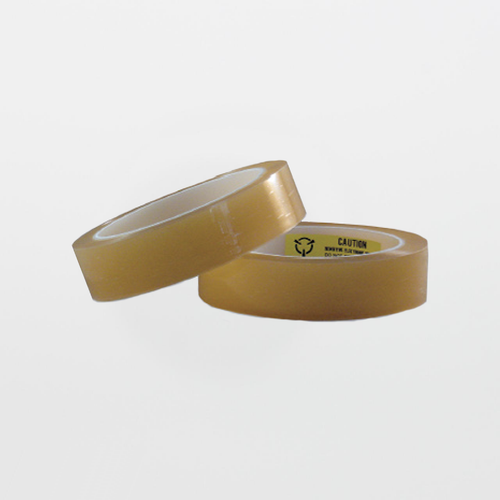
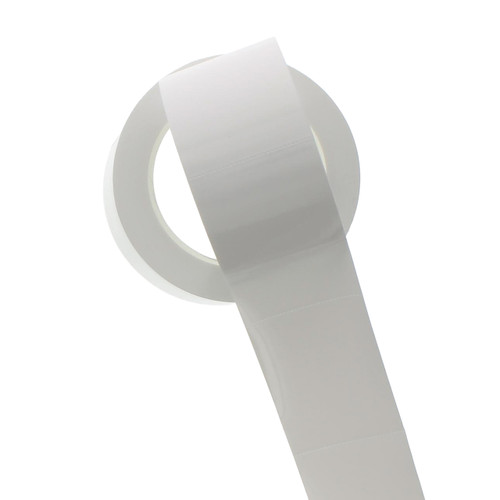
Cleanroom EZT Serrated Construction Tape

$371.31 - $393.94
SKU: EZT 7 - 10 Business Days
(No reviews yet)
Availability:
7 - 10 Business Days
Shipping:
Calculated at Checkout

Micronova EZT™ Cleanroom Serrated Construction Tape - High-Tack LDPE with Rubber Adhesive - White - 1" or 2" x 36 Yards - Case Quantity

Micronova EZT™ Serrated Construction Tape is a high-tack, pressure-sensitive polyethylene tape designed for cleanroom construction, controlled-environment retrofits, temporary barriers, and maintenance support. The tape combines a flexible low-density polyethylene (LDPE) film backing with a rubber-based adhesive for bonding compatible materials, including plastic sheeting, concrete, and stainless steel.

The distinctive serrated easy-tear edge allows operators to tear tape by hand at the required length without routinely using scissors, utility knives, or tape dispensers. This design can simplify temporary sealing and fastening tasks where crews are working around equipment, protective barriers, and construction materials.

Unlike standard cleanroom marking tapes selected for low-tack removal, EZT is intended for aggressive initial adhesion. The rubber-based adhesive helps establish contact between different types of materials, while the polyethylene backing provides flexibility for approved temporary construction applications.

EZT is available through SOSCleanroom in white, 36-yard rolls, with two width options: 1" and 2". The manufacturer identifies EZT-1WH for the 1" configuration and EZT-2WH for the 2" configuration. The 1" width is offered in cases of 36 rolls, while the 2" width is offered in cases of 24 rolls.

Micronova designs EZT for clean-build and maintenance operations in controlled environments. However, its construction-oriented positioning does not establish a specific particle-release limit, adhesive-residue guarantee, ESD rating, or universal approval for direct use on critical process surfaces.

EZT is non-sterile and not autoclavable. If a task requires a sterile consumable, documented low-outgassing performance, ESD control, or guaranteed residue limits, select a separately qualified product with supporting manufacturer documentation.

Clean Construction Advantage: EZT combines serrated hand-tear edges, high-tack rubber adhesive, and flexible LDPE film. It is particularly useful for approved temporary barrier, sheeting, retrofit, and maintenance tasks where strong adhesion to compatible materials is more important than easy or residue-free removal.

Specifications:
  • Manufacturer: Micronova Manufacturing, Inc.
  • Product Name: EZT™ Construction Tape
  • SOSCleanroom Parent SKU: EZT
  • Manufacturer Part Number - 1": EZT-1WH
  • Manufacturer Part Number - 2": EZT-2WH
  • Product Type: High-tack cleanroom construction and maintenance tape
  • Backing Material: Low-density polyethylene (LDPE) film
  • Adhesive Material: Rubber-based pressure-sensitive adhesive
  • Adhesive Characteristic: High tack / aggressive adhesion
  • Backing Edge: Serrated easy-tear edge
  • Tear Method: Hand tear; scissors or dispensers are not ordinarily required
  • Color: White
  • Finish: Medium gloss
  • Roll Length: 36 yards (108 feet / approximately 33 meters)
  • Available Widths: 1" (25.4 mm) and 2" (50.8 mm)
  • Core: 3" plastic core
  • 1" Case Quantity: 36 rolls
  • 2" Case Quantity: 24 rolls
  • SOSCleanroom Selling Unit: Manufacturer case
  • Backing Film Thickness: EZT-specific numerical thickness not established in the reviewed manufacturer documentation
  • Total Tape Thickness: EZT-specific numerical caliper not established
  • Adhesion to Steel: No EZT-specific numerical peel-adhesion value established
  • Tensile Strength: No EZT-specific numerical value established
  • Elongation at Break: No EZT-specific numerical value established
  • Specific Particle Release: No EZT-specific numerical qualification limit established
  • Nonvolatile Residue / Outgassing: No EZT-specific numerical limit established
  • ESD Rating: Not established
  • Sterility: Non-sterile
  • Autoclavability: Not autoclavable
  • Chemical Resistance: Manufacturer describes resistance to common solvents and acids; specific conditions require qualification
  • Primary Applications: Clean-build projects, retrofit barriers, temporary sheeting, maintenance sealing and compatible mixed-material joining
  • Manufacturer Documentation: EZT identified in Micronova product catalog; request current model-specific TDS for numerical performance values
  • Certificate of Conformance: Obtain applicable lot documentation when required
  • SDS Status: EZT-specific SDS or written applicability determination not established in reviewed public documentation
  • Shelf Life: Manufacturer EZT-specific shelf-life limit not verified
Available Sizes and Case Quantities:

SOSCleanroom provides two white EZT construction tape configurations. Both use the same 36-yard roll length and serrated-edge construction, with case quantities determined by width.

Manufacturer Part Number Width Color Length Rolls/Case
EZT-1WH 1" White 36 yards 36 rolls
EZT-2WH 2" White 36 yards 24 rolls

The narrower 1" tape is suitable for smaller joints and temporary fastening points where the selected surface can support the adhesive. The 2" width provides broader coverage for temporary sheeting seams, barrier edges, and larger construction applications.

Ordering Confirmation: EZT-1WH contains 36 rolls per case; EZT-2WH contains 24 rolls per case. Each roll contains 36 yards of white serrated construction tape. The case quantity changes with the selected width.

About the Manufacturer:

Micronova Manufacturing, Inc. develops cleaning and contamination-control products for cleanrooms, controlled manufacturing facilities, laboratories, pharmaceutical production, and advanced-technology environments.

Its EZT™ product family is designed specifically for construction and maintenance support, using a high-tack rubber adhesive and a hand-tear serrated polyethylene backing.

SOSCleanroom offers Micronova facility supplies and provides assistance with tape selection, manufacturer documentation, purchasing configurations, and cleanroom procurement requirements.

EZT Features:
  • Low-density polyethylene backing film
  • High-tack rubber pressure-sensitive adhesive
  • Distinctive serrated edge for convenient hand tearing
  • Useful for temporary clean-build and retrofit tasks
  • Designed to help bond compatible dissimilar materials
  • Applicable to selected plastic, concrete and stainless-steel surfaces
  • Flexible backing with good conformability
  • White industrial construction tape
  • 36 yards per roll
  • 1" or 2" width selection
  • 3" plastic core
  • Available in manufacturer case quantities
  • Does not ordinarily require a cutting blade for dispensing
  • Non-sterile configuration
  • Not autoclavable
  • Manufacturer-positioned for cleanroom construction and maintenance
  • Strong initial tack for approved temporary fastening applications
EZT Benefits:
  • Easy Hand Tearing: Serrated edges allow operators to separate tape at the required point without routinely using a blade.
  • High Initial Tack: Rubber adhesive supports rapid attachment to compatible prepared surfaces.
  • Mixed-Material Applications: Useful where temporary construction materials must be secured to different substrate types.
  • Flexible LDPE Backing: Helps accommodate suitable surface contours, sheeting, and temporary barrier edges.
  • Reduced Cutting-Tool Dependence: Convenient in work areas where use of scissors or utility knives is restricted.
  • Clean-Build Support: Suitable for evaluation in temporary containment and equipment-protection projects.
  • Defined Width Selection: Choose 1" for narrower fastening tasks or 2" for broader seams and contact areas.
  • Consistent Roll Length: Standard 36-yard rolls support project material planning.
  • Case-Level Purchasing: Clearly defined manufacturer quantities simplify ordering for construction crews and maintenance programs.
Common Applications:
  • Temporary cleanroom construction barriers
  • Clean-build and retrofit work
  • Securing compatible protective plastic sheeting
  • Temporary dust-containment support
  • Joining compatible plastic films to rigid surfaces
  • Temporary attachment to suitable concrete surfaces
  • Securing approved covers to stainless-steel equipment exteriors
  • Maintenance and equipment-protection projects
  • Temporary bundling and fastening of compatible materials
  • Approved construction-area sealing tasks
  • Temporary partition and barrier-edge fastening
  • Facility maintenance staging and protective-film attachment
  • Construction support where fast hand tearing is beneficial
  • Cleanroom shutdown or retrofit projects requiring temporary adhesive attachment
Serrated Easy-Tear Edge: How It Works:

EZT features a serrated film edge designed to provide convenient tear initiation. Instead of requiring a separate cutting tool for every strip, the operator can tear the tape directly from the roll to the needed length.

  • Serrated Edge: Designed to support tearing at different points along the tape length.
  • Hand Dispensing: Useful for temporary work where carrying scissors or a tape dispenser is inconvenient.
  • Field Flexibility: Allows workers to prepare strips while positioning sheeting or barriers.
  • No Fixed Tear Spacing: The serrated feature differs from pre-perforated tapes with preset segment lengths.
  • Application Control: Measure and align tape before pressing it firmly into place.
  • Damage Inspection: Discard irregularly torn or damaged strips when the application requires a continuous seal.
  • Barrier Qualification: The easy-tear feature is not evidence of a validated airtight or particle-tight joint.

Easy-Tear Guidance: The serrated edge improves dispensing convenience. It does not establish a numerical tear-force rating, guaranteed cut geometry, or validated containment-seal performance. Inspect critical temporary joints after installation.

LDPE Film and Rubber Adhesive Construction:

Micronova EZT combines an LDPE film backing with a high-tack rubber-based adhesive. This construction differs from acrylic-adhesive polyethylene tapes commonly selected for general cleanroom sealing and labeling.

  • LDPE Backing: Provides a flexible film for suitable temporary construction surfaces.
  • Rubber Adhesive: Selected for aggressive tack and bonding to different compatible substrates.
  • Surface Range: Manufacturer-supported intended uses include selected plastics, concrete, and stainless steel.
  • Surface Preparation: Dust, oils, loose coatings, and moisture can reduce actual adhesion.
  • Application Pressure: Even pressure helps establish initial adhesive contact.
  • Application Temperature: Verify performance under the actual jobsite temperature and humidity.
  • Dwell Time: Evaluate adhesive transfer and removal difficulty after the expected period of use.
  • Adhesive Residue: No unconditional clean-removal or zero-residue guarantee is established.
  • Backing Thickness: EZT-specific numerical thickness requires a current manufacturer specification.
  • Exact Adhesive Formula: Detailed resin composition, additives, and tackifier chemistry are not established in the reviewed public documentation.

Construction Qualification: Do not apply the 5.5-mil thickness, numerical adhesion, or low-outgassing claims from Micronova's general acrylic-adhesive polyethylene tape TDS to EZT. EZT uses a different high-tack rubber adhesive and requires model-specific evidence.

Temporary Barrier and Clean-Build Selection Guidance:

EZT is intended for temporary clean construction and support work. Before specifying it for a barrier system, consider the actual film material, adjoining surface, expected movement, cleanliness requirements, and planned removal procedure.

  • Plastic Sheeting: Verify adhesion to the exact polyethylene, polypropylene, PVC, or other film being used.
  • Concrete: Evaluate dust, porosity, surface moisture, coatings, and surface preparation.
  • Stainless Steel: Test adhesive transfer and removal after the anticipated project duration.
  • Painted Surfaces: Check coating adhesion and risk of paint lifting before applying high-tack tape.
  • Protective Film: Confirm the tape can be removed without tearing the underlying sheeting.
  • Barrier Joints: Establish overlap dimensions and application pressure in the project procedure.
  • Containment Performance: Do not assume a tape seam meets a quantified air-leakage or particle-containment requirement without testing.
  • Traffic and Handling: Inspect joints for lifting, movement, impact, and accidental damage.
  • Removal Planning: Determine an approved method before applying tape to sensitive or finished surfaces.
  • Critical Work Areas: Evaluate particle generation, residue, and packaging controls before introducing EZT into high-criticality zones.

Barrier-Control Guidance: EZT helps secure compatible construction and protection materials. It should not be described as a certified containment barrier, permanent building sealant, structural adhesive, or universal cleanroom seal without applicable system testing.

Recommended Application and Removal Procedure:

The following general practices support more predictable installation and removal. Follow the facility's approved construction, contamination-control, and maintenance procedures.

  1. Verify the Product: Confirm EZT, the selected 1" or 2" width, and the appropriate manufacturer part number.
  2. Inspect the Work Area: Identify adjacent sensitive equipment, finished surfaces, and contamination risks.
  3. Verify Material Compatibility: Test the tape on the actual substrate when practical.
  4. Prepare the Surface: Remove loose dust, oil, moisture, or other material that could prevent adhesion.
  5. Allow Drying: Confirm the surface has reached its approved application condition.
  6. Measure the Strip: Determine the needed tape length and overlap.
  7. Hand Tear: Use the serrated edge to separate the required length.
  8. Position the Tape: Align the strip without unnecessary stretching or wrinkles.
  9. Apply Firm Pressure: Establish consistent contact across the adhesive surface.
  10. Check Joint Edges: Inspect for lifting, gaps, wrinkles, or inadequate adhesion.
  11. Inspect During Use: Recheck temporary barriers where environmental or work conditions change.
  12. Plan Removal: Follow the approved removal sequence to limit sheeting damage and contamination spread.
  13. Peel Carefully: Test a controlled, low-angle removal method appropriate for the substrate.
  14. Check Residue: Inspect for adhesive transfer, coating damage, or surface contamination.
  15. Clean and Document: Use an approved cleaning method and record unexpected removal issues when required.

Removal Warning: High-tack rubber adhesive can be difficult to remove from certain surfaces. Do not assume that EZT will release cleanly from paint, plastics, coatings, polished metals, or aged construction materials after extended application.

Cleanroom Compatibility and Contamination-Control Limitations:

EZT is manufacturer-positioned for cleanroom construction and maintenance. This intended use is different from documented qualification for direct contact with critical manufactured products or ultra-low-contamination surfaces.

  • Controlled-Environment Intent: Designed for clean-build, retrofit, and maintenance projects.
  • ISO Classification: No EZT-specific numerical ISO Class application range was independently established.
  • Room Classification: A tape's intended use cannot determine or certify a cleanroom's ISO 14644 classification.
  • Particle Generation: Evaluate particles released during hand tearing, handling, application, and removal.
  • Adhesive Residue: Qualify the risk of residue transfer under the actual surface and dwell conditions.
  • Extractables and Outgassing: No model-specific quantitative limits were established in the reviewed manufacturer evidence.
  • Critical Product Contact: Do not assume approval for direct product-contact surfaces.
  • ESD-Controlled Areas: No model-specific antistatic or static-dissipative rating was established.
  • Sterile Applications: EZT is not supplied as a sterile or irradiated tape.
  • Steam Sterilization: EZT is not autoclavable.
  • Qualified Cleaning: Use only where the facility's contamination-control procedure permits this construction material.

ISO Application Distinction: Micronova's construction and maintenance positioning does not mean EZT is certified for every classified cleanroom or critical-process surface. Review site-specific contamination, adhesive transfer, and material-introduction requirements before use.

Chemical Resistance and Surface Protection:

Micronova describes EZT as resistant to common solvents and acids. This is a general material-positioning statement; it does not establish compatibility with every cleanroom cleaner, sporicide, disinfectant, or process chemical.

  • IPA Exposure: Test adhesive retention and removal after the actual alcohol concentration and cleaning cycle.
  • Disinfectants: Evaluate compatibility with the specific product, dilution, contact time, and cleaning frequency.
  • Acidic Solutions: Do not infer compatibility with every acid or concentration from a general resistance statement.
  • Oxidizers: Review exposure to oxidizing disinfectants and aggressive cleaning formulations.
  • Surface Coatings: Evaluate possible discoloration, lifting, softening, or adhesive transfer.
  • Warm Surfaces: Avoid assuming heat resistance without a verified EZT temperature specification.
  • Long Dwell Times: Reevaluate aged adhesion and removal behavior.
  • Documentation: Obtain manufacturer-specific evidence when formal chemical-resistance limits are required.
Choosing EZT Versus Other Cleanroom Tapes:

Different cleanroom tape families are designed for different adhesive and contamination-control priorities. Select the tape based on the required backing, adhesive, application strength, removal behavior, and documented process requirements.

Tape Family Construction Primary Selection Consideration
Micronova EZT LDPE / high-tack rubber adhesive / serrated edge Temporary construction, protective sheeting, and mixed-surface fastening
Micronova EGP Polyethylene / acrylic adhesive General support tape where the polyethylene/acrylic construction is specified
Micronova PCX LDPE / acrylic adhesive Cleanroom-processed sealing, marking and packaging applications
Micronova CR100PC Vinyl / rubber adhesive Controlled-environment marking and labeling with a vinyl backing
  • Choose EZT: When temporary construction requires aggressive tack and a serrated easy-tear edge.
  • Choose EGP: When general support use calls for polyethylene backing with acrylic adhesive.
  • Choose PCX: When the facility specifies a cleanroom-processed polyethylene/acrylic tape for approved sealing or identification.
  • Choose CR100PC: When the application requires a separately qualified vinyl-based marking or labeling tape.
  • Plan Removal: Do not substitute high-tack EZT for a clean-peel tape where residue control is essential.
  • Confirm ESD Requirements: Select a tape with appropriate ESD documentation where needed.
  • Confirm Sterility: Use a suitable sterile or irradiated variant when specified by the procedure.

Product Selection Guidance: EZT is a high-tack rubber-adhesive construction tape with a serrated LDPE backing. It is not the same product as acrylic-adhesive EGP or PCX, and it should not be selected solely because those products also have polyethylene backings.

Handling, Storage and Disposal:
  • Product Identification: EZT-1WH or EZT-2WH
  • Color: White
  • Roll Length: 36 yards
  • Case Quantities: 36 rolls for 1"; 24 rolls for 2"
  • Receiving: Verify the selected width, case quantity, packaging condition, and available lot information
  • Storage: Protect rolls from dust, excess heat, moisture, and contamination
  • Opened-Roll Handling: Keep unused material protected according to facility procedure
  • Application: Use on prepared and qualified compatible surfaces
  • Removal: Check for adhesive transfer and substrate damage
  • Autoclave: Not autoclavable
  • Sterile Use: Not supplied as sterile material
  • Shelf Life: Confirm numerical manufacturer guidance when required
  • Environmental Requirements: Follow site-specific material-introduction and construction controls
  • Disposal: Follow applicable facility procedures for used adhesive materials and any contamination present
Manufacturer Technical Documents:

Micronova Product Catalog - EZT Construction Tape: View Manufacturer Catalog and EZT Part Numbers

Micronova Technical Data Sheet Library: View Manufacturer Technical Document Library

Micronova Safety Data Sheet Library: View Manufacturer SDS Library

A current EZT-specific, revision-controlled PDS/TDS with numerical backing thickness, total caliper, adhesion, tensile strength, elongation, and cleanliness limits was not established in the reviewed public documentation. Contact Micronova for the applicable exact-model specification and SDS determination where required.

Other Similar Products Available From SOSCleanroom.com

Cleanroom Construction, Polyethylene and Marking Tape Alternatives

Notes: Need assistance selecting Micronova EZT construction tape, confirming the 1" or 2" case configuration, comparing rubber and acrylic adhesive systems, or obtaining manufacturer performance documentation? SOSCleanroom provides product selection assistance, technical resources, and procurement support.

SOSCleanroom.com supports pharmaceutical, biotechnology, semiconductor, medical-device, laboratory, and other controlled environments with cleanroom tapes, construction and maintenance supplies, cleaning products, and contamination-control materials.

Product description updated: November 5, 2026 (SOS Technical Staff)

© 2026 SOS Supply. All rights reserved.

The Technical Vault By SOSCleanroom
Micronova EZT™ Cleanroom Construction Tape LDPE Film High-Tack Synthetic Rubber Adhesive Serrated Easy-Tear Edge White 1" / 2" Widths 3" Plastic Core 36 / 24 Rolls per Case Nonirradiated Not Autoclavable

Micronova EZT™ Serrated Construction Tape: high-tack LDPE tape for cleanroom construction and maintenance

Micronova EZT™ Cleanroom Construction Tape is a white, low-density polyethylene (LDPE) tape with a high-tack synthetic rubber adhesive. Designed for cleanroom construction and maintenance, it provides aggressive initial adhesion to compatible surfaces while offering a distinctive serrated edge that permits tearing without a blade or separate dispenser.

Micronova identifies plastic, concrete and stainless steel as representative materials for EZT bonding applications. The flexible polyethylene backing is intended to conform to suitable surfaces during temporary clean-build, retrofit and maintenance work.

EZT is supplied on a 3-inch plastic core in 1-inch and 2-inch widths. Standard case configurations contain 36 rolls for the 1-inch version and 24 rolls for the 2-inch version.

Micronova positions EZT for cleanrooms and controlled environments. The tape is not irradiated and not autoclavable. Its specific suitability must be established against the facility's surface, particle, residue, chemical-compatibility and temporary-barrier requirements.

Product-selection takeaway: EZT combines LDPE film, high-tack rubber adhesive and a serrated easy-tear edge. It is intended for controlled-environment construction and maintenance rather than critical direct-product-contact applications. Confirm the actual roll length and exact manufacturer configuration when ordering.


Manufacturer specifications for EZT
  • Manufacturer: Micronova Manufacturing, Inc.
  • Product family: EZT™ Construction Tape
  • Backing material: Low-density polyethylene film
  • Adhesive: High-tack synthetic rubber
  • Edge construction: Serrated easy-tear edge
  • Color: White
  • Standard widths: 1" and 2"
  • Core material: Plastic
  • Core diameter: 3 inches
  • Manufacturer application: Cleanroom construction and maintenance
  • Example bonding materials: Plastic, concrete and stainless steel
  • Surface conformability: Manufacturer-described flexible backing
  • Backing thickness: No numerical exact-model specification established
  • Total tape caliper: No numerical exact-model specification established
  • Adhesive strength: No numerical exact-model peel-strength specification established
  • Irradiation: Not irradiated
  • Autoclavability: Not autoclavable
  • Sterility: Nonsterile
  • Quality system: Manufactured at an ISO 9001-certified facility
  • Traceability: Part number and lot number on bag and case
  • Certificate: Certificate of Conformance available
  • Manufacturer specification: Cleanroom Construction Tape, Form ENGR-3005, Revision 001

Dimensional clarification: Micronova's linked EZT product specification identifies 36-yard rolls, while the current online variant selector describes the same part numbers as 18-yard rolls. Confirm the exact supplied roll length for the selected SKU before finalizing purchasing or material-usage calculations.


EZT manufacturer part numbers and case configurations
  • EZT-1WH: White, 1" width, standard individually bagged presentation, 36 rolls per case
  • EZT-2WH: White, 2" width, standard individually bagged presentation, 24 rolls per case
  • EZT-2WHDB: White, 2" width, double-bagged presentation, 24 rolls per case
  • SOSCleanroom purchasing options: 1" and 2" standard case configurations
  • Ordering unit: Case
  • Variant identification: Confirm exact SKU and package presentation
  • Receiving: Verify width, roll length, case count, lot and bagging format

Packaging distinction: EZT-2WHDB is the double-bagged version; the DB suffix does not indicate a separate color. Both standard widths use the same LDPE/rubber-adhesive family, but the 1-inch and 2-inch case quantities differ.


Why the serrated easy-tear edge matters
  • Hand tearing: The serrated edge permits separation without a separate cutting blade.
  • Flexible lengths: Operators can produce sections suited to the actual task.
  • Reduced dispenser dependence: Useful where conventional tape dispensers are inconvenient.
  • Clean-build work: Supports installation of temporary sheeting, films and protection materials.
  • Tool control: May reduce the need to bring cutting implements into certain work areas.
  • Fewer handling steps: Helps streamline suitably planned tape application.
  • Edge quality: Inspect torn sections for fragments or damaged film.
  • Process limits: Follow required safety procedures despite tool-free tearing capability.

Feature distinction: A serrated easy-tear edge means the tape can be torn by hand; it does not mean the film is perforated at fixed intervals, guaranteed particle-free when torn, or qualified as a validated contamination barrier.


LDPE film and high-tack rubber adhesive
  • Backing: Low-density polyethylene
  • Adhesive: Synthetic rubber
  • Initial tack: Designed for rapid bonding to suitable surfaces
  • Conformability: Helps accommodate compatible contours and surface transitions
  • Material combinations: May be useful when bonding different substrates
  • Surface preparation: Clean and dry application surfaces are recommended
  • Dwell time: Can influence adhesion and removal behavior
  • Temperature: Actual operating limits require application-specific verification
  • Film thickness: Requires exact-model manufacturer confirmation
  • Adhesive residue: Must be evaluated on the actual surface

Construction warning: EZT uses a rubber adhesive, not the acrylic adhesive specified for some other polyethylene tape families. General LDPE/acrylic thickness or peel-strength figures must not be applied to EZT without model-specific evidence.


Cleanroom compatibility: manufacturer intent versus verified cleanliness

Micronova describes EZT as intended for cleanrooms and controlled environments, particularly construction and maintenance. Product compatibility must still be evaluated for the actual environment.

  • Intended use: Cleanroom construction and maintenance
  • Numerical ISO Class suitability: No EZT-specific class established in the manufacturer specification
  • Particle-release limit: No numerical exact-model acceptance limit established
  • Fiber-release limit: No numerical exact-model acceptance limit established
  • Nonvolatile residue: No exact EZT test limit established
  • Ionic extractables: No exact EZT test limit established
  • Outgassing: No numerical exact-model limit established
  • ESD rating: No exact EZT antistatic performance established
  • Sterility: Nonsterile
  • Qualification: Required where project controls specify numerical cleanliness or material criteria

ISO distinction: Designed for controlled environments does not establish an exact ISO Class 4, 5, 6 or other numerical classification for EZT. Facility classification, acceptable construction materials and validated containment performance are separate requirements.


Plastic, concrete and stainless steel: surface-selection guidance
  • Plastic sheeting: Test adhesion and film compatibility before use.
  • Concrete: Remove loose dust and determine whether the surface is adequately prepared.
  • Stainless steel: Clean and dry the surface before applying the adhesive.
  • Painted surfaces: Evaluate coating adhesion and potential paint damage.
  • Glass: Assess adhesive transfer and removal.
  • Powder-coated surfaces: Test on a representative area.
  • Flooring: Evaluate traffic, slip, wear and cleaning requirements before use.
  • Low-energy polymers: Test actual adhesion rather than assuming universal compatibility.
  • Irregular surfaces: Confirm adequate contact and pressure.
  • Direct product contact: Do not use without explicit qualification.

Application boundary: Manufacturer examples describe potential bonding applications, not guaranteed adhesion on every plastic, concrete or steel grade. Verify performance on the actual substrate, with the intended duration and environmental exposure.


Adhesive residue and removal limitations
  • High tack: Favors strong initial adhesion.
  • Clean removal: Not guaranteed by the exact EZT specification.
  • Surface type: Influences adhesive transfer and release.
  • Time in place: Extended dwell can alter peel behavior.
  • Temperature: Heat exposure may affect the adhesive and backing.
  • Cleaning chemistry: Solvents and disinfectants can change adhesive properties.
  • Removal angle: May affect coating damage and residue.
  • Surface coatings: Can be pulled, marked or damaged during removal.
  • Residue inspection: Required when surface cleanliness is important.
  • Prequalification: Test application and removal on representative surfaces.

Residue limitation: Do not assume EZT is adhesive-transfer-free or residue-free. High-tack rubber adhesive may behave differently from clean-peel acrylic systems. Test the actual surface and establish removal and residue-cleaning procedures before broad use.


Temporary barrier use and containment limitations
  • Construction sheeting: May support temporary attachment of approved films.
  • Equipment covering: Use only where the tape and protective material are compatible.
  • Temporary partitions: Confirm adhesion under the expected load.
  • Seam overlap: Define a consistent application method.
  • Airflow: Assess whether ventilation or pressure differentials may stress the attachment.
  • Dust containment: Must be evaluated as part of the entire barrier system.
  • Barrier certification: No EZT-specific validated particle containment rating established.
  • Safety-critical sealing: Do not use as a substitute for an engineered or qualified containment system.

Containment limitation: EZT may secure protective sheeting, but the tape itself does not establish a validated dust barrier, airtight seal, pressure-resistant joint or microbial-containment system.


Best-practice tape application procedure
  1. Confirm the product: Verify the exact EZT manufacturer part number.
  2. Confirm dimensions: Check the actual supplied width and roll length.
  3. Review the task: Determine whether the application is temporary support work or a qualified critical seal.
  4. Assess the substrate: Verify compatibility with LDPE and rubber adhesive.
  5. Prepare the surface: Remove dust, oils and incompatible cleaning residues.
  6. Allow drying: Avoid trapping liquid beneath the adhesive.
  7. Inspect the roll: Check for damage, contamination or uneven edges.
  8. Measure the section: Select the appropriate length for the application.
  9. Use the serrated edge: Tear in a controlled manner.
  10. Inspect the torn edge: Remove any damaged or fragmented tape section.
  11. Apply evenly: Seat the adhesive using consistent pressure.
  12. Control overlaps: Follow the site's approved overlap requirements.
  13. Inspect the joint: Check for lifted corners, wrinkles and incomplete contact.
  14. Document when necessary: Record the installed material and planned removal date.

Application control: A repeatable construction-tape method requires correct material identity, clean surfaces, controlled application pressure, defined overlap, and inspection of the finished attachment. Serrated edges reduce cutting-tool dependence but do not eliminate material-handling and contamination risks.


Best-practice tape removal and cleanup
  1. Confirm authorization: Verify the temporary material may be removed.
  2. Protect adjacent surfaces: Control exposed product and equipment.
  3. Test removal: Begin on a limited representative area.
  4. Peel gradually: Avoid abrupt pulling and uncontrolled tearing.
  5. Watch for coating damage: Stop if the substrate begins to lift or deform.
  6. Collect used tape: Prevent uncontrolled fragments from entering the work area.
  7. Inspect for residue: Check the full bonded area.
  8. Clean as required: Follow an approved compatible residue-removal method.
  9. Inspect final condition: Verify the surface meets applicable acceptance criteria.
  10. Document deviations: Record unexpected adhesive transfer, damage or debris.

Removal control: A high-tack construction adhesive may leave residue or damage sensitive finishes. Removal should be included in the original work plan, not treated as an unqualified final step.


Cleaning chemistry and environmental exposure
  • Manufacturer statement: Resistant to common solvents and acids.
  • Exact chemical test matrix: Not established for EZT.
  • IPA exposure: Verify performance at the intended concentration and contact time.
  • Disinfectants: Evaluate the actual formulation and repeated application.
  • Oxidizers: Do not assume compatibility without testing.
  • Temperature: Confirm acceptable conditions for bonding and removal.
  • Humidity: Evaluate effects on substrate preparation and adhesive performance.
  • Cleaning frequency: Assess whether repeated wiping causes edge lift or deterioration.
  • Critical work: Obtain numerical chemical-resistance data when required.

Chemical limitation: General manufacturer resistance statements do not establish compatibility with every disinfectant, acid, solvent, concentration or exposure duration. Validate the exact chemicals and cleaning routine used at the facility.


EZT versus other Micronova tape families
  • EZT: LDPE film with high-tack synthetic rubber adhesive and serrated edge.
  • EGP: Industrial polyethylene support tape with a different acrylic adhesive system.
  • PCX: Cleanroom polyethylene tape with an acrylic adhesive system.
  • EGV: Industrial vinyl support tape with rubber adhesive.
  • CR100PC: Cleanroom vinyl tape for separately qualified marking and labeling activities.
  • NovaStat: Separate antistatic tape family.
  • Backing differences: Affect flexibility, chemical resistance and use conditions.
  • Adhesive differences: Affect initial tack, bond strength and removal.
  • Edge differences: Affect cutting, tearing and handling.
  • Selection: Match the complete tape construction to the actual requirement.

Family distinction: EZT is not EGP, PCX or EGV. The combination of serrated LDPE backing and high-tack rubber adhesive is central to EZT's identity. Other tape-family performance and material specifications should not be transferred to it without confirmation.


Sterility, autoclaving and ESD restrictions
  • EZT sterilization: Not irradiated.
  • Sterile status: Nonsterile.
  • Autoclavability: Not autoclavable.
  • Sterilization indicator: EZT is not a steam-process indicator tape.
  • ESD classification: No EZT-specific antistatic rating established.
  • Electrical surface resistivity: No numerical EZT result established.
  • Protected electronic work areas: Confirm approval under the site's ESD control program.
  • Critical aseptic processes: Require separately qualified products where applicable.

Critical restriction: Do not autoclave EZT or treat it as sterile, irradiated or ESD-rated. Select an appropriately documented tape when any of those properties is mandatory.


Packaging, lot traceability and receiving controls
  • EZT-1WH: Individually bagged rolls.
  • EZT-2WH: Individually bagged rolls.
  • EZT-2WHDB: Double-bagged rolls.
  • 1-inch case: 36 rolls.
  • 2-inch case: 24 rolls.
  • Manufacturer part number: Identified on bags and cases.
  • Manufacturer lot number: Identified on bags and cases.
  • Certificate of Conformance: Available upon request.
  • Incoming inspection: Verify width, length, packaging and physical condition.
  • Storage: Protect material from contamination and environmental conditions that compromise adhesive performance.

Receiving control: Retain the exact SKU and lot number. Standard bagging and double bagging are distinct configurations. Verify the supplied roll length against the purchase order and manufacturer confirmation.


Technical data and documentation limitations
  • Manufacturer product specification: Form ENGR-3005, Revision 001.
  • Original specification: Manufacturer-hosted PDF linked from the EZT product page.
  • Backing film thickness: Not established.
  • Total thickness: Not established.
  • Peel adhesion: No exact-model numerical specification established.
  • Tensile strength: No exact-model numerical specification established.
  • Elongation: No exact-model numerical specification established.
  • Particle and NVR tests: No exact EZT numerical limits established.
  • Residue transfer: No guaranteed numerical limit established.
  • Exact roll length: Requires reconciliation between Micronova's published sources.
  • Product-specific SDS: Request from the manufacturer if required.
  • Separate IFU: Request controlled instructions when necessary.

Documentation guidance: Applications requiring specified film thickness, guaranteed adhesive strength, residue limits, chemical compatibility or numerical cleanliness results should obtain the appropriate controlled Micronova documentation before qualification.


Common failures and corrective actions
  • Incorrect roll length: Confirm the exact supplied configuration.
  • Poor initial adhesion: Check surface preparation and application pressure.
  • Edges lifting: Evaluate surface texture, temperature and adhesive seating.
  • Adhesive residue: Review dwell time, chemistry and removal method.
  • Damage to coatings: Test before application to sensitive finishes.
  • Tearing fragments: Inspect serrated sections during installation and removal.
  • Barrier leakage: Evaluate the complete temporary barrier system.
  • Wrong packaging: Distinguish EZT-2WH from EZT-2WHDB.
  • Incorrect substitute: Do not treat EGP or PCX as identical to EZT.
  • Autoclave exposure: Use an appropriate qualified alternative.
  • ESD concerns: Verify an ESD-approved product if required.
  • Undocumented cleanliness: Obtain controlled manufacturer evidence when necessary.

Related cleanroom products and selection references

Selection guidance: Choose tapes according to backing material, adhesive chemistry, intended environment, required adhesive strength, residue tolerance, removal conditions and approved packaging. Similar widths and colors do not establish technical equivalence.


Why purchase Micronova EZT™ from SOSCleanroom
  • Exact product family: Micronova EZT™ serrated LDPE construction tape.
  • Width choices: 1-inch and 2-inch standard case configurations.
  • Case purchasing: 36 rolls or 24 rolls depending on width.
  • Technical selection support: Compare construction, cleanroom polyethylene, vinyl and antistatic tapes.
  • Manufacturer documentation: Access the original EZT specification and certificate information.
  • Customer service: Contact SOSCleanroom for exact supplied length, lot information, availability and purchasing support.

Manufacturer documentation (authoritative references)
  • SOSCleanroom EZT Product Page: Click Here
  • Micronova EZT Official Manufacturer Product Page: Click Here
  • Micronova EZT Cleanroom Construction Tape Product Specification — Form ENGR-3005, Revision 001: Click Here
  • Micronova Technical Data Sheets: Click Here
  • Micronova Safety Data Sheet Library: Click Here

Technical documentation: Micronova identifies EZT™ as a white, low-density polyethylene construction tape with high-tack synthetic rubber adhesive and a serrated easy-tear edge, designed for cleanroom construction and maintenance. Standard widths are 1" and 2", with 36 and 24 rolls per case respectively. The manufacturer specifies a 3-inch plastic core, nonirradiated status and no autoclave suitability. Its linked product specification identifies 36-yard rolls, while the online SKU descriptions identify 18-yard rolls; confirm the supplied length before ordering. Numerical film thickness, guaranteed residue limits and exact ISO-class suitability are not established by the public model-specific documents.


If you have any questions please email us at Sales@SOSsupply.com or give us a call at (214)340-8574. OR check out the AI ChatBot powered by SOSCleanroom data libraries - give it a try! THIS IS NEW FOR 2026! © 2026 SOSCleanroom. All rights reserved.