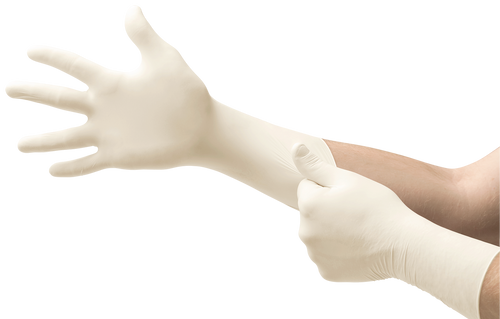
Ansell 92-600 TouchNTuff Nitrile Gloves

$17.39
SKU: 92-600 7 - 10 Business Days
(No reviews yet)
Availability:
7 - 10 Business Days
Shipping:
Calculated at Checkout

Ansell TouchNTuff 92-600 Nitrile Chemical Splash Protection Gloves

Ansell TouchNTuff® 92-600 is a green, powder-free, disposable nitrile glove designed to provide enhanced chemical splash protection for laboratory, industrial manufacturing, maintenance, food-processing, and chemical-handling applications. Manufactured using Ansell's TNT™ Chemical Splash Resistance Technology, these gloves combine a flexible nitrile barrier with a smooth external surface, standard-length beaded cuff, and silicone-free construction.

TouchNTuff 92-600 gloves are manufactured without natural rubber latex and provide a soft, comfortable fit for tasks requiring frequent glove changes and controlled handling. Their silicone-free composition is particularly useful in paint, coating, finishing, and other applications where silicone contamination may contribute to surface defects.

The 92-600 is classified by Ansell as a disposable chemical splash protection glove. It is not a sterile cleanroom glove and should not be selected for prolonged chemical immersion, chemotherapy-drug exposure, or critical aseptic operations without separate documented qualification.

Important purchasing note: Ansell's currently accessible U.S. manufacturer technical sheet reports a 1.5 AQL at Inspection Level I, while an earlier SOS-hosted technical sheet reports regional AQL values of 4.0 and 1.5. Published palm and finger thickness values also differ between these documents. These differences require manufacturer confirmation for the actual product sizes and lots being supplied. Packaging also varies by size: XS–XL are listed at 100 gloves per box and 1,000 per case; XXL is listed at 90 per box and 900 per case.

Specifications:
  • Manufacturer: Ansell
  • Brand / Product: TouchNTuff® 92-600
  • Product Type: Disposable nitrile chemical splash protection gloves
  • Material: Nitrile
  • Color: Green
  • Powder: Powder-free
  • Natural Rubber Latex: Not made from natural rubber latex
  • Silicone-Free: Yes
  • External Surface: Smooth
  • Cuff Style: Standard-length beaded cuff
  • Glove Length: 240 mm (9.45") typical
  • Palm Thickness: 0.125 mm (4.92 mil) typical, per the reviewed 2025 Ansell U.S. technical sheet; earlier regional sheet reports 0.12 mm
  • Finger Thickness: 0.14 mm (5.5 mil) typical, per the reviewed 2025 Ansell U.S. technical sheet; earlier regional sheet reports 0.16 mm
  • Thickness Measurement Reference: ASTM D3767 / EN 420, as identified in the manufacturer technical sheet
  • Freedom from Holes: 1.5 AQL, Inspection Level I, per the reviewed 2025 U.S. technical sheet; regional and inventory-lot applicability requires confirmation
  • AQL Testing Reference: ASTM D5151 / EN 455-1
  • Antistatic: Yes, EN1149 manufacturer designation
  • Sterile: No
  • Tested for Chemotherapy Drugs: No
  • Available Manufacturer Sizes: XS, S, M, L, XL, XXL
  • XS–XL Packaging: 100 gloves per dispenser; 10 dispensers per case; 1,000 gloves per case
  • XXL Packaging: 90 gloves per dispenser; 10 dispensers per case; 900 gloves per case
  • Protection Classification: Category III PPE, with applicable manufacturer-published chemical protection certifications
  • Primary Applications: Chemical splash handling, laboratory work, industrial maintenance, food processing, and manufacturing

Specification qualification: Physical properties represent manufacturer-published typical values, not guaranteed measurements for every individual glove. Regional variants, product codes, and supplied production lots must be confirmed before using a particular AQL or thickness value in a controlled procurement or qualification specification.

About the Manufacturer:

Ansell is a global manufacturer of protective gloves and personal protective equipment for laboratory, industrial, healthcare, food-processing, chemical-handling, and controlled-environment applications. Its product portfolio includes disposable nitrile gloves, reusable chemical-resistant gloves, specialized cleanroom gloves, and protective equipment engineered for different levels of occupational exposure.

The TouchNTuff® product family focuses on disposable hand protection for chemical splash and general industrial handling applications. Ansell's TNT™ Chemical Splash Resistance Technology is intended to improve the chemical splash resistance of its designated glove products while maintaining the flexibility and dexterity associated with disposable nitrile construction.

SOSCleanroom provides Ansell protective glove products and purchasing assistance for industrial, laboratory, and contamination-control environments. Our team supports product identification, glove configuration selection, case quantity verification, and requests for applicable manufacturer technical documentation.

TouchNTuff 92-600 Features:
  • Disposable nitrile construction for chemical splash protection applications
  • Ansell TNT™ Chemical Splash Resistance Technology
  • Green material for product identification in laboratory and industrial environments
  • Powder-free construction
  • Manufactured without natural rubber latex
  • Silicone-free formulation for sensitive finishing and coating applications
  • Smooth external glove surface
  • Standard-length beaded cuff
  • Soft nitrile material designed for comfort and dexterity
  • Manufacturer-published EN ISO 374 chemical protection classification
  • Manufacturer-published EN388 abrasion level 1 performance
  • Antistatic designation under EN1149
  • Nonsterile packaging for general industrial and laboratory use
  • Size-dependent dispenser and case quantities
TouchNTuff 92-600 Benefits:
  • Chemical splash resistance: Designed for tasks where intermittent exposure to compatible liquid chemicals may occur.
  • Comfort during routine work: Flexible nitrile supports dexterity for laboratory procedures, material handling, and industrial tasks.
  • Reduced latex allergy concerns: Manufactured without natural rubber latex, avoiding exposure to natural rubber latex proteins associated with Type I latex allergy.
  • Silicone contamination control: Silicone-free construction helps minimize a potential source of defects in painting, coating, and finishing operations.
  • Convenient glove changes: Disposable packaging supports replacement after chemical contact, damage, or task transitions.
  • Improved handling control: A beaded cuff helps maintain cuff shape during donning and removal.
  • Published protection information: Manufacturer standards and technical specifications support documented risk assessments and glove selection.
  • Antistatic properties: Manufacturer EN1149 designation may support selected static-control requirements, subject to facility qualification.
  • Size selection: Multiple available sizes help accommodate different users and reduce poor-fit handling risks.
Current AQL and Thickness Verification

AQL, or Acceptable Quality Limit, is a statistical measure associated with lot inspection for defects such as pinholes. It is not a guarantee that each individual glove is free from defects and should not be interpreted as a chemical breakthrough rating.

Two accessible Ansell technical documents report different values for TouchNTuff 92-600. These values should be maintained as distinct document claims until Ansell confirms the applicable production specifications for SOSCleanroom's current U.S. inventory.

  • 2025 Ansell U.S. technical sheet: Freedom from holes is listed as 1.5 AQL, Inspection Level I. Typical palm thickness is 0.125 mm and finger thickness is 0.14 mm.
  • Earlier SOS-hosted regional technical sheet: Freedom from holes is listed as 4.0 AQL for North and South America except Brazil, and 1.5 AQL for other listed regions including Brazil. Typical palm thickness is 0.12 mm and finger thickness is 0.16 mm.
  • AQL test references: ASTM D5151 and EN 455-1, as identified by the manufacturer.
  • Thickness test references: ASTM D3767 and EN 420, as identified by the manufacturer.
  • Current inventory applicability: The supplied size-specific manufacturer part numbers and lot documentation must be checked before either technical sheet is treated as controlling.

Quality assurance note: These discrepancies do not establish that the manufactured product changed. They may reflect different regional, production, or documentation specifications. Customers requiring a defined AQL or thickness for regulated purchasing should obtain written manufacturer confirmation and applicable lot documentation before qualification.

Size-Specific Case Counts and Ordering Information

Ansell TouchNTuff 92-600 packaging varies by glove size. When selecting a box or case quantity, customers should verify both the glove size and the number of gloves supplied within that configuration.

  • Extra Small (XS): 100 gloves per dispenser; 1,000 gloves per standard case
  • Small (S): 100 gloves per dispenser; 1,000 gloves per standard case
  • Medium (M): 100 gloves per dispenser; 1,000 gloves per standard case
  • Large (L): 100 gloves per dispenser; 1,000 gloves per standard case
  • Extra Large (XL): 100 gloves per dispenser; 1,000 gloves per standard case
  • Double Extra Large (XXL): 90 gloves per dispenser; 900 gloves per standard case

The manufacturer also identifies separate vending-pack configurations for selected sizes. Those packages should not be assumed equivalent to the standard dispenser and case quantities listed above.

Ordering guidance: Select the required size and purchase unit before checkout. XXL contains 10% fewer gloves per standard dispenser and case than XS–XL. Verify the exact manufacturer part number, packaging, and current availability when setting up blanket orders, recurring purchases, or controlled purchasing programs.

Chemical Splash Protection vs. Prolonged Chemical Exposure

Disposable nitrile gloves can provide useful protection against incidental chemical splashes, but chemical resistance is not universal. The suitability of TouchNTuff 92-600 depends on the specific substance, its concentration, the temperature of the chemical, the duration and type of exposure, and the mechanical demands of the task.

Chemical exposure may occur through degradation, permeation, or penetration. These mechanisms must be considered independently when selecting protective gloves.

  • Incidental splash: Brief, unintended chemical contact may be appropriate for the glove when supported by the manufacturer's chemical resistance data and the facility risk assessment.
  • Repeated splash exposure: Repeated wetting or chemical contact may require more frequent glove changes or a different glove design.
  • Prolonged contact: Continuous contact or immersion can exceed the protection provided by a disposable glove and may require a reusable, thicker, or specialized chemical-resistant construction.
  • Permeation: Some chemicals can migrate through glove material without visible damage. Permeation performance must be evaluated using data for the specific chemical and test conditions.
  • Degradation: Swelling, tackiness, softening, stiffening, or loss of strength may indicate chemical incompatibility.
  • Temperature: Elevated chemical temperatures can change permeation behavior and material performance.
  • Mixtures: Chemical mixtures may behave differently from individually tested substances.
  • Mechanical stress: Stretching, abrasion, puncture hazards, and repeated movement may reduce effective protection.

Selection requirement: Consult Ansell's current chemical permeation and degradation data for the exact substance and concentration. Do not interpret EN ISO 374 markings as proof of protection against every chemical or as permission for unlimited contact time.

Common Applications:
  • General laboratory analysis and sample handling
  • Handling compatible chemicals where incidental splashes may occur
  • Industrial liquid and solid material transfer
  • Food-processing tasks requiring appropriate disposable hand protection
  • Equipment maintenance and routine industrial servicing
  • Automotive production and assembly operations
  • Paint, coating, and finishing processes where silicone-free gloves are specified
  • Laboratory preparation and controlled dispensing procedures
  • General manufacturing support tasks
  • Cleaning and maintenance activities involving compatible chemicals

Application limitation: Suitability must be evaluated for the actual exposure conditions. TouchNTuff 92-600 is nonsterile and is not represented as an ISO-classified cleanroom glove, sterile aseptic glove, chemotherapy-tested glove, or general-purpose immersion glove.

Silicone-Free Nitrile Gloves and Surface Contamination Control

Silicone compounds can interfere with certain coatings, adhesives, and finishing processes by contributing to wetting problems, surface defects, or localized contamination. For facilities using silicone-sensitive materials, glove selection may be an important part of the contamination-control program.

Ansell identifies TouchNTuff 92-600 as silicone-free, making it a practical candidate for tasks involving sensitive coatings and finishing operations when the glove's other material and cleanliness characteristics are suitable.

  • Paint and coating operations: Silicone-free gloves help minimize a potential source of contamination associated with coating defects.
  • Precision handling: Smooth nitrile gloves may be suitable for selected operations involving components requiring clean handling.
  • Adhesive processes: Silicone-sensitive bonding workflows may benefit from selecting gloves without intentionally added silicone.
  • Facility qualification: Evaluate glove residues, handling practices, and packaging cleanliness when contamination sensitivity is critical.

Important distinction: Silicone-free does not mean particle-free, extractable-free, sterile, or cleanroom processed. Applications with stringent surface cleanliness requirements should use gloves qualified to the facility's actual contamination limits.

Standards and Protection Classifications

Ansell publishes protective equipment classifications for TouchNTuff 92-600 that support occupational safety and product selection. These designations must be interpreted within their specific test scopes.

  • Category III PPE: Manufacturer-designated protective equipment classification for applicable regulated hazards.
  • EN ISO 374-1:2016 Type B (JKPT): Chemical protection classification based on defined standardized chemical testing, not universal resistance to all chemicals.
  • EN ISO 374-5:2016 (Virus): Manufacturer-listed microorganism and viral penetration protection classification under the identified standard.
  • EN 388:2016 (1XXXX): Manufacturer-reported mechanical protection classification including abrasion level 1.
  • EN ISO 21420:2020: General requirements and test methods for protective gloves.
  • EN1149: Manufacturer-reported antistatic designation; suitability for specific ESD-control programs requires separate evaluation.
  • Food Contact: Manufacturer-listed U.S. and EU food-contact conformity information is available for applicable applications and conditions.
  • ISO 9001: Manufacturer-listed quality management system reference; it does not establish ISO cleanroom compatibility.

Regulatory clarification: Chemical resistance, microorganism penetration resistance, food-contact suitability, and electrostatic properties are separate qualification characteristics. No single certification establishes suitability for every chemical, biological, cleanroom, or manufacturing application.

Best-Practice Use:
  • Select the correct size: Choose a glove that fits securely without excessive stretching, restricted movement, or loose fingertips.
  • Check chemical compatibility: Review the manufacturer's chemical protection information before starting any task involving chemical exposure.
  • Inspect before use: Check for punctures, tears, visible defects, damage, and compromised packaging.
  • Use appropriate hand hygiene: Wash and dry hands in accordance with facility procedures before donning gloves.
  • Avoid excessive exposure: Do not use disposable splash protection gloves for extended immersion unless specifically validated for the chemical and exposure conditions.
  • Replace after contamination: Remove and replace gloves following a chemical splash or other event when the facility procedure or compatibility assessment requires it.
  • Monitor glove condition: Replace gloves showing swelling, softening, tackiness, discoloration, punctures, or other signs of deterioration.
  • Prevent cross-contamination: Change gloves before handling clean materials, laboratory samples, sensitive parts, or products that must remain free of process residues.
  • Remove carefully: Follow approved doffing techniques to minimize skin contact with potentially contaminated outer glove surfaces.
  • Dispose properly: Discard used gloves according to the chemicals handled, facility waste classification, and applicable regulations.
Selection Notes (92-600 vs. Other Glove Options)
  • TouchNTuff 92-600 vs. MICROFLEX 93-260: The 92-600 is a disposable nitrile glove positioned for chemical splash protection. MICROFLEX 93-260 uses a three-layer chemical-resistant construction and an extended cuff for different chemical handling requirements. Select based on tested chemical compatibility, task conditions, and protection needs.
  • TouchNTuff 92-600 vs. Nitrilite 93-311: The 92-600 is a nonsterile industrial/laboratory splash protection glove. Nitrilite 93-311 is a cleanroom-oriented nitrile glove intended for different contamination-control requirements. These products should not be treated as direct equivalents.
  • Nitrile vs. latex: Nitrile eliminates natural rubber latex proteins but chemical resistance and material performance must still be evaluated for the intended exposure.
  • Disposable vs. reusable chemical gloves: Disposable nitrile may be suitable for qualified intermittent splash tasks. Prolonged, repeated, or high-volume chemical exposure may require a reusable glove with documented permeation performance.
  • Nonsterile vs. sterile gloves: 92-600 is nonsterile. Sterile processing applications require separately qualified sterile gloves appropriate to the procedure.
  • Silicone-free vs. cleanroom-qualified: Silicone-free construction can help with selected surface contamination concerns, but does not establish particulate, ionic, extractable, or microbial cleanliness performance.
Storage and Handling:
  • Storage environment: Keep in a cool, dry location according to manufacturer instructions.
  • Sunlight exposure: Protect from direct sunlight.
  • Ozone and ignition sources: Store away from sources of ozone or ignition as identified in Ansell's technical documentation.
  • Packaging protection: Keep dispensers clean and dry; minimize contamination during receiving, storage, and dispensing.
  • Product rotation: Follow applicable manufacturer shelf-life or package-expiration requirements when provided.
  • Before use: Inspect the glove and verify that its size, packaging, and applicable technical specifications match the intended procedure.

Link to Ansell TouchNTuff 92-600 Manufacturer Product Page:
Click Here

Link to Ansell 2025 U.S. Technical Data Sheet: Click Here

Link to SOS-Hosted Ansell 92-600 Technical Data Sheet: Click Here

Link to Ansell 92-600 EU Declaration of Conformity: Click Here

Link to Ansell 92-600 UK Declaration of Conformity: Click Here

Link to Ansell 92-600 Food Declaration of Product Conformity: Click Here

Other Similar Products Available From SOSCleanroom.com

Ansell Chemical Protection Gloves

  • Ansell MICROFLEX 93-260: Three-layer disposable chemical-resistant glove with extended cuff for applications requiring a different chemical protection profile.

Ansell Cleanroom Nitrile Gloves

  • Ansell Nitrilite 93-311: Nonsterile cleanroom-oriented nitrile glove for applications requiring separately specified contamination-control characteristics.

Notes: Looking for additional chemical resistance guidance or qualification information for Ansell TouchNTuff 92-600 nitrile gloves? Open the SOSCleanroom Technical Vault tab above for educational information on glove chemical compatibility, permeation, degradation, AQL interpretation, applicable protection standards, and contamination-control considerations.

SOSCleanroom.com supports laboratory, industrial, and contamination-control programs with specialty protective gloves, competitive pricing, and responsive customer service. Our team can assist with product configuration, size-specific case quantities, and applicable manufacturer documentation inquiries.

Documentation clarification: Ansell's model-specific technical document bearing a 2025 copyright reports 1.5 AQL, 0.125 mm palm thickness, and 0.14 mm finger thickness. The earlier SOS-hosted technical document reports regional AQL differences and 0.12 mm palm / 0.16 mm finger thickness. Written confirmation of the controlling specification for currently supplied U.S. product lots remains necessary. A separate model-specific SDS, individual chemical permeation report, and lot-specific certificates were not independently confirmed during this review.

Product information reviewed: November 9, 2026 (SOS Technical Staff)

© 2026 Specialty Optical Systems, Inc. (dba SOSCleanroom). All rights reserved.

The Technical Vault By SOSCleanroom
Chemical Splash Protection Disposable Nitrile Non-Sterile Silicone-Free AQL & Thickness Verification Size-Specific Packaging

Ansell TouchNTuff™ 92-600: why chemical splash protection and glove selection must be evaluated together

Ansell TouchNTuff™ 92-600 is a green, powder-free, disposable nitrile glove designed for chemical splash protection in laboratory, industrial, chemical handling, manufacturing, and maintenance applications. It incorporates Ansell TNT™ Chemical Splash Resistance Technology and provides a flexible, non-sterile hand protection option for tasks requiring dexterity and a protective barrier against appropriately evaluated chemical exposures.

Operations takeaway: TouchNTuff 92-600 should be selected as part of a documented workplace hand protection program. Chemical identity, concentration, expected exposure time, temperature, glove condition, and manufacturer permeation data must all be considered. A general chemical splash protection claim does not establish suitability for prolonged immersion, continuous exposure, or every chemical encountered in a facility.


Chemical protection context: splash exposure versus prolonged chemical contact

Chemical protective gloves must be evaluated for the intended exposure conditions. TouchNTuff 92-600 is positioned for chemical splash protection, but the actual level of protection depends on both the glove material and the chemical being handled.

  • Incidental splash: Brief, unintended chemical contact that can be addressed through an appropriate protection and immediate glove-change procedure.
  • Repeated contact: Intermittent exposure that may increase cumulative chemical contact and permeation risk.
  • Prolonged contact: Extended exposure requiring chemical-specific resistance evaluation rather than assumptions based on general splash performance.
  • Continuous immersion: A substantially different exposure scenario that may require a heavier-duty glove and documented immersion suitability.
  • Chemical mixtures: Mixtures can behave differently from individual test chemicals and should not be considered validated by a single-component result.

Control point: Laboratory chemical breakthrough times do not automatically represent safe workplace wear times. Actual exposure, temperature, movement, mechanical stress, degradation, and operating procedures may require earlier glove replacement.


Specifications (SKU controls for RFQs, SOPs, and receiving)
  • Manufacturer: Ansell
  • Product: TouchNTuff™ 92-600
  • Product category: Disposable nitrile chemical splash protection glove
  • Material: Nitrile
  • Color: Green
  • Surface: Smooth
  • Powder: Powder-free
  • Cuff: Beaded
  • Silicone: Silicone-free formulation
  • Natural rubber latex: Not made from natural rubber latex
  • Sterility: Non-sterile
  • Glove length: Approximately 240 mm (9.45 inches), manufacturer-typical
  • Palm thickness: 0.125 mm (4.92 mil), per referenced Ansell U.S. technical data sheet
  • Finger thickness: 0.14 mm (5.5 mil), per referenced Ansell U.S. technical data sheet
  • Freedom from holes: AQL 1.5, inspection level I, per referenced Ansell U.S. technical data sheet
  • Available size range: XS through XXL, subject to regional and manufacturer part-number availability
  • Standard packaging, XS–XL: 100 gloves/box; 10 boxes/case; 1,000 gloves/case
  • Standard packaging, XXL: 90 gloves/box; 10 boxes/case; 900 gloves/case
  • Manufacturer-specific documentation: Current product data sheet, instructions for use, applicable chemical compatibility information, and regulatory declarations

Documentation rule: Published model specifications are not substitutes for the current manufacturer-approved documentation applicable to the delivered market, size, part number, and production lot. Existing SOSCleanroom AQL and thickness listings differ from the referenced Ansell U.S. data sheet and require written manufacturer reconciliation before universal acceptance criteria are established.


Current AQL and thickness verification (published specification differences)

Published SOSCleanroom specifications and the referenced Ansell U.S. product data sheet contain different numerical values for glove AQL and thickness. These differences should be identified during qualification rather than silently replacing existing regional values.

  • AQL reported in existing SOS specifications: 4.0 for North and South American supply, with regional exceptions; 1.5 for other specified regions.
  • AQL in referenced Ansell U.S. data sheet: 1.5, inspection level I.
  • Palm thickness reported by SOS: 0.12 mm.
  • Palm thickness in referenced Ansell data sheet: 0.125 mm.
  • Finger thickness reported by SOS: 0.16 mm.
  • Finger thickness in referenced Ansell data sheet: 0.14 mm.
  • Referenced measurement standards: ASTM D3767 / EN 420 for dimensional measurements, as identified in the manufacturer documentation.
  • Freedom-from-holes inspection: Referenced Ansell document identifies ASTM D5151 / EN 455-1 and inspection level I.
  • Resolution status: Written confirmation of applicable U.S. product codes, supply lots, regional specifications, and technical document revision remains required.

Understanding AQL: Acceptable Quality Limit (AQL) is associated with statistical sampling and batch acceptance criteria. A lower AQL represents a more stringent inspection acceptance level. It should not be interpreted as the precise percentage of defective gloves in an individual box or case.

Qualification caution: The reviewed manufacturer data sheet bears a 2025 copyright notice, but its distinct revision identifier and applicability to every current U.S. SOSCleanroom inventory lot have not been independently established. The differing published figures do not, by themselves, prove that Ansell changed the glove or that all regional supplies have identical specifications.


Size-specific case counts (ordering and consumption planning)

TouchNTuff 92-600 standard packaging is size-dependent. Purchasing teams should evaluate case quantities by the actual number of gloves supplied, particularly when comparing XXL requirements against smaller sizes.

  • Extra Small (XS): 100 gloves/box; 10 boxes/case; 1,000 gloves/case.
  • Small (S): 100 gloves/box; 10 boxes/case; 1,000 gloves/case.
  • Medium (M): 100 gloves/box; 10 boxes/case; 1,000 gloves/case.
  • Large (L): 100 gloves/box; 10 boxes/case; 1,000 gloves/case.
  • Extra Large (XL): 100 gloves/box; 10 boxes/case; 1,000 gloves/case.
  • Double Extra Large (XXL): 90 gloves/box; 10 boxes/case; 900 gloves/case.

XXL packaging control: The manufacturer-listed standard XXL case contains 900 gloves rather than 1,000. Buyers should verify the selected size, manufacturer part number, available dispensing configuration, and ordering unit before calculating price per glove or setting automated reorder quantities.


Chemical resistance characteristics and testing limitations

Ansell identifies TouchNTuff 92-600 for chemical splash protection and lists EN ISO 374-related chemical protection performance. These test classifications are useful screening tools, but glove suitability must be established for each specific application.

  • Permeation: Molecular movement of a chemical through the glove material, potentially occurring without visible damage.
  • Penetration: Passage of a chemical or substance through holes, defects, or physical discontinuities in the glove.
  • Degradation: Changes in the physical properties of glove material after chemical contact, including swelling, hardening, softening, or loss of strength.
  • Breakthrough time: A laboratory test result recorded under defined conditions; it does not automatically establish a safe wear interval.
  • EN ISO 374 Type B: Indicates qualification against the applicable minimum permeation performance for at least three designated test chemicals.
  • EN ISO 374 chemical code: Manufacturer documentation identifies JKPT; the marking should be checked against the current approved product documentation.
  • Concentration: Test results for one concentration do not necessarily apply to another concentration.
  • Temperature: Higher operating temperatures may change permeation behavior and material performance.
  • Mixtures: Performance against mixtures may differ from performance against the individual substances.

Chemical compatibility rule: Use manufacturer-provided chemical permeation and degradation information for the specific substance and test conditions. Do not infer suitability for an untested chemical from the presence of an EN ISO 374 marking or a broad chemical splash protection statement.


Standards and certifications (manufacturer-referenced)
  • EN ISO 374-1:2016 Type B: Manufacturer-listed chemical protective glove classification, with JKPT chemical marking.
  • EN ISO 374-5:2016: Manufacturer-listed protection against microorganisms, including applicable virus-related marking.
  • EN 388: Manufacturer-listed mechanical protective glove performance classification.
  • EN ISO 21420: General protective glove requirements.
  • Category III PPE: Manufacturer-listed personal protective equipment classification for serious risks under applicable regulations.
  • EN 1149: Manufacturer-listed antistatic characteristic; suitability for a specific ESD-control program requires separate evaluation.
  • Food-contact documentation: Manufacturer identifies applicable food-contact conformity information; review current declarations for the intended task and region.
  • ISO 9001: Manufacturer-listed quality management reference, not an individual glove performance certification.

Scope limitation: PPE standards, EN 1149 characteristics, and manufacturer quality system references do not automatically establish sterile status, ISO-classified cleanroom suitability, or validated chemotherapy-drug handling protection. Check the exact product markings, certificates, and instructions relevant to your application.


What TouchNTuff 92-600 is designed to do (typical use cases)
  • Laboratory sample preparation and general analysis where documented glove protection is appropriate
  • Handling and transferring chemicals under evaluated incidental splash conditions
  • Liquid transfer, dispensing, and mixing tasks where chemical compatibility has been established
  • Manufacturing operations requiring flexible disposable hand protection
  • Industrial cleaning and maintenance where selected chemicals are compatible with nitrile
  • Selected paint, coating, and finishing operations where silicone-free glove construction is advantageous
  • Selected food handling and processing applications supported by the appropriate manufacturer conformity documentation
  • Maintenance and inspection tasks involving oils, residues, or other substances compatible with the glove

Silicone-free benefit: A silicone-free formulation can help reduce one potential source of surface contamination in coating, painting, and finishing operations. Silicone-free construction does not establish the absence of all particles, extractables, or other residues.


Best-practice use (reduce chemical exposure, contamination, and glove failures)
  1. Identify the chemical: review the substance, concentration, safety data sheet, exposure route, and handling conditions.
  2. Confirm glove compatibility: evaluate available manufacturer chemical resistance, permeation, and degradation data before use.
  3. Select the correct size: avoid excessive stretching and loose fitting that may impair dexterity, grip, or protective integrity.
  4. Inspect before donning: check the glove for visible holes, tears, degradation, or other defects.
  5. Control exposure: minimize direct chemical contact and avoid unnecessary contact with contaminated surfaces.
  6. Follow defined change-out criteria: replace gloves after contamination, suspected breakthrough, physical damage, or when required by the facility procedure.
  7. Prevent cross-contamination: avoid transferring contaminants from glove surfaces to tools, controls, clean materials, or personnel.
  8. Remove gloves safely: use a removal method that limits contact between the contaminated glove exterior and exposed skin.
  9. Dispose correctly: follow the site's hazardous-material and waste-handling procedures when contamination requires special disposal.

Method standardization tip: For repetitive chemical handling activities, document the selected glove, chemical compatibility basis, expected exposure duration, change-out triggers, and disposal method. Consistent procedures are essential for reliable protection.


Misuse controls & when not to use TouchNTuff 92-600
  • If sterility is required: TouchNTuff 92-600 is non-sterile and should not be substituted for a documented sterile glove.
  • If ISO cleanroom qualification is required: do not assume the glove meets a specific ISO cleanroom class without supporting product-specific contamination data and facility approval.
  • If chemotherapy-drug protection is required: do not infer chemotherapy-drug resistance from general chemical protection claims or EN ISO 374 classification. Manufacturer documentation does not identify this model as chemotherapy-drug tested.
  • If prolonged immersion is expected: evaluate a glove specifically documented for the chemical and exposure duration.
  • If handling highly hazardous chemicals: verify substance-specific permeation, degradation, and protective equipment requirements before use.
  • If the glove is damaged: replace immediately rather than attempting continued use.
  • If an ESD-controlled process is involved: assess documented electrical properties against the facility's ESD program rather than relying only on an antistatic claim.
  • If low extractables or particle release are critical: require separately established contamination-control performance.

Important distinction: A disposable chemical splash glove and a cleanroom-qualified glove are not necessarily interchangeable. Chemical resistance, cleanliness, sterility, and electrostatic performance are separate selection considerations.


Cleanroom and contamination-control considerations

The suitability of TouchNTuff 92-600 within a controlled environment depends on the facility's material qualification requirements. The referenced manufacturer information supports its chemical splash protection positioning but does not independently establish a specific ISO cleanroom compatibility classification.

  • ISO 14644 context: Cleanroom classification applies to the controlled environment. It does not automatically certify individual glove products used within that environment.
  • Particle controls: Determine whether the process requires a cleanroom-processed glove with documented particle release performance.
  • Extractables: Evaluate ionic and nonvolatile residue requirements separately where relevant.
  • Sterile applications: A non-sterile glove does not become sterile because it is introduced into a controlled area.
  • Glove transfer: Follow facility-approved procedures for material introduction, dispensing, donning, and waste removal.
  • Documented suitability: Select a product with verified contamination and chemical performance appropriate to the process.

Contamination-control takeaway: Where particulate release, residue limits, sterile packaging, or ISO cleanroom suitability are critical, use a separately qualified cleanroom glove rather than assuming TouchNTuff 92-600 meets those specifications.


Storage, handling, and lot traceability

Store unopened TouchNTuff 92-600 gloves according to current manufacturer instructions and packaging labeling, in a suitable clean and dry location away from conditions that may degrade glove performance.

  • Storage environment: Avoid direct sunlight, excessive heat, ozone exposure, and other identified degradation conditions.
  • Packaging integrity: Inspect shipping and dispenser packaging for damage or contamination before use.
  • Lot identification: Retain manufacturing lot or batch information when required for qualification, traceability, or investigations.
  • Manufacturer part number: Verify the exact size-specific product code on the supplied packaging.
  • Quantity verification: Confirm the number of gloves per dispenser and case, particularly for XXL.
  • Document version: Maintain the applicable manufacturer specification and instruction revision when required by the quality system.
  • Certificates: Request lot-specific certificates or declarations when required for regulated receiving procedures.

Receiving control: Product name alone is insufficient for a fully controlled glove purchasing program. Record size, manufacturer code, packaging quantity, production lot, and applicable technical documentation where required.


Why buy Ansell TouchNTuff™ 92-600 from SOSCleanroom
  • Product identification support: SOSCleanroom helps customers identify the requested Ansell glove model, size, and ordering configuration.
  • Packaging awareness: Understanding standard XS–XL and XXL case counts helps procurement teams maintain accurate ordering and consumption estimates.
  • Technical documentation support: Manufacturer specifications and chemical compatibility information can be used to guide product evaluation and qualification requests.
  • Program purchasing: Repeat glove requirements can be coordinated with other workplace PPE and facility consumables.
  • Application-focused selection: Customers can evaluate chemical protection requirements alongside glove sizing, cleanliness expectations, and task-specific safety procedures.

Manufacturer documentation (authoritative references)
  • SOSCleanroom Ansell TouchNTuff 92-600 product page: Click Here
  • Official Ansell TouchNTuff 92-600 product information: Click Here
  • Ansell TouchNTuff 92-600 Product Data Sheet: Click Here
  • Ansell chemical protective glove selection resources: Click Here

Manufacturer documentation status: The referenced Ansell product data sheet carries a 2025 copyright notice. A distinct revision identifier and applicability to every current U.S. SOSCleanroom supply lot have not been independently confirmed. Chemical-specific permeation reports, complete instructions for use, and required lot-level certificates should be obtained and evaluated where the intended process requires them.


Technical qualification and purchasing questions
  • Is the AQL 1.5 or 4.0? The referenced Ansell U.S. data sheet reports 1.5 at inspection level I. Existing SOS specifications identify different regional values. Confirm the specification applicable to the actual supplied product and lot.
  • Do all case sizes contain 1,000 gloves? No. The manufacturer-listed standard XXL case contains 900 gloves; XS through XL contain 1,000 gloves per standard case.
  • Can the glove be used for chemical immersion? Do not assume suitability. Evaluate chemical-specific permeation, degradation, and required exposure duration.
  • Is the glove sterile? No. TouchNTuff 92-600 is a non-sterile product.
  • Is the glove ISO cleanroom certified? A specific ISO cleanroom compatibility classification has not been established in the referenced documentation.
  • Is it suitable for chemotherapy-drug handling? The referenced manufacturer information does not establish chemotherapy-drug testing for this model.
  • What is the benefit of silicone-free nitrile? It helps avoid intentionally incorporating silicone into the glove formulation, which can be useful in coating and finishing applications sensitive to silicone contamination.
  • What information should be included in an RFQ? Identify TouchNTuff 92-600, requested size and manufacturer code, ordering quantity, applicable pack configuration, required regional specification, and any qualification documents.

Technical insight: The most important purchasing and safety distinctions for TouchNTuff 92-600 are its disposable chemical splash protection purpose, non-sterile construction, chemical-specific exposure limits, regional specification verification, and the difference between XXL and smaller-size case quantities.


Technical Vault Disclaimer

This Technical Vault entry is intended to support product evaluation, purchasing, laboratory operations, workplace PPE selection, and chemical handling education. It does not replace manufacturer instructions, workplace hazard assessments, chemical safety data sheets, permeation and degradation testing, facility standard operating procedures, regulatory requirements, or product qualification. Published specifications may vary by region, manufacturer part number, document revision, and production lot. Confirm current manufacturer documentation, chemical compatibility, glove dimensions, AQL, and packaging configuration before adopting this product for a controlled or safety-critical application.


If you have any questions please email us at Sales@SOSsupply.com or give us a call at (214)340-8574. OR check out the AI ChatBot powered by SOSCleanroom data libraries - give it a try! THIS IS NEW FOR 2026! © 2026 SOSCleanroom. All rights reserved.