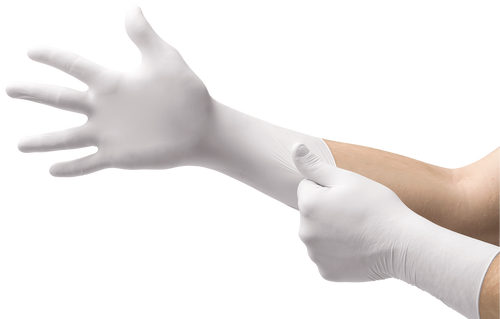
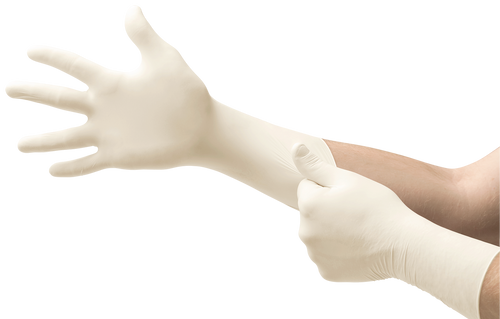
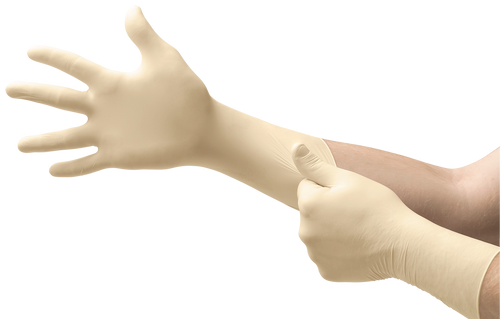
Ansell 69-318 Glove TouchNTuff Latex

$107.88
SKU: 69-318 7 - 10 Business Days
(No reviews yet)
Availability:
7 - 10 Business Days
Shipping:
Calculated at Checkout

Ansell TouchNTuff 69-318 Fully Textured Latex Exam Gloves

Ansell TouchNTuff® 69-318 is a lightweight, powder-free natural rubber latex glove designed for comfortable handling, enhanced tactile sensitivity, and secure grip during laboratory, food-processing, inspection, and general industrial applications. Its soft, elastic latex construction conforms closely to the hand, while the fully textured exterior helps operators control small objects, tools, instruments, and containers during repetitive tasks.

TouchNTuff 69-318 features a standard-length beaded cuff, natural latex color, and a thin glove profile that supports precision handling. Ansell's current U.S. technical data identifies a nominal palm thickness of 0.14 mm (5.5 mil), finger thickness of 0.17 mm (6.7 mil), 240 mm (9.45") glove length, and 1.5 AQL for freedom from holes at Inspection Level I.

The gloves are manufactured for multipurpose applications including food handling, sample collection, testing, and compatible maintenance tasks. Manufacturer documentation identifies the product as silicone-free and nonsterile, with applicable food-contact and chemical protection classifications. Final selection must account for natural latex sensitivity, chemical exposure, mechanical hazards, and facility contamination-control requirements.

Natural rubber latex allergy warning: This product contains natural rubber latex, which may cause allergic reactions, including Type I immediate hypersensitivity in sensitized individuals. Do not use this product where latex-free hand protection is required. Powder-free does not mean latex-free. Select a qualified synthetic alternative for latex-sensitive operators, patients, or facilities.

Specification and selection note: The current Ansell 69-318 product sheet specifies fully textured construction, 0.14 mm palm thickness, and 0.17 mm finger thickness. An older Ansell 69-318-NA sheet reports textured fingers and 0.12/0.14 mm thickness. Confirm the actual product code and applicable manufacturer documentation before using either specification for controlled purchasing. Standard manufacturer packaging is 100 gloves per dispenser and 1,000 gloves per case.

Specifications:
  • Manufacturer: Ansell
  • Brand: TouchNTuff®
  • Manufacturer Model: 69-318
  • Product Type: Lightweight, disposable latex examination and multipurpose protective glove
  • Material: Natural rubber latex
  • Color: Natural
  • Powder Content: Powder-free
  • External Glove Surface: Fully textured, per current Ansell 69-318 documentation
  • Cuff Style: Standard-length beaded cuff
  • Glove Length: 240 mm (9.45") typical
  • Palm Thickness: 0.14 mm (5.5 mil) typical, per current Ansell 69-318 technical data
  • Finger Thickness: 0.17 mm (6.7 mil) typical, per current Ansell 69-318 technical data
  • Thickness Testing References: ASTM D3767 / EN 420
  • Freedom from Holes: 1.5 AQL, Inspection Level I
  • AQL Testing References: ASTM D5151 / EN 455-1
  • Elongation at Break: At least 650% before aging and 500% after aging, per manufacturer technical data
  • Sterile: No
  • Silicone-Free: Yes, manufacturer-designated
  • Antistatic: Not tested
  • Chemotherapy Drug Testing: No, according to Ansell
  • Manufacturer-Listed Sizes: XS, S, M, L, XL
  • Standard Packaging: 100 gloves per dispenser; 10 dispensers per case; 1,000 gloves per case
  • Country of Origin: Malaysia, per reviewed manufacturer technical data; confirm labeling for the actual supplied lot where required
  • Manufacturer Product Segmentation: Multi-Purpose
  • Food Contact: Manufacturer-listed U.S. and EU food-contact conformity for applicable conditions of use
  • Primary Applications: Food processing, sample collection, laboratory testing, inspection, and compatible light maintenance tasks

Specification control: Published material measurements are typical reference values, not guaranteed minimum dimensions for each glove. The manufacturer documentation applicable to the supplied product code and lot should be confirmed when thickness, texture, size, or material properties are controlled purchasing requirements.

About the Manufacturer:

Ansell is a global manufacturer of hand protection and personal protective equipment serving healthcare, life sciences, food processing, laboratory operations, chemical handling, and industrial manufacturing. Its protective glove portfolio includes disposable latex and nitrile gloves, reusable chemical-resistant gloves, cleanroom gloves, and specialized protective equipment for different occupational hazards.

The TouchNTuff® product family offers disposable hand protection designed for a range of laboratory, food-processing, and industrial applications. TouchNTuff 69-318 emphasizes thin, elastic latex construction, tactile sensitivity, and fully textured grip for tasks requiring frequent manipulation of smaller objects and equipment.

SOSCleanroom provides Ansell protective gloves and purchasing support for laboratories, food-processing facilities, manufacturing operations, and contamination-control programs. Our team assists with glove material selection, case configurations, manufacturer documentation, and product identification for recurring purchasing requirements.

TouchNTuff 69-318 Features:
  • Lightweight natural rubber latex construction
  • Soft, elastic material designed for comfortable fit and tactile response
  • Fully textured exterior, per current exact-model manufacturer documentation
  • Powder-free design
  • Standard-length beaded cuff
  • 240 mm nominal glove length
  • 0.14 mm typical palm thickness
  • 0.17 mm typical finger thickness
  • 1.5 AQL freedom-from-holes classification
  • Manufacturer-designated silicone-free construction
  • Manufacturer-listed EN ISO 374 chemical protection classification
  • Manufacturer-listed U.S. and EU food-contact conformity
  • Nonsterile configuration
  • Standard 100-glove dispensers and 1,000-glove cases
TouchNTuff 69-318 Benefits:
  • Tactile sensitivity: Lightweight latex construction allows responsive handling of small components, sample containers, and delicate instruments.
  • Flexible fit: Natural rubber latex elasticity helps the glove conform to the hand during precision tasks.
  • Fully textured grip: Texture across the exterior provides a gripping surface beyond fingertip-only textured designs.
  • Comfort during repetitive work: Thin, flexible material supports frequent hand movements and repeated handling.
  • Powder-free handling: Avoids intentionally added glove powder and associated powder transfer.
  • Food-processing versatility: Manufacturer-listed food-contact conformity supports selection for appropriate food-processing procedures.
  • Published quality reference: The 1.5 AQL specification provides a standardized freedom-from-holes inspection reference.
  • Silicone-sensitive applications: Silicone-free construction may be useful in selected processes where silicone contamination is restricted.
  • Efficient procurement: Standardized 1,000-glove cases support routine replenishment and recurring purchasing.
0.14 / 0.17 mm Thickness Verification

Ansell's current TouchNTuff 69-318 technical data identifies a typical palm thickness of 0.14 mm (5.5 mil) and finger thickness of 0.17 mm (6.7 mil). Earlier Ansell documentation associated with the 69-318-NA designation reports different physical and texture specifications.

  • Current 69-318 palm thickness: 0.14 mm (5.5 mil) typical.
  • Current 69-318 finger thickness: 0.17 mm (6.7 mil) typical.
  • Current 69-318 exterior: Fully textured.
  • Earlier 69-318-NA palm thickness: 0.12 mm (4.7 mil) typical.
  • Earlier 69-318-NA finger thickness: 0.14 mm (5.5 mil) typical.
  • Earlier 69-318-NA exterior: Textured fingers.
  • Measurement methods: Manufacturer-listed ASTM D3767 and EN 420.

Product qualification: Differences between published specifications may reflect model variants, documentation changes, or production configurations. They should not be treated as proof of a universal product change. Confirm the supplied manufacturer's exact product code, applicable technical sheet, and lot information before updating a controlled material specification.

Fully Textured vs. Fingertip-Textured Glove Surfaces

Surface texture can influence grip during work involving small tools, laboratory instruments, sample containers, packaging, and other objects. Gloves may use texture on the fingertips, fingers, palm, or a larger portion of the external surface.

Current Ansell documentation identifies TouchNTuff 69-318 as fully textured. This configuration provides a textured surface beyond the fingertips, whereas fingertip-textured alternatives concentrate the texture in the areas most frequently used for precision pinching and gripping.

  • Fully textured surface: Provides additional textured contact area across the glove exterior.
  • Fingertip-textured surface: Concentrates texture near the fingertips for precise manipulation and gripping.
  • Tactile response: Glove thickness, fit, elasticity, and texture together influence the user's handling experience.
  • Wet handling: Texture can support grip, but suitability depends on the substance present on the glove and the object being handled.
  • Grip qualification: A textured design does not establish universal performance with oily, chemically contaminated, or highly slippery objects.
  • Material limitations: Texturing does not independently increase puncture protection, cut resistance, or chemical barrier performance.

Selection guidance: Choose glove texture according to the actual handling task, object geometry, surface conditions, required dexterity, and any applicable safety or contamination-control requirements.

Confirm Available Size MPNs and Case Quantities

Ansell identifies sizes XS through XL in the current TouchNTuff 69-318 product information. The manufacturer technical data sheet includes the following ordering codes for the standard published configuration:

  • Small (S), 6.5–7: 6931800S
  • Medium (M), 7.5–8: 6931800M
  • Large (L), 8.5–9: 6931800L
  • Extra Large (XL), 9.5–10: 693180XL
  • Extra Small (XS), 5.5–6: Manufacturer lists this size, but a corresponding code is not provided in the reviewed U.S. PDS ordering table.

Standard case configuration:

  • 100 individual gloves per dispenser
  • 10 dispenser boxes per case
  • 1,000 individual gloves per case
  • Packaging applies to the manufacturer-listed standard configuration

Additional size verification: The reviewed current Ansell U.S. ordering table does not establish XXL or XXXL manufacturer codes for this exact model. If a supplier lists larger sizes, confirm whether they represent a different product, regional configuration, or alternate ordering code before treating them as interchangeable with standard 69-318.

Natural Rubber Latex Allergy and Use Limits

Natural rubber latex contains proteins that may cause allergic reactions in sensitized individuals. Although TouchNTuff 69-318 is powder-free, the glove still contains natural rubber latex and is not suitable for environments requiring latex-free hand protection.

  • Type I latex allergy: Latex proteins may cause immediate hypersensitivity reactions in individuals with latex sensitivity.
  • Latex-restricted facilities: Select a qualified synthetic alternative where natural rubber latex is prohibited.
  • Operator sensitivity: Personnel with known or suspected latex allergy should follow occupational health guidance and use appropriate latex-free products.
  • Patient and product exposure: Consider indirect contact with patients, foods, medical equipment, shared tools, and other materials.
  • Powder-free distinction: Powder-free construction does not eliminate natural rubber latex protein exposure.
  • Protective limitations: Latex elasticity and grip do not establish resistance to all chemicals, mechanical hazards, or biological exposures.
  • Selection alternatives: Synthetic nitrile or other latex-free materials may be appropriate depending on chemical compatibility, dexterity, and facility requirements.

Safety warning: Do not use TouchNTuff 69-318 where natural rubber latex allergy precautions require avoidance. If an allergic reaction is suspected, stop use and follow facility medical and occupational health procedures.

Chemical Contact and Protection Limitations

Ansell publishes EN ISO 374-1 Type B chemical protection information for TouchNTuff 69-318. However, chemical resistance must be evaluated for the exact substance and working conditions. The classification does not mean that a thin disposable latex glove is suitable for unlimited chemical exposure or prolonged immersion.

  • Chemical identification: Verify the specific substance, concentration, and relevant safety data information before use.
  • Incidental splash: Brief contact may be acceptable only when supported by substance-specific manufacturer evidence and the workplace assessment.
  • Repeated contact: Repeated wet exposure can increase chemical loading and may require a different glove or more frequent replacement.
  • Permeation: Chemicals may move through intact glove material without visible deterioration.
  • Breakthrough time: Standardized test results are measured under controlled laboratory conditions and are not automatically permissible workplace exposure times.
  • Degradation: Swelling, tackiness, softening, cracking, or loss of strength can indicate incompatibility.
  • Chemical temperature: Elevated temperatures may alter permeation and material performance.
  • Oils and solvents: Natural latex is not universally compatible with industrial oils, fuels, and solvents.
  • Immersion: Continuous or prolonged chemical contact may require a specialized chemical-resistant glove.
  • Chemotherapy drugs: Ansell does not identify 69-318 as tested for chemotherapy drug use.

Selection guidance: Consult the applicable Ansell chemical permeation and degradation data before exposing the glove to chemicals. Do not interpret the material description or EN ISO 374 classification as universal chemical compatibility.

Common Applications:
  • Food processing and handling under applicable food-contact conditions
  • Meat, fish, and secondary food-processing operations
  • Laboratory sample collection and handling
  • Routine testing and bench procedures requiring tactile sensitivity
  • Handling small instruments, tools, and sample containers
  • Life sciences support and general laboratory activities
  • Material inspection and component identification
  • General-purpose manufacturing support
  • Vehicle maintenance involving compatible substances
  • Light equipment servicing and inspection
  • Handling tasks requiring a thin latex glove with fully textured grip

Application limitation: These examples are subject to natural latex restrictions, chemical compatibility, applicable hygiene requirements, and task-specific hazard assessments. Food-contact conformity does not establish universal chemical or mechanical protection.

Best-Practice Use:
  • Confirm latex acceptance: Verify that natural rubber latex is permitted under the facility's PPE and allergy prevention requirements.
  • Select the proper size: Choose a glove that fits securely without excessive stretching or loose fingertips.
  • Inspect before use: Check for tears, holes, discoloration, damaged cuffs, or other material defects.
  • Use clean, dry hands: Follow facility hand hygiene procedures before donning gloves.
  • Don carefully: Avoid excessive pulling or stretching that may damage the cuff or glove material.
  • Check chemical compatibility: Confirm manufacturer test evidence before anticipated chemical exposure.
  • Limit contamination: Avoid unnecessary contact with non-controlled surfaces, packaging, and unrelated equipment.
  • Change after contamination: Replace gloves after exposure, suspected damage, or task changes as required by the facility procedure.
  • Inspect during work: Remove gloves if they become torn, tacky, swollen, softened, or otherwise compromised.
  • Avoid reuse: Disposable gloves should not be washed or reused unless a specific approved procedure explicitly supports such practice; routine reuse is not recommended.
  • Doff safely: Remove gloves without touching potentially contaminated exterior surfaces with bare skin.
  • Dispose appropriately: Follow applicable facility requirements for food-processing, laboratory, biological, or chemical waste.
Nonsterile Latex Gloves vs. Cleanroom-Qualified Gloves

TouchNTuff 69-318 is a nonsterile, multipurpose natural rubber latex glove. The manufacturer lists chemical protection and food-contact certifications, but these do not establish ISO-classified cleanroom cleanliness or sterile suitability.

  • Sterility: 69-318 is nonsterile and is not supplied as a sterile aseptic glove.
  • ISO cleanroom requirements: No ISO cleanroom cleanliness classification should be inferred from food-contact or chemical protection certification.
  • Particle cleanliness: Particle release and surface cleanliness require separate supporting data where critical.
  • Extractables: Residue, ionic contamination, and other extractable limits must be evaluated for the intended process.
  • Packaging: Standard glove dispensers do not automatically satisfy cleanroom-processed or sterile packaging requirements.
  • Antistatic and ESD: The manufacturer identifies antistatic performance as not tested; suitability for ESD-controlled processes has not been established.
  • Aseptic operations: Critical sterile manipulation requires appropriately qualified sterile gloves and approved gowning procedures.

Selection guidance: For critical controlled-environment work, use gloves documented to satisfy the site's specific cleanliness, packaging, sterility, chemical compatibility, and gowning requirements.

Standards and Protection Classifications

Ansell publishes protective glove and food-contact classifications for TouchNTuff 69-318. Each designation applies to defined performance or regulatory requirements and must not be generalized beyond its scope.

  • Category III PPE: Manufacturer-listed protective equipment classification under the applicable European framework.
  • EN ISO 374-1:2016 Type B (KPT): Chemical protection classification based on standardized tests for specified substances.
  • EN ISO 374-5:2016 Virus: Manufacturer-listed microorganism and viral penetration protection classification.
  • EN ISO 21420:2020: General requirements and test methods for protective gloves.
  • U.S. FDA 21 CFR 177.2600: Manufacturer-listed food-contact regulatory reference, subject to applicable conditions of use.
  • EU Food Contact: Manufacturer-listed food-contact conformity for applicable use conditions.
  • ISO 13485: Manufacturer-listed quality management system reference.
  • ISO 9001: Manufacturer-listed quality management system reference.
  • UKCA: Manufacturer-listed conformity marking.
  • Antistatic: Not tested.
  • Chemotherapy Drug Testing: No, per manufacturer product information.
  • Silicone-Free: Yes, per current manufacturer documentation.

Regulatory clarification: Food-contact compliance, chemical permeation testing, microorganism penetration resistance, and cleanroom qualification represent separate performance requirements. Do not use one classification as proof of another.

Storage and Handling:
  • Storage environment: Keep in a cool, dry place according to manufacturer guidance.
  • Sunlight: Protect gloves from direct sunlight.
  • Ozone: Store away from sources of ozone.
  • Ignition sources: Keep away from ignition sources as directed by Ansell.
  • Packaging: Maintain dispenser and case integrity to reduce contamination or damage.
  • Product rotation: Follow manufacturer expiration or shelf-life information where applicable.
  • Receiving verification: Check the model, size code, packaging, lot information, and applicable specification document before controlled use.
Selection Notes (69-318 vs. Other Ansell Gloves)
  • 69-318 vs. MICROFLEX Diamond Grip MF-300: TouchNTuff 69-318 emphasizes lightweight construction, elasticity, and fine tactile control. Diamond Grip MF-300 is a more robust latex examination glove with a thicker fingertip profile. Both contain natural rubber latex.
  • 69-318 vs. MICROFLEX Evolution One EV-2050: Both are latex examination gloves. Compare the actual manufacturer specification, texture, fit, and applicable handling requirements before substitution.
  • 69-318 vs. TouchNTuff 92-600: TouchNTuff 92-600 is a synthetic nitrile alternative positioned for chemical splash protection. It may be more appropriate where natural rubber latex cannot be used, subject to chemical compatibility and other task requirements.
  • Latex vs. nitrile: Latex provides a highly elastic fit and tactile response, while nitrile eliminates natural latex proteins and has different chemical resistance characteristics.
  • Fully textured vs. fingertip textured: Confirm the exact manufacturer variant and external glove texture if this property is part of the approved purchasing specification.
  • Nonsterile vs. sterile: TouchNTuff 69-318 is nonsterile. Use appropriately qualified sterile hand protection when required by the process.

Link to Ansell TouchNTuff 69-318 Manufacturer Product Page:
Click Here

Link to Ansell TouchNTuff 69-318 Manufacturer Technical Data Sheet: Click Here

Link to Earlier SOS-Hosted Ansell 69-318-NA Technical Data Sheet: Click Here

Other Similar Products Available From SOSCleanroom.com

Natural Rubber Latex Examination Gloves

Latex-Free Nitrile Alternatives

  • Ansell TouchNTuff 92-600: Powder-free synthetic nitrile disposable gloves for qualified chemical splash protection and latex-free material selection.

Notes: Looking for additional application or qualification guidance for Ansell TouchNTuff 69-318 fully textured latex examination gloves? Open the SOSCleanroom Technical Vault tab above for information on natural latex allergies, glove thickness, AQL interpretation, chemical compatibility, grip selection, and contamination-control limitations.

SOSCleanroom.com supports laboratory, food-processing, manufacturing, and contamination-control customers with protective gloves, competitive pricing, and responsive customer service. Our team can assist with glove material selection, case quantities, and manufacturer documentation inquiries.

Manufacturer documentation: Ansell's model-specific 69-318 technical data sheet bearing a 2025 copyright identifies fully textured natural rubber latex, 0.14 mm palm thickness, 0.17 mm finger thickness, 1.5 AQL, and standard 1,000-glove cases. Earlier Ansell 69-318-NA documentation reports textured fingers and 0.12/0.14 mm thickness. The exact specification applicable to current SOSCleanroom inventory must be confirmed against manufacturer part numbers and lot records. No distinct signed revision identifier, separate model-specific SDS, complete chemical permeation report, or lot-specific certificate has been independently confirmed during this review.

Product information reviewed: November 9, 2026 (SOS Technical Staff)

© 2026 Specialty Optical Systems, Inc. (dba SOSCleanroom). All rights reserved.

The Technical Vault By SOSCleanroom
Natural Rubber Latex Type I Latex Allergy Risk Fully Textured Surface High-Tactility Design AQL 1.5 Powder-Free Non-Sterile 1,000 Gloves/Case

Ansell TouchNTuff™ 69-318: why fully textured latex and lightweight tactile sensitivity matter for precision handling

Ansell TouchNTuff™ 69-318 is a powder-free natural rubber latex disposable glove designed for applications requiring a close-fitting, elastic protective barrier with excellent tactile feedback. Its lightweight construction and fully textured external surface support secure handling of instruments, small components, sampling tools, food products, and other materials where grip and fingertip sensitivity influence work quality.

Unlike heavier disposable gloves selected primarily for durability or extended chemical protection, TouchNTuff™ 69-318 emphasizes flexibility, comfort, and tactile control. Ansell's referenced U.S. technical data sheet identifies a typical 0.14 mm palm thickness, 0.17 mm finger thickness, and 1.5 AQL for freedom from holes.

Natural latex allergy warning: TouchNTuff™ 69-318 contains natural rubber latex, which may cause allergic reactions, including potentially serious Type I immediate hypersensitivity. Do not use this product where natural rubber latex allergy is known or suspected, or where facility policy requires non-latex gloves. Powder-free construction does not eliminate the natural latex allergy risk.

Operations takeaway: TouchNTuff™ 69-318 is most appropriate when tactile sensitivity, comfort, and grip must work together in a documented glove selection program. Verify user latex compatibility, chemical exposure limits, correct sizing, and cleanliness requirements before standardizing the product for laboratory, food processing, maintenance, or controlled-environment operations.


Natural latex allergy: Type I hypersensitivity and glove material selection

TouchNTuff™ 69-318 is manufactured from natural rubber latex. Natural rubber latex proteins can trigger allergic reactions in susceptible individuals, and this risk must be addressed before the glove is introduced into healthcare, laboratory, food processing, or industrial workplaces.

  • Type I natural latex allergy: Immediate immune-mediated hypersensitivity to natural rubber latex proteins. Symptoms may include itching, hives, respiratory reactions, and potentially severe systemic responses.
  • Type IV contact allergy: A delayed allergic skin response that may result from certain chemical additives used during glove manufacturing. This differs from immediate latex protein allergy.
  • Irritant contact dermatitis: Skin irritation that may occur from prolonged moisture exposure, friction, repeated washing, or glove-use conditions without necessarily indicating an allergy.
  • Powder-free designation: Means the glove is supplied without intentionally added donning powder. It does not mean that natural rubber latex proteins are absent.
  • Known latex sensitivity: Individuals with known or suspected natural rubber latex allergy should use a suitable non-latex alternative.
  • Healthcare and food handling: Consider exposure risks for workers, patients, and other affected individuals, as well as applicable workplace latex restrictions.
  • Alternative glove materials: Nitrile or other appropriate non-natural-rubber gloves may be selected when latex proteins must be avoided, provided the alternative meets the task requirements.

Before purchasing: Confirm that natural rubber latex gloves are permitted for the application and intended users. Where latex allergy or a latex-restricted environment is a concern, select a suitable non-latex product instead of assuming that powder-free latex is non-allergenic.


Fully textured versus fingertip-textured gloves: understanding grip performance

Ansell identifies TouchNTuff™ 69-318 as fully textured. This means the external glove texture is not limited to the fingertips. The design is intended to support secure handling across a broader range of contact points during precision work.

  • Fully textured surface: Provides texture across the glove's external contact surface to support gripping control during handling and manipulation.
  • Fingertip-textured alternatives: Concentrate texture at the fingertips while other glove areas may have a smoother surface.
  • Thin latex construction: Supports tactile feedback when handling small tools, delicate instruments, sample containers, and components.
  • Elastic material: Natural rubber latex stretches and conforms closely to the hand, supporting dexterity and a secure fit.
  • Small-component handling: Useful where operators repeatedly pinch, rotate, or position objects and need consistent finger contact.
  • Food processing: Texture can support handling of food products and processing materials where the glove meets applicable food-contact requirements.
  • Mechanical limitations: Texture improves gripping characteristics but does not independently establish cut resistance, puncture protection, or suitability for every wet or oily surface.

Grip selection point: Fully textured construction may be advantageous when the palm and fingers both contact the workpiece. Fingertip-textured gloves may be sufficient for other tasks. Evaluate actual operator grip, comfort, dexterity, and surface conditions rather than choosing solely by a texture description.


Specifications (SKU controls for RFQs, SOPs, and receiving)
  • Manufacturer: Ansell
  • Product: TouchNTuff™ 69-318
  • Product category: Lightweight disposable natural rubber latex glove
  • Material: Natural rubber latex
  • Color: Natural
  • External surface: Fully textured
  • Powder: Powder-free
  • Cuff: Beaded, standard length
  • Glove length: 240 mm / 9.45 inches, manufacturer-typical
  • Palm thickness: 0.14 mm / 5.5 mil, manufacturer-typical
  • Finger thickness: 0.17 mm / 6.7 mil, manufacturer-typical
  • Freedom from holes: AQL 1.5, inspection level I
  • Natural rubber latex: Present; allergic reactions are possible
  • Sterility: Non-sterile
  • Silicone-free: Yes, manufacturer-listed
  • Antistatic: Not tested, according to Ansell
  • Chemotherapy-drug testing: No, according to Ansell
  • Product segmentation: Multi-Purpose
  • Country of origin: Malaysia, according to the referenced manufacturer data sheet
  • Manufacturer ordering table: S, M, L, XL
  • Manufacturer product page size listing: Also mentions XS; exact current size-specific code requires confirmation
  • SOS product description: Includes references to XXL and XXXL that are not supported by the referenced Ansell ordering table
  • Standard packaging: 100 gloves/dispenser; 10 dispensers/case; 1,000 gloves/case
  • RightCycle™: Manufacturer-listed eligibility; confirm current program requirements

Documentation rule: These specifications reflect the referenced Ansell U.S. model documentation. Confirm that the current manufacturer document applies to the actual supplied product, size, manufacturing lot, and destination market before treating model-level values as formal acceptance criteria.


0.14/0.17 mm thickness verification (manufacturer versus published SOS values)

The referenced Ansell U.S. technical data sheet identifies different thickness values from those currently published in the SOSCleanroom product description. These differences are important where glove thickness influences dexterity, protection, purchasing requirements, or formal product qualification.

  • Existing SOS palm thickness: 0.12 mm / approximately 4.7 mil.
  • Referenced Ansell palm thickness: 0.14 mm / 5.5 mil.
  • Existing SOS finger thickness: 0.14 mm / 5.5 mil.
  • Referenced Ansell finger thickness: 0.17 mm / 6.7 mil.
  • Existing SOS surface description: Textured fingers.
  • Referenced Ansell surface description: Fully textured.
  • Dimensional test methods: ASTM D3767 / EN 420, as identified in the manufacturer technical data sheet.
  • Measurement interpretation: Published values are manufacturer-typical and should not be treated as guaranteed measurements for every individual glove.
  • Qualification requirement: Confirm the approved current technical data sheet, applicable tolerances, measurement methodology, and regional or lot scope when required.

Specification reconciliation: Ansell's referenced U.S. data sheet identifies 0.14 mm palm thickness, 0.17 mm finger thickness, and fully textured construction. Existing SOSCleanroom description fields display 0.12 mm, 0.14 mm, and textured fingers. Obtain manufacturer confirmation of applicability before standardizing corrected values across product attributes, Description, Technical Vault, and downloadable documentation.


Physical performance characteristics (manufacturer-typical values)
  • Glove length: 240 mm / 9.45 inches
  • Length test methods: ASTM D3767 / EN 420
  • Freedom from holes: 1.5 AQL, inspection level I
  • Freedom-from-holes test methods: ASTM D5151 / EN 455-1
  • Palm thickness: 0.14 mm / 5.5 mil
  • Finger thickness: 0.17 mm / 6.7 mil
  • Thickness test methods: ASTM D3767 / EN 420
  • Elongation at break before aging: ≥ 650%
  • Elongation at break after aging: ≥ 500%
  • Elongation test method: ASTM D412
  • External texture: Fully textured
  • Material: Natural rubber latex
  • Powder content: Powder-free
  • Standard case quantity: 1,000 gloves

Understanding AQL 1.5: Acceptable Quality Limit is a statistical inspection criterion used in lot acceptance testing for freedom from holes. It is not a direct measurement of the percentage of defective gloves in an individual case or proof that a glove cannot develop damage during use.


Confirm available size MPNs (manufacturer codes and SOS ordering options)

Ansell's referenced technical data sheet provides manufacturer ordering codes for S through XL. The current Ansell product page also lists XS as an available size, while the SOSCleanroom description contains additional XXL and XXXL size references. These differences require verification before unsupported options are treated as valid manufacturer configurations.

  • Extra Small (XS, 5.5–6): Mentioned on Ansell's product page; manufacturer code not established from the referenced ordering table.
  • Small (S, 6.5–7): 6931800S.
  • Medium (M, 7.5–8): 6931800M.
  • Large (L, 8.5–9): 6931800L.
  • Extra Large (XL, 9.5–10): 693180XL.
  • Double Extra Large (XXL): Referenced in existing SOS description; exact manufacturer code, availability, and packaging not established.
  • Triple Extra Large (XXXL): Referenced in existing SOS description; exact manufacturer code, availability, and packaging not established.
  • Current SOS public purchase selector: Displays XS, S, M, L, and XL; availability of these configurations remains subject to current manufacturer and inventory verification.
  • Standard case configuration: 100 gloves per dispenser and 10 dispensers per case.
  • Manufacturer-listed standard case quantity: 1,000 gloves.

Size qualification control: Do not create or assume XXL or XXXL manufacturer codes based solely on a size reference in the SOS product description. Confirm whether any additional-size product represents an authorized 69-318 configuration, a different model, an alternate market offering, or a historical listing before establishing its quantity and purchasing status.


Chemical protection: understanding EN ISO 374 Type B and contact-time limitations

Ansell identifies TouchNTuff™ 69-318 with EN ISO 374-1:2016 Type B chemical protection marking KPT. This classification relates to performance against designated chemical test substances under standardized laboratory conditions. It should not be interpreted as universal chemical resistance.

  • EN ISO 374 Type B: Indicates that the glove meets applicable minimum standardized permeation performance for at least three designated test chemicals.
  • KPT marking: Identifies the relevant standard chemical codes covered by the manufacturer-listed classification.
  • Permeation: Chemical movement through the glove material at a molecular level, potentially occurring without visible damage.
  • Penetration: Passage through physical defects or discontinuities in the glove.
  • Degradation: Chemical-induced changes to the glove material that may affect its barrier performance or physical integrity.
  • Concentration: Results for a particular test concentration do not establish protection against every concentration.
  • Contact duration: Short incidental contact, repeated splash, and continuous immersion represent different exposure conditions.
  • Temperature: Higher temperatures may alter chemical permeation and material performance.
  • Chemical mixtures: Individual test chemical results do not necessarily predict the behavior of combined chemicals.
  • Latex compatibility: Natural rubber latex should not be assumed suitable for every oil, solvent, cleaner, or industrial chemical.

Chemical selection rule: Use chemical-specific manufacturer permeation and degradation evidence for the actual substance, concentration, temperature, and exposure period. Standardized laboratory breakthrough times do not automatically establish safe workplace wear times.


Latex versus non-latex examination gloves (selection tradeoffs)

Latex and non-latex examination gloves can both support routine handling activities when properly selected. However, material choice affects allergy risk, tactile feel, elasticity, chemical compatibility, and workplace acceptance.

  • Natural rubber latex: Offers elasticity and conformability that can support fine tactile handling, but contains natural latex proteins associated with allergic reactions.
  • Nitrile: Avoids natural rubber latex proteins and may offer suitable performance for many handling tasks, depending on formulation and exposure conditions.
  • Neoprene: Another synthetic material used in protective glove systems, with suitability dependent on the specific product and application.
  • Grip characteristics: Compare fully textured, fingertip-textured, and smooth glove surfaces using actual tools and workpieces.
  • Glove thickness: Evaluate tactility and durability together rather than treating thinner or thicker construction as automatically preferable.
  • Chemical protection: Select by tested chemical resistance and exposure conditions rather than material category alone.
  • Worker sensitivity: Follow workplace policies for known or suspected allergies and other material restrictions.
  • Controlled environments: Select a glove with the appropriate sterility, processing, packaging, and contamination-control documentation when required.

Material selection takeaway: TouchNTuff™ 69-318 may be preferred for tasks emphasizing thin latex tactility and fully textured gripping. Nitrile or another qualified non-latex alternative should be evaluated when natural latex allergy is a concern or when chemical and contamination-control requirements favor a different material.


Standards and certifications (manufacturer-listed scope)
  • Category III PPE: Manufacturer-listed classification under applicable European protective equipment requirements.
  • EN ISO 21420:2020: General protective glove requirements and testing.
  • EN ISO 374-1:2016 Type B (KPT): Manufacturer-listed chemical protection classification.
  • EN ISO 374-5:2016 Virus: Manufacturer-listed protection classification against microorganisms, including applicable virus testing.
  • FDA 21 CFR 177.2600: Manufacturer-listed U.S. food-contact conformity reference; intended contact conditions must be evaluated.
  • EU food-contact conformity: Manufacturer-listed, subject to applicable declaration and conditions of use.
  • ISO 13485: Manufacturer-listed quality management audit standard.
  • ISO 9001: Manufacturer-listed quality management audit standard.
  • UKCA: Manufacturer-listed regulatory marking.
  • Antistatic performance: Not tested according to the manufacturer; do not infer ESD-safe performance.
  • Silicone-free: Yes, manufacturer-listed; not proof of zero extractables or universal contamination suitability.
  • Chemotherapy-drug testing: No, manufacturer-listed.
  • RightCycle™: Manufacturer-listed eligibility, subject to applicable program conditions.

Certification scope: Food-contact declarations, chemical protection markings, and quality management standards do not automatically establish ISO cleanroom suitability, sterile presentation, validated ESD performance, chemotherapy-drug protection, or universal chemical resistance.


What TouchNTuff 69-318 is designed to do (typical use cases)
  • General sample taking and laboratory processing
  • Testing and inspection requiring tactile feedback
  • Handling small tools, delicate instruments, and precision components
  • Food processing and food-contact handling where appropriate requirements are satisfied
  • Meat, fish, and secondary food processing operations
  • Routine manufacturing inspection and component handling
  • General laboratory support activities where non-sterile gloves are acceptable
  • Selected vehicle maintenance tasks where chemical compatibility has been established
  • General-purpose manual work requiring flexibility and a fully textured gripping surface

Tactility-focused selection: TouchNTuff™ 69-318 is particularly relevant where workers must feel, manipulate, and position small objects accurately. Confirm natural latex suitability and any chemical or contamination-control requirements independently from the gripping benefit.


Best-practice use (fit, integrity, hygiene, and glove-changing discipline)
  1. Confirm latex compatibility: Check operator and workplace restrictions before introducing natural rubber latex gloves.
  2. Select the correct size: Use a glove that fits securely without excessive stretching, bunching, or loose fingertips.
  3. Prepare clean, dry hands: Follow the facility's hand hygiene procedure and allow hands to dry appropriately before donning.
  4. Inspect glove integrity: Check for visible tears, punctures, deterioration, or other defects before use.
  5. Don carefully: Avoid excessive pulling, sharp fingernails, and jewelry that may damage the glove.
  6. Control chemical contact: Verify material compatibility and minimize exposure to substances that may degrade latex.
  7. Maintain clean-touch boundaries: Avoid transferring contamination from equipment, tools, packaging, or non-controlled surfaces to clean materials.
  8. Define change-out triggers: Replace gloves after contamination, damage, task changes, suspected chemical exposure failure, or other facility-defined conditions.
  9. Remove gloves safely: Use a doffing procedure that limits contact with the contaminated exterior.
  10. Dispose correctly: Follow the designated waste stream based on any biological, food, chemical, or process contamination present.

Method standardization tip: Establish a written procedure defining latex eligibility, glove size, permitted use conditions, chemical exposure limits, hand hygiene, inspection, change-out triggers, and disposal. Consistent technique is essential even for routine disposable glove use.


Misuse controls & when not to use TouchNTuff 69-318
  • If natural latex allergy is present or suspected: Do not use the product; choose a suitable non-latex alternative.
  • If a latex-restricted environment applies: Follow workplace requirements prohibiting natural rubber latex products.
  • If sterile gloves are required: TouchNTuff™ 69-318 is non-sterile and should not replace a qualified sterile glove.
  • If chemotherapy-drug protection is required: Ansell lists the model as not tested for chemotherapy drugs; select appropriately documented protection.
  • If prolonged chemical immersion is expected: Use chemical-specific resistance data and select an appropriate protective glove for the exposure.
  • If ESD control is mandatory: Antistatic performance is not tested; do not assume compatibility with an ESD-control program.
  • If ISO cleanroom qualification is required: Obtain separate product-specific particle, cleanliness, packaging, and sterility evidence as applicable.
  • If high mechanical hazards exist: A thin latex glove is not a substitute for dedicated cut-resistant or puncture-resistant PPE.
  • If extended wrist coverage is required: Evaluate an extended-cuff glove rather than relying on the standard-length design.
  • If additional sizes are requested: Confirm manufacturer codes and actual product configuration before treating XXL or XXXL as approved 69-318 options.

Critical limitation: Fully textured grip, thin latex construction, and food-contact compliance do not mean TouchNTuff™ 69-318 is appropriate for all hazardous substances, latex-sensitive users, sterile processing activities, or critical cleanroom environments.


Cleanroom and contamination-control considerations

TouchNTuff™ 69-318 is a non-sterile multipurpose latex glove. Its chemical protective glove and food-contact references do not establish a specific ISO cleanroom compatibility classification or validated low-particle performance.

  • ISO 14644 context: Cleanroom classification describes the controlled environment rather than automatically certifying every glove used inside it.
  • Non-sterile status: The glove should not replace sterile gloves required for critical aseptic manipulations.
  • Particle release: A specific ISO cleanroom particle-release qualification is not established by the referenced manufacturer data sheet.
  • Extractables: Evaluate ionic and nonvolatile residues separately where the process imposes contamination limits.
  • Material sensitivity: Natural rubber latex may be unacceptable where worker allergy policies or process material restrictions apply.
  • Silicone-free status: Does not independently establish cleanroom laundering, low particle release, or the absence of all residues.
  • Glove introduction: Follow packaging, storage, dispensing, and material-transfer controls appropriate to the facility.
  • Change-out discipline: Replace gloves after contact with non-controlled materials or contaminated surfaces according to the applicable SOP.

Cleanroom selection rule: Select separately documented cleanroom gloves where ISO-class process compatibility, sterile packaging, validated low particle release, or specified extractable limits are required. Do not infer these properties from a general food-contact or chemical-protection certification.


Storage, handling, and lot traceability

Ansell recommends storing TouchNTuff™ 69-318 in a cool, dry location away from direct sunlight, ozone, and ignition sources. Appropriate packaging protection, glove identification, and traceability support consistent product selection.

  • Storage environment: Maintain cool, dry conditions in accordance with manufacturer instructions.
  • Direct sunlight: Avoid exposure that may accelerate natural rubber latex deterioration.
  • Ozone: Keep gloves away from ozone sources.
  • Ignition sources: Follow manufacturer storage restrictions.
  • Packaging integrity: Check dispenser boxes and shipping cases for visible damage or contamination.
  • Product identification: Record Ansell TouchNTuff™ 69-318 and the applicable manufacturer part number.
  • Latex identification: Keep natural rubber latex warnings visible to prevent inappropriate substitution in latex-sensitive environments.
  • Case quantity: Confirm 100 gloves per dispenser and 10 dispensers per case for the verified standard configuration.
  • Lot traceability: Record manufacturer lot or batch information when required by purchasing, quality, or safety procedures.
  • Documentation control: Retain the applicable technical data sheet, declarations, and other required qualification documents.

Receiving control: Confirm the exact glove model, natural rubber latex material, size-specific manufacturer code, physical case quantity, production lot, and applicable technical documentation before introducing the product into a controlled purchasing or PPE program.


Why buy Ansell TouchNTuff™ 69-318 from SOSCleanroom
  • Product identification support: SOSCleanroom provides the Ansell TouchNTuff™ 69-318 family for customers requiring lightweight, fully textured natural rubber latex gloves.
  • Configuration control: Purchasing by exact model, size, and case format helps reduce unintended substitutions and ordering discrepancies.
  • Technical documentation support: Manufacturer specifications and applicable certificates help customers evaluate glove selection and workplace requirements.
  • Repeat purchasing: Standard case configurations support procurement planning across laboratory, food processing, and general handling operations.
  • Application-focused selection: Customers can compare grip, dexterity, latex sensitivity, chemical compatibility, and contamination-control requirements before standardizing their glove programs.

Manufacturer documentation (authoritative references)
  • SOSCleanroom TouchNTuff 69-318 product page: Click Here
  • Official Ansell TouchNTuff 69-318 product information: Click Here
  • Original Ansell 69-318 Technical Data Sheet: Click Here
  • Ansell chemical compatibility and product documentation resources: Click Here

Documentation status: The referenced Ansell model-specific technical data sheet bears a 2025 copyright notice. A distinct revision identifier and applicability to the exact current SOSCleanroom U.S. supply lot have not been independently established. Manufacturer documentation supports 0.14 mm palm thickness, 0.17 mm finger thickness, and fully textured construction. Additional size codes, chemical permeation reports, instructions for use, and lot-specific documentation should be confirmed where required for formal qualification.


Technical qualification and purchasing questions
  • Does TouchNTuff 69-318 contain natural rubber latex? Yes. It contains natural rubber latex, which may cause allergic reactions, including Type I hypersensitivity.
  • Does powder-free mean latex-free? No. Powder-free construction does not eliminate natural rubber latex proteins.
  • Is the glove fully textured or only textured at the fingertips? Ansell's referenced U.S. technical data sheet identifies a fully textured external surface.
  • What is the palm thickness? The referenced manufacturer data sheet reports a typical palm thickness of 0.14 mm / 5.5 mil.
  • What is the finger thickness? The manufacturer reports a typical finger thickness of 0.17 mm / 6.7 mil.
  • Why do existing SOS specifications show 0.12 and 0.14 mm? Those values differ from the referenced current manufacturer document. The applicable product specification should be verified before updating all published fields.
  • What is the glove's AQL? Ansell identifies 1.5 AQL at inspection level I.
  • How many gloves come in a case? The manufacturer lists 100 gloves per dispenser and 10 dispensers per case, totaling 1,000 gloves.
  • Are XXL and XXXL official sizes for 69-318? The referenced manufacturer ordering table does not identify those sizes. Exact part numbers and availability must be confirmed before treating them as standard options.
  • Is the glove sterile? No. Ansell identifies TouchNTuff™ 69-318 as non-sterile.
  • Can it be used for chemotherapy-drug handling? Ansell lists the product as not tested for chemotherapy drugs; do not infer hazardous drug protection.
  • Is 69-318 antistatic? Ansell identifies antistatic performance as not tested.
  • Is the glove silicone-free? Yes, according to the manufacturer; this does not independently establish cleanroom suitability.
  • Is 69-318 ISO cleanroom qualified? No specific ISO cleanroom compatibility classification is established by the referenced manufacturer data sheet.
  • Why choose fully textured lightweight latex? The combination of elastic fit, thin construction, and texture across the glove surface can support fine manual handling where natural rubber latex is permitted and the protective characteristics match the task.

Technical insight: TouchNTuff™ 69-318 is differentiated by its lightweight natural rubber latex construction, fully textured surface, tactile sensitivity, 1.5 AQL, and standard 1,000-glove case configuration. Its most important selection and purchasing controls are Type I latex allergy risk, chemical compatibility, non-sterile restrictions, manufacturer-confirmed 0.14/0.17 mm thickness values, and verification of size-specific ordering codes.


Technical Vault Disclaimer

This Technical Vault entry is intended to support product evaluation, procurement, laboratory handling, food processing glove selection, workplace PPE review, and contamination-control planning. It does not replace manufacturer instructions, current product labeling, latex allergy screening, chemical-specific permeation evidence, workplace hazard assessments, facility standard operating procedures, sterile gowning requirements, cleanroom qualification, or applicable regulatory guidance. TouchNTuff™ 69-318 contains natural rubber latex, which may cause allergic reactions. Confirm current manufacturer specifications, applicable product codes, size availability, chemical protection requirements, and lot-specific documentation before selecting this glove for a controlled or safety-critical application.


If you have any questions please email us at Sales@SOSsupply.com or give us a call at (214)340-8574. OR check out the AI ChatBot powered by SOSCleanroom data libraries - give it a try! THIS IS NEW FOR 2026! © 2026 SOSCleanroom. All rights reserved.