The Technical Vault By SOSCleanroom
Analytical Reagents | Acetate Buffer Chemistry | USP Test Solutions | pH Control | Laboratory Quality Assurance
RICCA 62-16 Acetate Buffer TS: Chemistry, USP Test Solution Applications & Laboratory Qualification
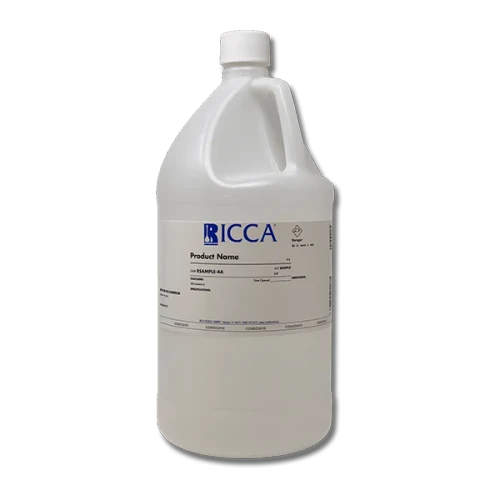
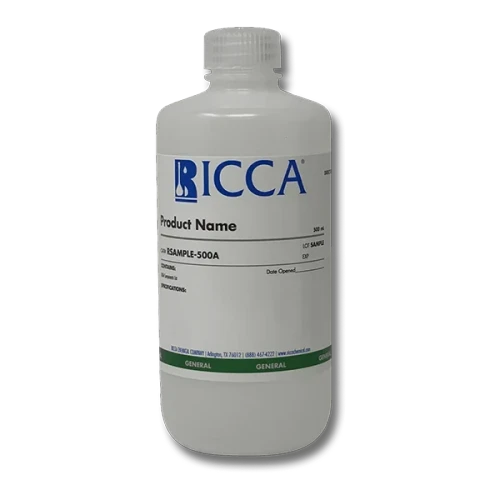
RICCA Chemical Company Acetate Buffer TS, catalog 62-16 and manufacturer part number R0062000-500A, is a prepared aqueous laboratory buffer supplied in a 500 mL natural polyethylene bottle. It belongs to RICCA Product Number 62 and is intended for analytical procedures requiring the specified Acetate Buffer TS formulation.
RICCA's manufacturer specification establishes a pH acceptance range of 5.90-6.00 at 25°C, recommended storage at 15-30°C, and a 24-month shelf life for unopened containers. This Technical Vault examines the solution's chemistry, analytical purpose, method selection, handling, safety classification, and reagent documentation.
Technical Takeaway: RICCA 62-16 is the 500 mL configuration of RICCA Acetate Buffer TS Product Number 62. The formulation and manufacturer specifications also apply to the 1-liter configuration, catalog 62-32. Package volume is the primary difference between these two catalog numbers.
1. Analytical Context: Understanding Acetate Buffer TS
The designation TS means Test Solution. In compendial analytical chemistry, a test solution is a reagent prepared to meet the composition or functional requirements specified for a laboratory method.
Acetate buffers employ the acid-base relationship between acetic acid and acetate ions to help resist changes in solution acidity. Their effectiveness depends on reagent concentration, acid-base ratio, temperature, and the chemical conditions of the test.
Analytical Requirement: Reagent suitability must be based on the exact method and its requirements. A similar nominal pH does not establish equivalence between different acetate buffer products.
2. Verified Product Specifications
- Manufacturer: RICCA Chemical Company
- Product Name: Acetate Buffer TS
- RICCA Catalog Number: 62-16
- Extended Part Number: R0062000-500A
- Manufacturer Product Number: 62
- pH Acceptance Range: 5.90-6.00 at 25°C
- SDS-Reported pH: 5.97
- Physical State: Liquid
- Appearance: Colorless
- Relative Density: 1.05 (SDS Section 9)
- Water Solubility: Miscible
- Packaging: Natural polyethylene bottle
- Bottle Volume: 500 mL
- Purchase Quantity: One (1) bottle
- Unopened Shelf Life: 24 months
- Recommended Storage: 15-30°C (59-86°F)
- Recommended Use: General laboratory reagent
- GHS Hazard Classification: Not classified as hazardous
- DOT/IATA Transport: Not regulated
Specification Note: The SDS-reported pH is a general product property. The manufacturer specification's 5.90-6.00 range at 25°C governs the published pH acceptance criteria. Lot-specific results require the applicable Certificate of Analysis.
3. Chemical Composition and CAS Identification
RICCA's Product Number 62 Safety Data Sheet, Section 3, identifies the following ingredients and weight percentages:
- Water: CAS 7732-18-5; 69.14% by weight
- Ammonium Acetate: CAS 631-61-8; 30.36% by weight
- Acetic Acid: CAS 64-19-7; 0.50% by weight
The manufacturer's Product Specification identifies ACS-grade ammonium acetate and acetic acid, along with water designated ACS/ASTM/USP/EP grade.
The formulation provides acetate ions through ammonium acetate, with acetic acid contributing to the solution's acid-base balance. The finished reagent is an aqueous chemical mixture rather than a single pure substance.
Technical Identification: The solution should be identified using its RICCA catalog and manufacturer part numbers. No single CAS number fully identifies the complete finished buffer formulation.
4. pH Specification, Measurement and Traceability
RICCA specifies a pH acceptance range of 5.90-6.00 at 25°C for Acetate Buffer TS. The Product Specification references manufacturer test methods SQCP027 and SQCP033.
The manufacturer identifies NIST Standard Reference Materials 185i, 186-I-g, and 186-II-g in connection with its pH testing. The specification also describes equipment calibration and traceability practices supporting product manufacturing and testing.
- Test Temperature: 25°C
- Acceptance Range: pH 5.90-6.00
- Manufacturer Test Methods: SQCP027 and SQCP033
- Referenced NIST SRMs: 185i, 186-I-g, 186-II-g
- Actual Lot Result: Obtain from applicable lot-specific documentation
Metrology Distinction: The use of traceable reference materials in manufacturer testing does not automatically establish the finished Acetate Buffer TS as a certified pH calibration standard or Certified Reference Material (CRM).
5. USP Test Solution Applications and Method Compatibility
The RICCA Product Specification references USP for Acetate Buffer TS. The reagent is appropriate for evaluation in laboratory procedures that specifically require this test solution.
Compendial reagent selection is controlled by the applicable current method. A manufacturer's USP-referenced formulation does not, by itself, demonstrate compliance with every compendial application.
- Identify the applicable USP chapter or individual monograph.
- Confirm that Acetate Buffer TS is the specified reagent.
- Check the required pH and formulation acceptance criteria.
- Verify that the supplied material meets the laboratory's documentation requirements.
- Document substitutions or alternative sourcing under approved change-control procedures.
Method-Control Reminder: Manufacturer specifications support reagent identification and qualification but do not replace laboratory method validation or applicable system suitability requirements.
6. Storage, Shelf Life and Reagent Stability
RICCA specifies a recommended storage temperature of 15-30°C (59-86°F) and a 24-month shelf life for unopened containers of catalog 62-16.
The SDS directs users to protect the product from freezing and physical damage. It also reports that the solution is stable under normal use and storage conditions.
- Temperature: Maintain the recommended 15-30°C range.
- Container: Keep the bottle appropriately closed when not dispensing.
- Freezing: Protect from freezing.
- Physical Protection: Avoid container damage and leakage.
- Compatibility: Avoid strong oxidizers identified in the SDS.
- Expiration Control: Follow actual manufacturer labeling and lot documentation.
- In-Use Dating: Apply laboratory-specific procedures after opening.
Shelf-Life Limitation: The published 24-month shelf life applies to unopened containers. It does not establish a 24-month period after opening or guarantee reagent suitability beyond the manufacturer's applicable expiration date.
7. Best-Practice Laboratory Handling
- Receiving Inspection: Confirm product identification, 500 mL bottle size, container integrity, and lot information.
- Documentation Review: Verify applicable method requirements, product specifications, and lot records.
- Storage: Maintain recommended conditions and protect the bottle from freezing.
- Dispensing: Use clean, chemically compatible measuring and transfer equipment.
- Contamination Prevention: Avoid returning dispensed reagent to the stock container.
- Analytical Integrity: Prevent carryover from sample vessels, pipettes, and other equipment.
- Traceability: Record the reagent lot and relevant use information according to the laboratory SOP.
- Disposal: Follow the SDS and institutional chemical-waste requirements.
Inventory Recommendation: Laboratories with low consumption may prefer the 500 mL package where a smaller stock container better matches their expected usage and documented reagent handling procedures.
8. Safety and Transportation Classification
RICCA's Product Number 62 Safety Data Sheet identifies Acetate Buffer TS as not classified as hazardous under GHS. It does not require a GHS signal word or hazard pictograms under the referenced classification.
- GHS Hazard Classification: Not classified as hazardous
- GHS Signal Word: None required
- GHS Pictograms: None required
- DOT Transportation: Not regulated
- IATA Air Transportation: Not regulated
- Canadian TDG: Not regulated
- Eye Protection: Safety glasses or goggles
- Hand Protection: Chemical-resistant gloves
- Ventilation: Normal room ventilation identified as adequate
The SDS identifies possible slight skin and eye irritation. Appropriate chemical hygiene precautions remain necessary even when a formulation does not meet GHS hazardous classification criteria.
Safety Notice: Use the current manufacturer's SDS for chemical handling, emergency procedures, transport, and disposal. The referenced SDS revision date is April 1, 2025.
9. Quality Documentation and Audit Readiness
Controlled laboratories should qualify analytical reagents using manufacturer documentation and their applicable quality-system requirements.
- Product Specification: Defines the manufacturer's pH acceptance range, storage conditions, and package-specific shelf life.
- Safety Data Sheet: Identifies composition, physical properties, chemical hazards, and transport classification.
- Certificate of Analysis: Provides applicable lot-specific analytical test information when issued.
- Lot Traceability: Connects reagent purchasing and receiving to laboratory testing records.
- Expiration Control: Uses the actual manufacturer label and applicable release documentation.
- Method Authorization: Documents that the reagent is approved for its intended analytical application.
The available RICCA product specification includes a SAMPLE lot identifier and does not provide the actual analytical results of a purchased bottle.
Audit Point: When a lot-specific Certificate of Analysis is required, request documentation corresponding to the actual product lot received. Do not treat a general manufacturer specification as an individual lot certificate.
10. Product Selection and Package Size Comparison
RICCA 62-16 / R0062000-500A: Acetate Buffer TS, 500 mL natural polyethylene bottle. Suitable for purchasing where the smaller package aligns with laboratory reagent consumption.
RICCA 62-32 / R0062000-1A: Acetate Buffer TS, 1-liter natural polyethylene bottle. Same documented product family and formulation with twice the nominal solution volume.
RICCA 60.1-32 / R0060100-1A: Separate pH 3.5 acetate buffer formulation identified for USP heavy metals testing. Not a direct substitute for Product Number 62.
RICCA 64-16 / R0064000-500A: Separately identified pH 6.0 EP Acetate Buffer Solution 4002200, 500 mL. Similar nominal pH does not establish formulation or method interchangeability.
Selection Principle: Purchase by exact reagent designation, manufacturer part number, formulation requirements, and approved method. Select the package size based on consumption and inventory-control requirements.
11. Frequently Asked Questions
What does TS mean?
TS means Test Solution, a designated reagent used in specified analytical laboratory procedures.
What is the pH of RICCA 62-16?
The manufacturer specifies pH 5.90-6.00 at 25°C.
Does the 500 mL bottle contain the same formulation as the 1-liter bottle?
Yes. Both catalog 62-16 and catalog 62-32 are covered by RICCA Product Number 62 and its published formulation specifications.
What chemicals are in the solution?
The SDS lists water, ammonium acetate, and acetic acid as the mixture components.
Is the buffer ready to use?
Yes. It is supplied as a prepared test-solution reagent. Follow any additional steps required by the approved method.
Can it be used as a certified pH calibration standard?
The available documents do not establish the product as a certified calibration standard. Use an appropriately qualified reference material where required.
What is the unopened shelf life?
RICCA specifies 24 months for unopened containers. Use the actual expiration information applicable to the received lot.
How should it be stored?
Recommended storage is 15-30°C. Protect from freezing and physical damage.
Is the product regulated as hazardous for transportation?
The referenced RICCA SDS states that it is not regulated under DOT, IATA, or Canadian TDG transportation rules.
Does the specification PDF qualify as a lot-specific CoA?
No. The general specification has a SAMPLE lot identifier. Obtain documentation corresponding to the actual purchased lot when required.
Is this product sterile or certified for an ISO cleanroom classification?
No such certification is established in the available manufacturer documentation. Controlled-environment introduction requires appropriate facility review.
Why Source RICCA Laboratory Reagents Through SOSCleanroom?
- Accurate Product Identification: Source by RICCA manufacturer part number and specific bottle configuration.
- Laboratory Reagent Selection: Choose the appropriate formulation and package size.
- Manufacturer Documentation: Assistance locating specifications, Safety Data Sheets, and applicable lot records.
- Procurement Consistency: Maintain approved material identification for repeat purchases.
- Laboratory Supply Support: Source analytical reagents alongside other laboratory and controlled-environment products.
For technical sourcing and manufacturer documentation assistance, contact Sales@SOSsupply.com or call 800-443-7101.
The Technical Vault By SOSCleanroom | October 12, 2026
© 2026 Specialty Optical Systems, Inc. (dba SOSCleanroom). All rights reserved.