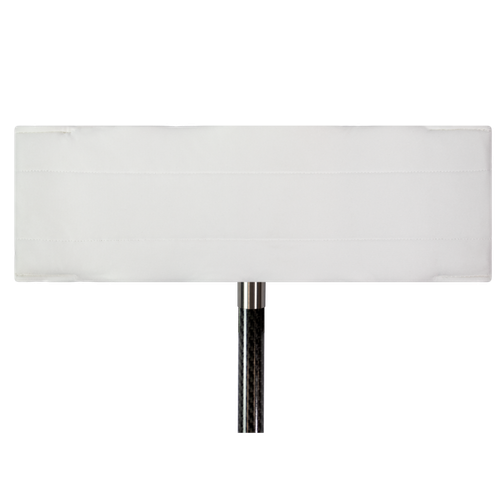
Teknipure TM-MFP-415P TekniMop Microfiber Knit Pocket Mop Cover, Integrated Pad, 4″x15″ (Refills) (Case Qty.)

$798.83
SKU: TM-MFP-415P CASE 7 - 10 Business Days
(No reviews yet)
Availability:
7 - 10 Business Days
Shipping:
Calculated at Checkout
Type:
Dry Mop

Teknipure TM-MFP-415P TekniMop Microfiber Knit Pocket Mop Cover, Integrated Pad, 4″x15″ (Refills) (Case Qty.)

The Teknipure TM-MFP-415P TekniMop™ Microfiber Knit Pocket Mop Cover is a dry, non-sterile cleanroom mop cover with an integrated absorbent pad for floors, walls, ceilings, and other large controlled-environment surfaces. Its knit microfiber cleaning face supports particle and residue pickup, while the built-in pad provides liquid-holding capacity and cushioned contact. The pocket-style cover fits the TKM415 carbon fiber frame.

Integrated absorbent pad: Built into the cover to provide additional liquid-holding capacity and cushioned surface contact without requiring a separate pad. Because TM-MFP-415P is supplied dry, the facility selects the compatible cleaning solution and controls wetting according to its approved procedure.

Specifications:
  • Part Number: TM-MFP-415P
  • Product Type: Microfiber knit pocket mop cover with integrated absorbent pad
  • Nominal Size: 4" x 15" (10 cm x 38 cm)
  • Cleaning Material: Knit microfiber
  • Pad: Integrated absorbent pad; no separate pad required
  • Attachment: Pocket-style
  • Supplied Condition: Dry; not factory-presaturated
  • Sterility: Non-sterile
  • Cleanroom Environment: Manufacturer lists ISO Class 5–8; confirm suitability for the specific process
  • Packaging: 10 covers/bag, 10 bags/case
  • Total Case Quantity: 100 covers/case
  • Compatible Frame: TKM415 TekniMop™ 4" x 15" Carbon Fiber Flat Mop Frame
  • Published Dry-Cover Shelf Life: 5 years from date of manufacture; follow product labeling and applicable lot records
  • Storage: Clean, dry environment at 15°C–30°C, according to Teknipure's technical guidance
Where TM-MFP-415P Fits in Controlled Environments

TM-MFP-415P combines microfiber contamination pickup with the flexibility of facility-controlled chemistry. Its 4" x 15" format is intended for broad surfaces where a flat mop can maintain useful contact throughout the cleaning path. The integrated absorbent pad supports solution retention and release while cushioning the cleaning interface.

Typical program fit: Cleanroom floors, walls, ceilings, accessible equipment surfaces, particle and residue removal, application of compatible disinfectants or sanitizers, and spill pickup where the cover and selected chemistry are appropriate.

The manufacturer-listed ISO range does not replace process qualification. TM-MFP-415P is supplied non-sterile, and final suitability depends on the target surface, solution, hardware, transfer method, cleaning objective, and facility SOP.

About the Manufacturer:

Teknipure develops contamination-control consumables for cleanrooms and other critical environments. Its TekniMop™ platform includes frames, handles, and application-specific covers for pharmaceutical and biologics operations, medical device and optics production, semiconductor manufacturing, aerospace, compounding pharmacies, and laboratories.

The large-surface product family includes dry and presaturated cleaning covers. Selecting the exact cover and compatible hardware allows facilities to align the cleaning material, working reach, and solution-delivery method with their procedures.

TM-MFP-415P Features:
  • Knit microfiber cleaning face for particle and residue pickup
  • 4" x 15" format for large-surface controlled-environment cleaning
  • Integrated absorbent pad for liquid capacity and cushioned contact
  • Pad enclosed on all sides; no separately installed pad required
  • Pocket-style attachment for the compatible TKM415 frame
  • Dry format for facility-controlled chemistry selection and wetting
  • Low-linting construction for contamination-control applications
  • Manufacturer-listed compatibility with IPA and common cleanroom disinfectants
  • Non-sterile presentation
  • 10 covers/bag; 10 bags/case; 100 covers/case
TM-MFP-415P Benefits:
  • Contamination pickup: The microfiber working face supports capture and removal of particles, residues, and other surface contamination.
  • Integrated-pad convenience: The absorbent backing is built into the cover, eliminating a separate pad installation step.
  • Liquid management: The integrated pad provides additional fluid-holding capacity for solution application or appropriate liquid-pickup tasks.
  • Cushioned contact: The pad provides a soft cleaning interface that can help maintain contact across surface variations.
  • Chemistry flexibility: The dry format allows facilities to select a compatible solution instead of using a fixed factory-presaturated blend.
  • Controlled preparation: The facility can define the wetting method and solution loading for its approved cleaning process.
  • Convenient cover changes: Pocket-style construction supports replacement of the cleaning cover while retaining the reusable frame and handle.
  • Large-surface application: The matched TKM415 system provides a practical format for floors, walls, ceilings, and other accessible broad surfaces.
Common Applications:
  • Cleanroom floor, wall, and ceiling cleaning
  • Cleaning accessible large equipment and facility surfaces
  • Particle and process-residue removal
  • Application of compatible disinfectants and sanitizers
  • Controlled solution application and surface wetting
  • Spill pickup when appropriate for the liquid and facility procedure
  • General cleaning of large controlled-environment areas
Best-Practice Use:
  • Prepare and inspect: Verify the correct cover and inspect packaging, the cleaning face, and reusable hardware before use.
  • Install securely: Fit the pocket-style cover fully onto TKM415 and confirm even positioning of the cleaning face and integrated absorbent pad. No separate pad is required.
  • Select compatible chemistry: Use the solution and concentration specified by the facility, following the chemistry manufacturer's instructions and safety requirements.
  • Control wetting: Follow the approved loading method to achieve the required surface conditions without unnecessary dripping or runoff.
  • Maintain contact and coverage: Use the facility-defined cleaning sequence and overlapping passes, with appropriate frame orientation and pressure.
  • Follow disinfectant requirements: When disinfecting, maintain the surface wetness and contact time specified for the selected chemistry. Material compatibility alone does not establish disinfection efficacy.
  • Change covers at defined limits: Replace according to area, contamination load, wetness, damage, or zone transition. Use a fresh cover when the procedure changes chemistry; do not mix solutions on a used cover.
  • Protect the remaining supply: Store unused covers according to facility material controls. Follow the approved disposal procedure for used covers and the contamination collected.
Selection Notes (TM-MFP-415P vs. Other TekniMop™ Options)
  • TM-MFP-415P: Dry 4" x 15" microfiber pocket cover with an integrated absorbent pad; choose when the approved process requires facility-controlled chemistry and wetting.
  • TM-MFP70G-415P: 70% IPA presaturated counterpart with an integrated absorbent pad; choose when its ready-to-use chemistry matches the procedure. Packaging is 10 covers/resealable gusset bag, 8 bags/case, 80 covers/case.
  • TM-PFM-415: A separately specified dry 4" x 15" microfiber cover with an integrated absorbent pad. Retain the exact SKU required by the purchasing or cleaning specification.
  • TM-PFM70G-415: A separately specified 70% IPA presaturated 4" x 15" integrated-pad configuration. Do not substitute solely on the basis of similar dimensions or product wording.
  • Dry vs. presaturated: Dry covers allow facility-selected compatible chemistry. Presaturated covers reduce initial preparation when their supplied solution matches the approved method.
  • Exact-SKU selection: Confirm construction, chemistry, sterility, hardware compatibility, and packaging separately; matching size does not make different part numbers equivalent.
Compatible TekniMop™ Products

Compatible Carbon Fiber Frame

  • TKM415: 4" x 15" carbon fiber flat mop frame for floors, walls, ceilings, and other large controlled-environment surfaces. Select the compatible TekniMop™ carbon fiber handle for the required working reach.
Building a TM-MFP-415P TekniMop™ System

TM-MFP-415P is the dry microfiber mop-cover component with a built-in absorbent pad. Pair it with the TKM415 frame, a compatible carbon fiber handle, and the facility-approved cleaning solution. Select handle length according to access, surface orientation, and operator control.

System configuration:
TM-MFP-415P Microfiber Knit Pocket Mop Cover with Integrated Absorbent Pad + TKM415 Carbon Fiber Frame + Compatible TekniMop™ Carbon Fiber Handle

Prepare the dry cover with the compatible solution and loading method specified by the facility. The absorbent pad is already included in the cover assembly.

Workflow note: TM-MFP-415P is supplied dry and non-sterile. Material transfer, preparation, use, cover changeout, and disposal should follow the facility SOP. Do not infer cover reuse or sterilization compatibility from the ratings of the reusable frame or handle.

Notes: Looking for application guidance or qualification context for the Teknipure TM-MFP-415P TekniMop™ Microfiber Knit Pocket Mop Cover with Integrated Absorbent Pad? Open the SOSCleanroom Technical Vault tab above for large-surface cleaning guidance, solution-loading considerations, cover selection, system configuration, and changeout controls.

SOSCleanroom.com supports contamination-control programs with cleanroom mop covers, frames, handles, cleaning solutions, and critical-environment consumables backed by responsive product support.

Product page updated: November 2, 2026

© 2026 Specialty Optical Systems, Inc. (dba SOSCleanroom) All rights reserved.

The Technical Vault By SOSCleanroom
Knit Microfiber 4" x 15" Integrated Absorbent Pad Pocket Attachment Dry / Non-Sterile 100 Covers/Case

Teknipure TekniMop™ TM-MFP-415P: dry microfiber pocket cover with an integrated absorbent pad

The Teknipure TekniMop™ TM-MFP-415P is a 4" x 15" dry, non-sterile microfiber knit pocket mop cover with an integrated absorbent pad. It provides a replaceable cleaning interface for the TKM415 carbon fiber frame while leaving solution selection and loading under facility control. [1, 2]

Operations takeaway: The dry format separates the consumable from the chemistry. Specify the cover by exact part number, then define the compatible solution, preparation method, cleaning pattern, and change-out limits required for the task.


Specifications (SKU controls for RFQs, SOPs, and receiving)
  • Manufacturer: Teknipure
  • Part number: TM-MFP-415P
  • Product: TekniMop™ Microfiber Knit Pocket Mop Cover with Integrated Absorbent Pad
  • Nominal size: 4" x 15" (10 cm x 38 cm)
  • Cleaning material: Knit microfiber
  • Pad: Integrated absorbent pad
  • Attachment: Pocket-style
  • Supplied condition: Dry
  • Sterility: Non-sterile
  • Cleanroom positioning: Manufacturer lists ISO Class 5–8
  • Packaging: 10 covers/bag, 10 bags/case
  • Total case quantity: 100 covers/case
  • Designated carbon fiber frame: TKM415, 4" x 15"

Product configuration references: Teknipure product information and August 2026 mop price list. Packaging follows the exact-SKU price-list entry. [1, 2]

Configuration-control point: Keep the complete part number on purchasing records and procedures. A matching size or a similar product name does not establish equivalence in construction, chemistry, sterility, or packaging.


Integrated absorbent pad: liquid capacity and cushioning in one assembly

Integrated absorbent pad: Built into the cover to provide additional liquid-holding capacity and cushioned surface contact without requiring a separate pad. [3]

Teknipure states that the pad is enclosed on all sides. The exterior cleaning textile and internal absorbent component therefore perform different roles within the same consumable. [1]

  • During setup: Install the supplied cover assembly without improvising an additional backing layer.
  • During inspection: Check for tears, displacement, or exposed internal material.
  • During use: Maintain suitable frame orientation rather than relying on cushioning to compensate for poor contact.
  • At change-out: Replace the complete cover assembly according to the procedure.

Microfiber cleaning face: mechanical pickup at the surface

Teknipure describes its microfiber mop-cover family as low-linting and designed to capture particles, residues, and microorganisms. [3]

  • Define the removal objective: Identify the contamination or residue that the cleaning step must remove.
  • Evaluate the result: Check the surface against the process acceptance criteria rather than judging performance only by visible wetting.
  • Set a loading limit: Establish when collected material requires a fresh cover.
  • Avoid unsupported equivalence: Do not assume that another microfiber cover performs identically because its material category matches.

Qualification boundary: Do not translate low-linting or contamination-pickup descriptions into a zero-particle specification, a microbial kill claim, or an unlimited-use allowance.


Dry format: the preparation method becomes part of the specification

Dry describes the supplied condition, not a requirement to use the cover without liquid. For a wet-cleaning process, the facility should define the solution and preparation steps instead of leaving them to individual operator preference.

  • Solution identity: Specify the approved cleaner or disinfectant.
  • Concentration: Use the preparation and dilution requirements applicable to that solution.
  • Loading method: Define how the cover receives the solution and how consistent preparation will be checked.
  • Preparation equipment: Include the cleanliness requirements for containers and other items used during wetting.
  • Prepared-cover handling: Define staging conditions and any permitted delay before use.

SOS operational guidance: These preparation and use considerations support procedure development. They are not manufacturer-validated loading volumes, hold times, or cleaning limits for this SKU.


Chemistry compatibility: qualify the actual formulation

Teknipure lists compatibility with IPA and common cleanroom disinfectants. [1]

  • Cover compatibility: Evaluate the selected formulation under its intended concentration and exposure conditions.
  • Surface compatibility: Check the substrate, coating, seals, and other materials that may contact the solution.
  • Cleaning objective: Confirm that the combination addresses the actual residue or contamination.
  • Disinfection objective: Follow the selected disinfectant’s applicable directions and required surface conditions.
  • Operator protection: Use the solution’s current safety data sheet and facility handling requirements.

Process distinction: Compatibility is not proof of cleaning or disinfectant efficacy. A material can tolerate a solution without establishing that the assembled method meets the facility’s performance requirements.


TKM415 compatibility: build the system around the target surface

Teknipure’s TKM415 frame page specifically lists TM-MFP-415P as compatible. The frame provides dual adjustable swivels and accepts the listed TekniMop™ carbon fiber handles. [4]

  • TKM220H: Approximately 3.2 ft maximum handle length
  • TKM240H: Approximately 6.5 ft maximum handle length
  • TKM355H: Approximately 13.5 ft maximum handle length
  • TKM455H: Approximately 17.9 ft maximum handle length

Handle configurations are listed in Teknipure’s frame documentation. [4]

Selection principle: Select the frame for access and surface geometry, then select the handle for the required working distance. Do not automatically use maximum extension or assume that every compatible combination is equally controllable for every task.


Pocket installation: verify retention before cleaning
  • Prepare the frame: Confirm its required cleanliness status and inspect for damage.
  • Follow the fitting method: Seat the cover using the designated frame instructions.
  • Check alignment: Correct folds or displacement that interfere with the intended cleaning face.
  • Check retention: Confirm that the cover remains seated during the planned motion.
  • Stop after displacement: Correct the fit or replace the cover before continuing the cleaning zone.

Setup control: Do not qualify fit solely from nominal dimensions. Use the designated frame and verify the assembled configuration under the actual cleaning conditions.


Manufacturer-listed applications
  • Cleanroom floors, walls, and ceilings
  • Disinfectant and sanitizer application
  • Residue removal
  • Spill control
  • General large-area cleaning

Application reference: Teknipure TM-MFP-415P product information. [1]

Application boundary: Select the chemistry and method for the specific task. A general application listing does not establish suitability for every spill, residue, equipment surface, or controlled process.


Wetting controls: define the useful operating condition

Qualification should establish how much liquid the prepared cover needs to deliver, how consistently that condition can be achieved, and when a fresh cover is required. Do not equate maximum liquid retention with the correct working load.

  • Check initial preparation: Confirm that the selected loading method produces the intended starting condition.
  • Observe the surface: Evaluate distribution, incomplete wetting, pooling, or runoff against the procedure.
  • Set the endpoint: Define when declining delivery requires replacement.
  • Control replenishment: Do not return a used cover to fresh solution or add chemistry unless the approved method specifically addresses that step.

Standardization tip: Where preparation varies between operators, review the wetting method, solution quantity, preparation equipment, and time between preparation and use before changing the cover specification.


Large-surface coverage: planned passes rather than an assumed area rating
  • Plan the route: Identify the start, boundaries, obstacles, and completion point.
  • Define overlap: Specify how adjacent passes will avoid untreated strips.
  • Verify contact: Check that the intended cleaning face reaches the target throughout the pass.
  • Control progression: Follow the approved surface sequence and zoning rules.
  • Check the endpoint: Confirm that the treated section meets its required condition before moving on.

Coverage rule: Do not assign a universal square-foot capacity from the cover dimensions. Establish a working limit using the actual surface, contamination load, solution delivery, and cleaning pattern.


Floors, walls, and ceilings: evaluate each working setup
  • Floors: Plan operator movement to avoid unnecessarily crossing completed areas.
  • Walls: Check contact at the selected frame angle and establish acceptable solution behavior.
  • Ceilings: Evaluate the wetted cover, frame, and handle together at the intended extension.
  • Obstructed areas: Change to a suitable approved tool when boundaries prevent controlled access.

Operational consideration: Do not assume a setup demonstrated on a nearby horizontal surface is suitable overhead. Assess operator control and useful surface contact where the task will actually be performed.


Change-out triggers: define the stopping point before starting
  • Area or zone limit: The assigned section is complete or the procedure requires a fresh cover.
  • Contamination limit: The working face is loaded, visibly soiled, or leaves an unacceptable result.
  • Solution-delivery limit: The cover no longer provides the required surface condition.
  • Handling event: The cover contacts an uncontrolled surface.
  • Physical condition: Damage or poor retention interferes with use.
  • Process transition: Another chemistry or cleaning step requires a new consumable.

Decision rule: Replace at the first applicable limit. Remaining liquid does not justify continuing after a contamination or zoning limit has been reached.


Best-practice use (dry integrated-pad pocket cover)
  1. Verify the SKU: Match TM-MFP-415P to the approved task and required non-sterile presentation.
  2. Inspect the package: Check integrity, identification, expiration, and storage controls.
  3. Prepare reusable hardware: Confirm that the frame and handle meet the required cleanliness and condition criteria.
  4. Prepare the chemistry: Use the approved formulation and concentration, with its required safety controls.
  5. Install and wet as specified: Follow the approved order of preparation and protect the working face during handling.
  6. Verify the assembly: Check cover alignment, retention, and the intended working setup.
  7. Execute the cleaning pattern: Maintain the defined progression, overlap, and contact.
  8. Monitor process limits: Replace at the established contamination, wetness, area, or zoning trigger.
  9. Complete subsequent treatment: Follow any separate disinfection, residue-removal, or surface-release requirements.
  10. Close out the task: Dispose of the cover appropriately and prepare reusable hardware for storage or its next use.

Packaging: 10 covers per bag, 100 covers per case
  • Bag quantity: 10 covers
  • Case configuration: 10 bags
  • Total case quantity: 100 covers

Packaging reference: Teknipure Mops Price List, August 2026, TM-MFP-415P entry. [2]

Purchasing control: Specify the order unit as well as the part number. A bag and a case are different quantities; do not use them interchangeably on purchasing or inventory records.


Storage and shelf life

Teknipure’s Large Surface Mopping Tools TDS gives dry mop covers a five-year shelf life from manufacture and specifies clean, dry storage at 15°C–30°C. [3]

  • Receiving: Apply the labeled expiration and applicable lot controls.
  • Inventory: Keep identification available and protect remaining covers from uncontrolled contact.
  • Opened bags: Follow the facility’s storage and material-handling procedure.
  • Prepared covers: Establish any post-wetting hold time separately from the dry product’s shelf life.

Inventory distinction: A manufacture-based shelf life is not a permitted reuse period, an opened-bag allowance, or a hold time for a cover after chemistry has been added.


TM-MFP-415P vs. TM-MFP70G-415P: dry or factory-presaturated?
  • TM-MFP-415P: Dry integrated-pad pocket cover; 10 covers/bag, 10 bags/case, 100 covers/case.
  • TM-MFP70G-415P: 70% IPA presaturated integrated-pad pocket cover; 10 covers/resealable gusset bag, 8 bags/case, 80 covers/case.

Configuration and packaging comparison follows the August 2026 Teknipure mop price list. [2]

Selection logic: Choose the dry format when the approved method requires facility-selected chemistry or facility-controlled wetting. Choose the presaturated format when its supplied chemistry matches the procedure. Do not make that substitution solely to simplify preparation.


Qualification boundaries and misuse controls
  • Sterility: Do not treat cleanroom positioning or later exposure to a disinfectant as a sterile-product designation.
  • Particle and residue limits: Obtain applicable test information before creating numerical acceptance criteria.
  • Pad enclosure: Do not interpret an enclosed pad as proof of zero particle release under every condition.
  • Reprocessing: Do not assume permission to launder, sterilize, or reuse the cover.
  • Hardware ratings: Do not transfer a frame’s autoclave rating to the consumable fitted over it.
  • Chemistry changes: Do not mix solutions or carry a used cover into a different chemistry step without an approved method.
  • Process suitability: Assess the complete cover, hardware, solution, surface, and handling procedure.

Documentation rule: The operational considerations in this Vault support product selection and procedure review. They do not establish manufacturer-validated coverage limits or replace an approved facility SOP.


Why source TekniMop™ through SOSCleanroom
  • Exact-SKU selection: Get help distinguishing similar cover names, supplied conditions, and case packs.
  • System selection: Review the consumable, designated frame, and required working reach together.
  • Documentation support: Request manufacturer information for purchasing, qualification, and procedure review.
  • Coordinated procurement: Source mop covers and hardware alongside the other consumables required by the cleaning program.

Manufacturer documentation and technical references
  • [1] Teknipure TM-MFP-415P product information: Supplied condition, integrated-pad construction, attachment, chemistry compatibility, cleanroom positioning, and intended applications.
  • [2] Teknipure Mops Price List, August 2026: Exact-SKU descriptions and controlling packaging quantities.
  • [3] TekniMop™ Large Surface Mopping Tools TDS: Page 1 for storage and shelf life; pages 5–6 for microfiber-family and integrated-pad information.
  • [4] Teknipure TKM415 product information: Designated cover compatibility, frame articulation, and compatible handle configurations.

Final acceptance: Use the exact SKU, specified order unit, product labeling, and applicable manufacturer records for purchasing and receiving. Process suitability remains subject to the facility’s qualification and operating requirements.


If you have any questions please email us at Sales@SOSsupply.com or give us a call at (214)340-8574. OR check out the AI ChatBot powered by SOSCleanroom data libraries - give it a try! THIS IS NEW FOR 2026! © 2026 SOSCleanroom. All rights reserved.