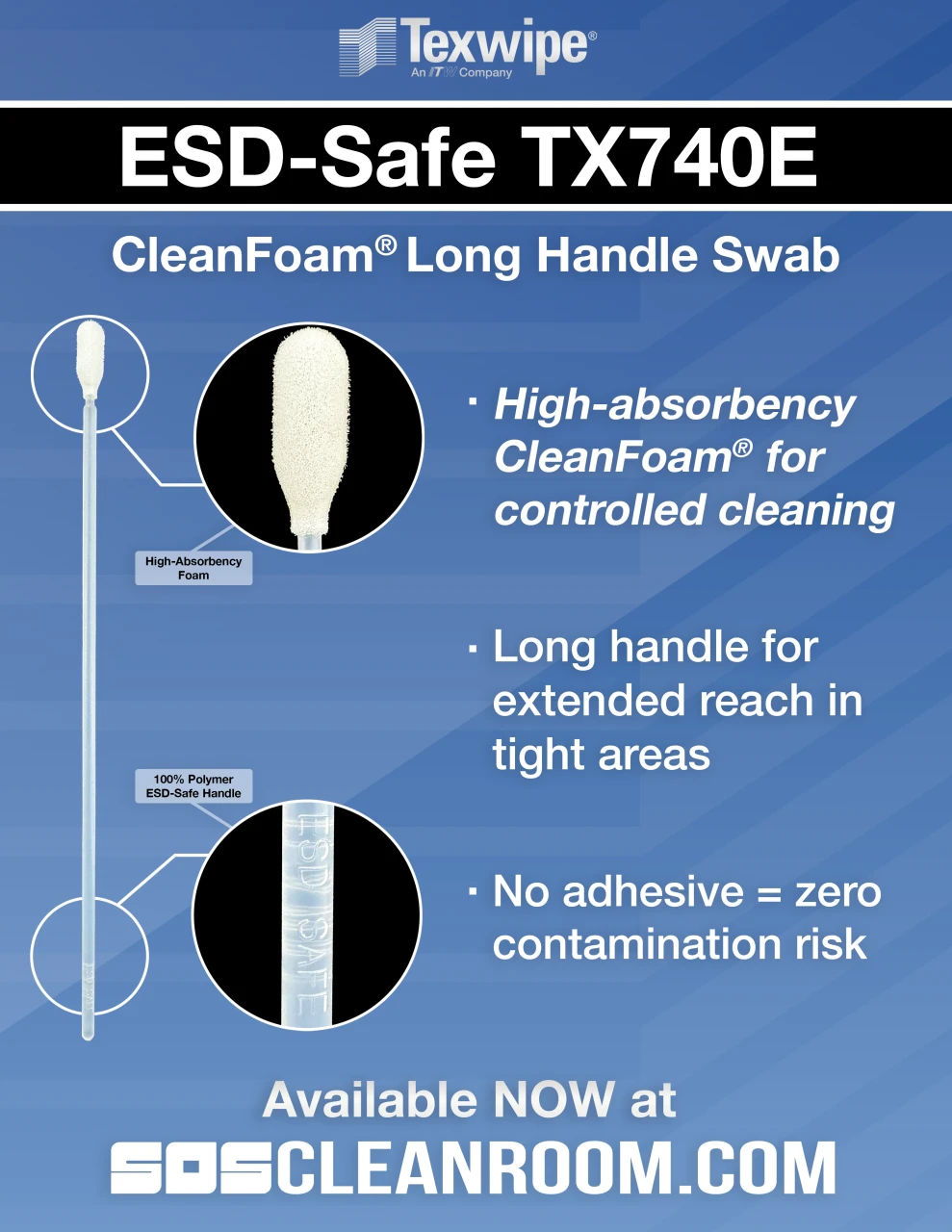
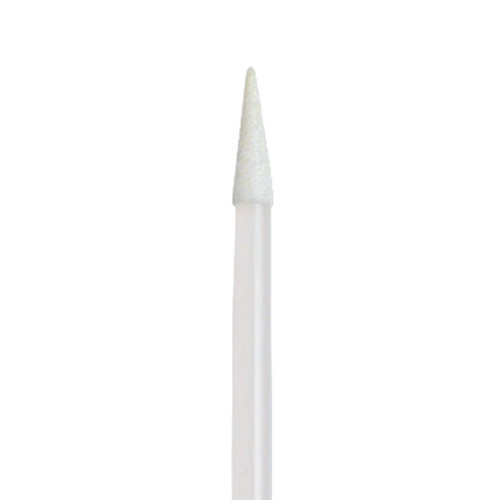
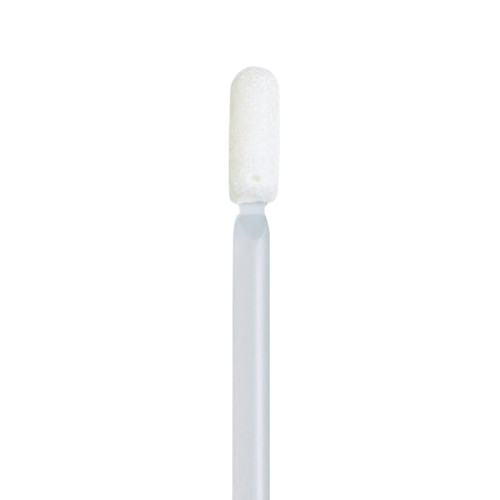
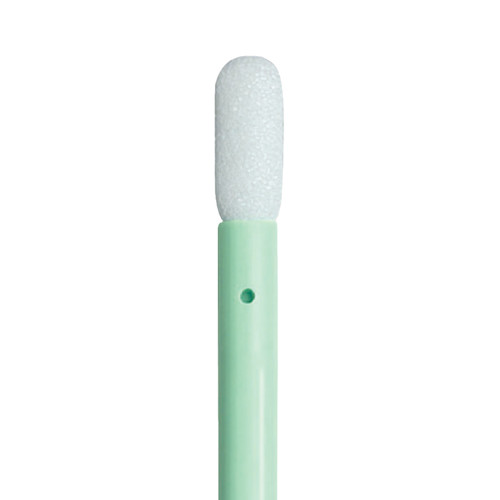
Texwipe TX740E Medium CleanFoam ESD Swab with Long Handle

$35.00
SKU: TX740E BAG Stock Item
(No reviews yet)
Availability:
Stock Item
Shipping:
Calculated at Checkout
Type:
Dry Swab
Family:
CleanFoam
Material:
Foam
ESD-Safe:
Yes

Texwipe TX740E Medium CleanFoam ESD Swab with Long Handle - Non-Sterile

Texwipe TX740E is a non-sterile, medium-head CleanFoam® ESD-safe cleanroom swab designed for precision cleaning, controlled solvent application, and particulate removal in static-sensitive manufacturing environments. Its cleanroom-processed 100 PPI polyurethane foam head combines absorbency with controlled surface contact, while the extended Stat-Rite® inherently dissipative handle supports cleaning inside recessed components, connector housings, channels, grooves, and other difficult-to-reach areas.

The TX740E features a 6.0 mm wide, 4.6 mm thick, and 16.2 mm long CleanFoam® head thermally bonded to a Stat-Rite® handle without adhesives. With an overall swab length of 163.1 mm, TX740E provides extended reach while helping operators maintain controlled cleaning technique. Each swab is cleanroom processed, lot coded for traceability, and supplied in protective anti-static packaging.

ESD-Safe Precision Cleaning Advantage: TX740E combines a cleanroom-processed polyurethane foam head with an inherently dissipative Stat-Rite® handle to support contamination control and electrostatic discharge management during precision cleaning. Its long-handle construction provides access to recessed surfaces while reducing unnecessary contact between the operator's gloves, sleeves, and sensitive components.

Specifications:
  • Manufacturer: ITW Texwipe
  • Part Number: TX740E
  • Product Family: CleanFoam® ESD-Safe Swabs
  • Product Type: Medium CleanFoam® ESD Swab with Long Handle
  • Swab Format: Dry, single-use cleanroom swab
  • Head Material: Cleanroom-processed polyurethane foam
  • Foam Density: 100 pores per inch (100 PPI)
  • Head Width: 6.0 mm (0.236")
  • Head Thickness: 4.6 mm (0.181")
  • Head Length: 16.2 mm (0.638")
  • Handle Material: Stat-Rite® inherently dissipative polymer
  • Handle Width: 3.2 mm (0.126")
  • Handle Thickness: 3.2 mm (0.126")
  • Handle Length: 146.9 mm (5.783")
  • Overall Swab Length: 163.1 mm (6.421")
  • Head Bond: Complete thermal bond without adhesives
  • ESD Properties: Inherently dissipative handle construction
  • Handle Construction: Designed without blooming carbon particles, metal fillers, or ionic anti-static additives
  • Sterility: Non-sterile
  • Cleanroom Processing: Cleanroom processed
  • Packaging: Anti-static protective bag
  • Bag Quantity: 100 swabs
  • Case Quantity: 10 bags
  • Total Case Quantity: 1,000 swabs
  • Traceability: Lot coded for quality control
  • Temperature Guidance: Suitable for applications below 194°F (90°C), subject to process conditions
  • Available Purchase Options: Bag of 100 or case of 1,000 swabs
  • Availability: Stock item, subject to current inventory
About the Manufacturer:

Texwipe, an ITW company, manufactures contamination-control consumables for semiconductor manufacturing, electronics assembly, pharmaceutical production, biotechnology, medical devices, optics, and other critical environments. Its cleanroom swab portfolio includes polyurethane foam, knitted polyester, nonwoven polyester, microfiber, and specialized ESD-safe materials designed for precision cleaning.

The Texwipe ESD-Safe Swab Series uses Stat-Rite® inherently dissipative polymer technology to help manage electrostatic charge without relying on conventional carbon-loaded or ionic anti-static additives. Combined with cleanroom-processed swab heads, thermal bonding, and anti-static packaging, this construction supports repeatable cleaning procedures in static-sensitive environments.

SOSCleanroom is an authorized Master Distributor of ITW Texwipe. Our team supports customers with product selection, manufacturer documentation, ESD-safe cleaning consumables, packaging configurations, lot traceability, and procurement assistance for contamination-sensitive manufacturing operations.

TX740E Features:
  • Medium CleanFoam® polyurethane foam head
  • 100 PPI cleanroom-processed foam construction
  • Stat-Rite® inherently dissipative polymer handle
  • Extended handle for cleaning hard-to-reach surfaces
  • 6.0 mm wide head for localized precision cleaning
  • Complete thermal bond construction without adhesives
  • Designed to avoid blooming carbon particles, metal fillers, and ionic anti-static additives
  • Foam head supports controlled solvent absorption and particulate pickup
  • Flexible foam construction for contact with compatible irregular surfaces
  • Precision automated manufacturing for dimensional consistency
  • Protective anti-static bag packaging
  • Lot coded for traceability and quality control
  • Non-sterile configuration
  • 100 swabs per bag
  • 1,000 swabs per case
TX740E Benefits:
  • ESD Management: The inherently dissipative handle supports electrostatic charge control when incorporated into an established ESD-protected work environment.
  • Precision Cleaning: The medium foam head allows controlled cleaning of connectors, joints, recessed features, and other localized surfaces.
  • Extended Reach: The 163.1 mm overall length provides access to areas that shorter swabs may not reach.
  • Controlled Solvent Application: The 100 PPI polyurethane foam head can absorb and transfer compatible cleaning solutions.
  • Particle Pickup: Open-cell foam construction supports the removal of fine particulate contamination from compatible surfaces.
  • Reduced Adhesive Contamination Risk: Thermal bonding eliminates adhesive at the head-to-handle attachment.
  • Clean ESD Construction: Stat-Rite® technology avoids conventional carbon, metal, and ionic anti-static additive systems that may contribute contamination.
  • Low-Fiber Cleaning: Foam construction helps reduce the risk of long textile fiber shedding during suitable cleaning procedures.
  • Consistent Handling: Defined head geometry and handle dimensions support repeatable precision-cleaning technique.
  • Traceability: Lot coding supports material control and manufacturing quality procedures.
  • Flexible Purchasing: Available bag and case configurations accommodate different production requirements.
Common Applications:
  • Precision cleaning of ESD-sensitive electronic assemblies
  • Semiconductor manufacturing equipment maintenance
  • Cleaning connector housings, contacts, and recessed assemblies
  • Controlled application and removal of compatible cleaning solvents
  • Cleaning narrow grooves, channels, tracks, and slots
  • Removal of localized particulate contamination
  • Cleaning intersecting equipment surfaces and joints
  • Controlled removal of compatible flux and process residues
  • Applying and removing lubricants or adhesives in precision manufacturing
  • Cleaning hard-to-reach areas of electronic and mechanical equipment
  • Picking up fine powders where foam contact is compatible with the process
  • Precision optical and laboratory equipment cleaning
  • Static-sensitive assembly, inspection, and rework stations
  • Controlled cleaning procedures requiring a defined foam head and extended handle
Best-Practice Use:
  • Inspect Before Use: Examine the foam head, handle, and packaging for visible damage or contamination.
  • Use ESD-Protected Workstations: Perform cleaning within the facility's established ESD control program.
  • Maintain Grounding: Confirm that personnel, work surfaces, tools, and equipment are properly grounded according to the applicable ESD procedures.
  • Use Appropriate Gloves: Select gloves compatible with both cleanroom contamination requirements and ESD control procedures.
  • Control Solvent Loading: Apply sufficient cleaning solution to the foam head without oversaturating it or flooding sensitive components.
  • Use Controlled Strokes: Maintain consistent direction and contact pressure while cleaning recessed surfaces.
  • Avoid Excessive Force: Aggressive scrubbing can damage foam, release particles, or affect delicate components.
  • Replace Contaminated Swabs: Discard swabs when loaded with residues, visibly damaged, or no longer effective.
  • Prevent Cross-Contamination: Do not return used swabs to clean solvent containers or unused packaging.
  • Verify Solvent Compatibility: Confirm that the selected cleaning chemistry is compatible with the foam, handle, and surface being cleaned.
  • Maintain Traceability: Record swab lot information where required by the facility's quality procedures.
  • Single-Use Handling: Dispose of used swabs according to applicable chemical and process waste requirements.
ESD Grounding and Charge-Control Guidance:

Electrostatic discharge protection involves more than selecting a dissipative swab. A complete ESD control program requires appropriate grounding, charge management, qualified materials, and controlled handling procedures. TX740E is designed to support these practices through its inherently dissipative Stat-Rite® handle.

  • ESD-Protected Area: Use TX740E within an appropriately controlled ESD workstation when handling electrostatic-discharge-sensitive devices.
  • Personnel Grounding: Maintain approved wrist straps, footwear, flooring, or other personnel grounding systems as required by the facility.
  • Work Surface Grounding: Verify that ESD work mats, benches, fixtures, and grounding connections are functioning correctly.
  • Handle-to-Ground Path: The dissipative handle can support charge dissipation, but effective grounding depends on the complete electrical path through the operator, approved equipment, and workstation.
  • Insulating Interfaces: Gloves, coatings, packaging, or other insulating materials can interrupt an intended conductive or dissipative path. Evaluate the complete handling system.
  • Equipment Potential: Ensure exposed conductive surfaces and equipment are controlled according to the facility's ESD program.
  • Ionization: Where insulating components cannot be grounded, properly maintained ionization equipment may be required.
  • Triboelectric Charging: Swabbing friction can generate electrostatic charge, particularly on insulating materials. Control wiping pressure, speed, and contact conditions.
  • Humidity: Follow facility humidity requirements, but do not rely on humidity alone as a substitute for grounding and charge-control procedures.
  • ESD Qualification: Verify required resistance and charge-decay characteristics according to the applicable ESD control program.
  • Applicable Standards: Facilities may reference ANSI/ESD S20.20 and IEC 61340-5-1 when establishing ESD protection procedures.

ESD Control Principle: A dissipative swab is one component of an ESD protection system. Effective charge management requires an appropriate electrical path between the swab, operator, work surface, and approved grounding system. The Stat-Rite® handle does not independently guarantee that a complete workstation is grounded or that electrostatic discharge cannot occur. The full cleaning procedure should be evaluated under the facility's ESD control requirements.

Solvent Compatibility and Cleaning Qualification:

TX740E uses a cleanroom-processed polyurethane foam head and an inherently dissipative polymer handle. Solvent compatibility depends on the cleaning chemistry, concentration, temperature, contact duration, and the material being cleaned.

  • Isopropyl Alcohol (IPA): May be suitable for controlled wiping when compatibility with the foam, handle, and cleaned component has been established.
  • Deionized Water: May be used for compatible aqueous cleaning processes, subject to cleanliness and drying requirements.
  • Specialty Cleaning Solvents: Verify compatibility before using hydrocarbon, ketone, ester, or other aggressive solvent formulations.
  • Foam Integrity: Some chemicals can swell, soften, degrade, or alter polyurethane foam. Inspect for dimensional changes, loss of strength, or particle release.
  • Handle Compatibility: Confirm that prolonged exposure to the intended chemistry does not degrade the Stat-Rite® handle or affect its required ESD characteristics.
  • Surface Compatibility: Verify that the selected solvent does not damage coatings, plastics, adhesives, metals, or sensitive electronic assemblies.
  • Controlled Wetness: Use a defined solvent-loading procedure to limit dripping, pooling, and unintended fluid migration into equipment.
  • Cleaning Recovery: Evaluate residue pickup and removal under the actual swabbing method when cleanliness requirements are critical.
  • Extractables: Assess chemical extractables and residue background when the cleaning process is sensitive to contamination.
  • Particle Generation: Evaluate foam integrity and particulate release after exposure to the intended solvent and wiping conditions.
  • Temperature: Follow the manufacturer's guidance for applications below 90°C (194°F), with additional restrictions as required by the solvent and component.
  • Method Qualification: Establish suitable solvent concentration, swab wetness, wiping pressure, stroke count, and replacement frequency.

Solvent Selection Guidance: CleanFoam® construction provides absorbency and controlled solution transfer, but compatibility must be established for each cleaning chemistry and process. Solvent exposure may affect foam integrity, contaminant extraction, residue generation, or handle performance. Facilities should qualify TX740E with the intended solvent, contact time, temperature, cleaning surface, and ESD control requirements before adopting it for critical cleaning procedures.

Selection Notes (TX740E vs. Other CleanFoam ESD Swabs)

Texwipe offers ESD-safe CleanFoam® swabs in multiple head sizes and handle configurations. The correct product depends on the cleaning geometry, solvent requirements, access limitations, surface sensitivity, and electrostatic-control procedures.

Product Selection Guidance: Choose TX740E when extended reach, medium foam-head contact, and ESD-safe handle construction are required together. Select smaller or compressed CleanFoam® models for tighter features and more localized cleaning. Non-ESD alternatives may be appropriate where static control is not a process requirement. Swab substitutions should be evaluated for geometry, cleaning performance, material compatibility, and ESD characteristics.

Contamination Control and Material Compatibility:
  • Particle Control: Cleanroom-processed foam supports controlled particulate levels during appropriate cleaning procedures.
  • Foam Construction: 100 PPI polyurethane foam provides liquid absorption and contact with fine surface features.
  • Low-Fiber Cleaning: Foam construction avoids the long textile fibers associated with some conventional cleaning materials.
  • Thermal Bond: Adhesive-free attachment reduces one potential source of contamination.
  • ESD Handle Material: Stat-Rite® inherently dissipative polymer is designed to avoid contamination associated with blooming carbon particles, metal fillers, and ionic anti-static additives.
  • Solvent Compatibility: Compatibility must be confirmed for the selected cleaning chemistry and exposure conditions.
  • Foam Wear: Abrasive surfaces, sharp edges, and excessive cleaning pressure may damage foam and release particles.
  • Nonvolatile Residue: Residue contribution should be evaluated when cleaning sensitive optical or electronic components.
  • Electrostatic Performance: Maintain appropriate grounding and handling procedures throughout the cleaning operation.
  • Sterility: TX740E is supplied non-sterile and is not a substitute for sterile cleaning swabs where sterility is required.
Packaging and Storage Recommendations:
  • Bag Quantity: 100 swabs per bag
  • Case Quantity: 10 bags per case
  • Total Case Quantity: 1,000 swabs
  • Packaging Material: Anti-static protective bag
  • Packaging Integrity: Inspect bags before opening to verify protection from contamination and damage
  • Storage Conditions: Store in a clean, dry, controlled environment
  • ESD Storage: Follow the facility's ESD handling requirements when storing and staging swabs for static-sensitive operations
  • Contamination Protection: Keep unused swabs protected from dust, chemical vapors, oils, and uncontrolled handling
  • Opened Bags: Follow facility procedures for managing partially used swab packages
  • Lot Identification: Retain manufacturer lot codes where traceability is required
  • Single-Use: Discard used swabs according to the applicable cleaning and waste-management procedures
Manufacturer Technical Documents:

Texwipe TX740E Manufacturer Product Information and Specifications: Click Here

Texwipe ESD-Safe Swabs Product Brochure (PDF): Click Here

Texwipe Swab Technical Data Sheet Library: Click Here

SOSCleanroom TX740E Product Information: Click Here

Other Similar Products Available From SOSCleanroom.com

CleanFoam ESD-Safe Swabs

Non-ESD CleanFoam Alternative

Notes: Need assistance selecting a CleanFoam® ESD-safe swab for semiconductor manufacturing, electronics assembly, or precision cleaning? Open the SOSCleanroom Technical Vault tab above for additional information about ESD grounding procedures, solvent compatibility, cleaning methods, particulate control, and product selection.

SOSCleanroom.com supports contamination-control programs with cleanroom swabs, wipers, cleaning solutions, ESD-safe consumables, and specialized precision-cleaning products. Our team provides product selection assistance, manufacturer documentation, packaging information, and procurement support for semiconductor, electronics, pharmaceutical, optical, and laboratory operations.

Product description updated: October 19, 2026 (SOS Technical Staff)

© 2026 SOS Supply. All rights reserved.

The Technical Vault By SOSCleanroom
ESD-Safe Precision Cleaning CleanFoam® 100 PPI Stat-Rite® Dissipative Handle Long-Handle Access Adhesive-Free Thermal Bond ISO 14644 Operations Control

Texwipe TX740E CleanFoam®: why this long-handle ESD-safe swab supports precision cleaning of static-sensitive equipment

Texwipe TX740E Medium CleanFoam® ESD Swab with Long Handle is a non-sterile precision cleanroom swab designed for cleaning recessed, narrow, and difficult-to-access areas where both particulate contamination and electrostatic discharge (ESD) are important process concerns.

TX740E features a 100 pores-per-inch (PPI) polyurethane CleanFoam® head thermally bonded to a long Stat-Rite® inherently dissipative polymer handle. This construction combines controlled solvent absorption and particulate pickup with material properties intended to support electrostatic charge dissipation in properly managed ESD-protected work areas.

The 163.1 mm overall length helps operators reach recessed assemblies while keeping gloved hands farther from critical surfaces. The foam head supports controlled application and removal of cleaning solutions, lubricants, adhesives, light residues, and fine particles from compatible surfaces.

Operations takeaway: TX740E is selected when precision cleaning, extended reach, and electrostatic control must work together. Its dissipative handle supports an established ESD-control program, while repeatable cleaning performance depends on compatible chemistry, controlled wetness, proper grounding practices, defined wiping techniques, and timely swab replacement.


ISO-first context: where ESD-safe swabs fit in cleanroom operations control

ISO 14644-5:2025 addresses contamination control through a documented Operations Control Programme (OCP) covering equipment, personnel, material transfer, cleaning, maintenance, and monitoring. Precision swabs are part of this system when used to remove contamination from controlled surfaces and sensitive equipment.

Electronics manufacturing and semiconductor processes may require an additional electrostatic discharge control program. In these environments, cleaning materials must be evaluated not only for particle and residue performance but also for their potential to generate, retain, or transfer electrostatic charge.

Control point: Cleanroom suitability and ESD performance are separate requirements. A low-particle swab is not automatically static dissipative, and an ESD-safe handle does not independently guarantee that the entire cleaning operation meets the facility's electrostatic-control requirements.


Specifications (SKU controls for RFQs, SOPs, and receiving)
  • Product: Texwipe Medium CleanFoam® ESD Swab with Long Handle
  • Manufacturer: ITW Texwipe
  • Manufacturer part number: TX740E
  • Product family: ESD-Safe CleanFoam® / Transplex® Swab Series
  • Type: Dry, non-sterile precision cleanroom swab
  • Head configuration: Medium flexible foam paddle
  • Head material: Cleanroom-processed polyurethane foam
  • Foam structure: 100 pores per inch (100 PPI)
  • Head attachment: Thermal bonding without adhesive
  • Head width: 6.0 mm (0.236")
  • Head thickness: 4.6 mm (0.181")
  • Head length: 16.2 mm (0.638")
  • Handle material: Stat-Rite® inherently dissipative polymer
  • Handle width: 3.2 mm (0.126")
  • Handle thickness: 3.2 mm (0.126")
  • Handle length: 146.9 mm (5.783")
  • Overall swab length: 163.1 mm (6.421")
  • Handle color: Translucent
  • ESD properties: Inherently dissipative handle construction
  • Processing: Cleanroom processed
  • Packaging: 100 swabs per bag
  • Case configuration: 10 bags per case
  • Total case quantity: 1,000 swabs
  • Packaging material: Anti-static protective bag
  • Traceability: Lot coded
  • Sterility: Non-sterile
  • Temperature guidance: Manufacturer lists use at temperatures below 194°F (90°C)

Ordering control: TX740E is packaged as 100 swabs per bag and 10 bags per case, totaling 1,000 swabs per case. Confirm the selected bag or case purchasing option when ordering through SOSCleanroom.


CleanFoam® polyurethane construction and performance characteristics
  • 100 PPI foam: Fine-pore polyurethane foam provides controlled liquid absorption and contact with small particulate contamination.
  • Flexible paddle head: Supports contact with compatible recessed surfaces, joints, and irregular geometries.
  • Thermal bonding: Eliminates adhesive at the head-to-handle connection.
  • Cleanroom processing: Helps control background particles, residues, and other contamination associated with the swab.
  • Solvent absorption: Foam construction allows controlled loading and application of compatible cleaning liquids.
  • Particulate pickup: Foam contact can collect fine particles and loosened residues during appropriate cleaning.
  • Long-handle geometry: Provides additional reach without placing the operator's hand directly beside the cleaning area.
  • Stat-Rite® handle: Uses inherently dissipative polymer technology rather than relying on conventional migrating antistatic additives.
  • Lot coding: Supports traceability and controlled purchasing.

Material distinction: TX740E uses polyurethane CleanFoam®, not a polyester knit or nonwoven fabric head. Foam and polyester swabs may differ in solvent absorption, particle pickup, surface contact, and mechanical behavior. Select the head material according to the actual cleaning requirements.


ESD performance: how the Stat-Rite® handle supports electrostatic control

Electrostatic discharge can damage or degrade sensitive electronic components. Charge accumulation during cleaning may result from contact, separation, rubbing, material movement, or the handling of insulating surfaces.

TX740E uses a Stat-Rite® inherently dissipative polymer handle intended to support controlled electrostatic charge dissipation. The material is designed to provide ESD functionality without conventional carbon-filled or migrating antistatic additive systems.

  • Inherently dissipative polymer: Provides the handle's intended static-dissipative behavior through its material construction.
  • Controlled charge dissipation: Helps manage electrostatic charge when used within an appropriately designed ESD-control system.
  • Non-blooming technology: Manufacturer describes the handle system as avoiding blooming carbon particles, metals, and ionic antistatic contaminants.
  • Cleanroom integration: Supports use where both electrostatic behavior and material cleanliness must be considered.
  • Handle continuity: Consistent contact and approved handling procedures are important for the intended charge-dissipation path.
  • Testing: Verify electrical resistance or resistivity characteristics against the applicable manufacturer information and facility requirements.

ESD protection principle: A dissipative handle helps manage electrostatic charge but does not independently ground the swab or guarantee a particular discharge rate in every application. Effective protection requires the proper integration of personnel, tools, work surfaces, grounding equipment, and handling procedures.


The ESD ground chain: swab, operator, workstation, and ground

ESD-safe swab performance should be evaluated as part of the entire electrostatic-control system. The handle's material properties are only one part of managing charge during precision cleaning.

  1. Identify the sensitive component: Determine the electrostatic discharge susceptibility of the assembly being cleaned.
  2. Establish an ESD-protected area: Perform cleaning at a workstation configured according to the facility's ESD-control program.
  3. Verify operator grounding: Use approved wrist straps, footwear, flooring, or other personnel grounding methods appropriate to the task.
  4. Confirm workstation grounding: Verify that applicable mats, tools, and equipment are connected to an appropriate common grounding system.
  5. Use the dissipative handle: Handle TX740E according to the approved method without compromising the intended charge-control arrangement.
  6. Evaluate glove effects: Insulating gloves may interrupt a conductive path through the operator. Verify the actual glove and grounding configuration rather than assuming contact is electrically continuous.
  7. Control insulating materials: Evaluate nearby plastics, packaging, solvents, and other materials that may generate or retain electrostatic charge.
  8. Verify the system: Conduct required resistance, continuity, or other ESD measurements using the facility's approved procedures.

Ground-chain distinction: A Stat-Rite® handle is not an independent connection to earth ground. The electrical path through gloves, personnel, work surfaces, and any approved grounding contact must be evaluated. If a verified dissipative path cannot be established, the process may require additional ESD controls or a different qualified handling method.


ANSI/ESD S20.20 and IEC 61340 application considerations

Organizations manufacturing or servicing electrostatic discharge-sensitive equipment commonly use standards such as ANSI/ESD S20.20 and the IEC 61340 series to define electrostatic-control programs.

  • Program integration: Confirm that the selected swab meets the organization's documented ESD requirements.
  • Material verification: Evaluate the handle's electrical properties using the appropriate test method.
  • Grounding requirements: Verify the actual grounding arrangement used during cleaning.
  • Personnel procedures: Establish approved clothing, glove, and handling practices for sensitive assemblies.
  • Insulator control: Manage nearby charge-generating materials according to the facility ESD program.
  • Process monitoring: Perform required verification and periodic compliance checks.
  • Documentation: Retain product qualification records where required by the facility quality system.

Standards clarification: Use of an ESD-safe swab does not independently establish compliance with ANSI/ESD S20.20 or IEC 61340. Compliance depends on the complete program, applicable test methods, equipment, personnel controls, and documented verification.


Contamination characteristics and manufacturer-typical values

Texwipe publishes contamination and electrical performance information for the ESD-Safe CleanFoam® series. These values can assist product evaluation and comparison when interpreted according to the manufacturer's testing methods.

  • Liquid particle count (LPC): Published typical result of 4,182 particles per swab at the manufacturer's stated 0.5 µm test threshold.
  • Nonvolatile residue in IPA: Published typical value of 0.0100 mg per swab.
  • Nonvolatile residue in deionized water: Published typical value of 0.0055 mg per swab.
  • Electrical resistivity: Manufacturer brochure reports 2.90 x 10¹⁰ in its ESD resistivity data table; verify the test method and measurement units for qualification.
  • Ionic contamination: Manufacturer testing includes extractable anions and cations.
  • Silicone screening: Manufacturer FTIR testing reports silicone not detected under the stated test conditions.
  • Amide screening: Manufacturer FTIR testing reports amide not detected under the stated test conditions.
  • Head bond integrity: Manufacturer testing includes dry and solvent-conditioned pull testing.
  • Lot acceptance: Use current manufacturer documentation and applicable lot-specific records where required.

Technical data interpretation: Published performance values describe results from specified laboratory methods. Typical results are not guaranteed maximum limits for every production lot. Where quantitative acceptance criteria are required, obtain the applicable current controlled documentation and verify test conditions.


What TX740E is designed to do (typical use cases)
  • Precision cleaning of electrostatic discharge-sensitive electronic assemblies
  • Cleaning recessed components and difficult-to-reach equipment features
  • Removing light residues from intersecting surfaces and joints
  • Cleaning compatible semiconductor manufacturing equipment
  • Applying approved solvents to localized work areas
  • Removing compatible lubricants and adhesives
  • Picking up fine powders and small particulate contamination
  • Cleaning narrow grooves, tracks, slots, and accessible channels
  • Controlled maintenance of sensitive instrumentation
  • Cleaning printed circuit board features under approved ESD procedures
  • Precision cleaning in aerospace and electronics manufacturing
  • Supporting contamination-sensitive equipment assembly and servicing

Application consideration: TX740E is particularly useful when operators need a flexible foam head, extended reach, and a dissipative handle in the same cleaning tool. Confirm that the head dimensions, handle length, solvent system, and ESD properties satisfy the actual process requirements.


Long-handle access and cleaning geometry

The 146.9 mm handle helps operators access recessed locations without placing hands and sleeves close to the cleaning surface. The medium foam head provides a controlled contact area for compatible internal equipment features.

  • Extended reach: Improves access to recessed components and internal equipment surfaces.
  • Reduced glove intrusion: Helps keep gloved hands away from narrow contamination-sensitive work areas.
  • Flexible foam paddle: Supports controlled contact with compatible joints, channels, and irregular surfaces.
  • Head dimensions: The 6.0 mm width and 4.6 mm thickness should be considered when selecting the appropriate clearance.
  • Localized wet cleaning: Allows solvent application to small features without unnecessarily wetting adjacent surfaces.
  • Controlled contact pressure: Helps operators apply deliberate pressure appropriate for the substrate.
  • Repeatable positioning: Consistent geometry can support standardized insertion depth and stroke direction.

Geometry control: Do not force the foam head into openings smaller than its practical compressed dimensions. Excessive compression, scraping, twisting, or snagging can damage the head, generate contamination, or damage sensitive equipment.


Solvent compatibility and controlled solution application

TX740E is intended for use with compatible cleaning solvents and solutions. The foam head can absorb and dispense liquid during controlled precision cleaning, while the Stat-Rite® handle must remain compatible with the selected chemistry.

  • Isopropyl alcohol: May be used in approved precision cleaning methods when compatible with the swab and substrate.
  • Aqueous solutions: Evaluate wetting behavior, cleaning effectiveness, drying time, and residual contamination.
  • Organic solvents: Verify chemical compatibility with both polyurethane foam and the Stat-Rite® handle.
  • Foam swelling: Evaluate whether the selected chemistry changes the dimensions or integrity of the cleaning head.
  • Handle properties: Confirm that chemical exposure does not adversely affect mechanical strength or required ESD behavior.
  • Controlled wetness: Apply sufficient solvent to clean the intended surface without uncontrolled dripping or flooding.
  • Residue pickup: Replace the swab when accumulated contamination could be redeposited.
  • Drying requirements: Follow applicable evaporation and residue-control requirements before releasing components for operation.
  • Flammable solvents: Use appropriate ventilation, ignition-source controls, and electrostatic safety procedures.

Solvent qualification: Chemical compatibility must be established for the complete swab, including the polyurethane head, thermal bond, and dissipative handle. Evaluate foam integrity, extractables, residue transfer, dimensional changes, and electrical performance where these characteristics are critical.


Best-practice use (ESD control, wetness, and contamination prevention)
  1. Verify the correct swab: Confirm TX740E, the approved product configuration, and the required packaging quantity.
  2. Prepare the ESD work area: Establish the required operator, workstation, and equipment grounding controls.
  3. Control introduction: Transfer swabs into the work area using approved packaging and cleanroom procedures.
  4. Inspect the swab: Check the foam head and handle for damage, contamination, or deformation.
  5. Use approved gloves: Select gloves that satisfy the task's cleanliness, solvent, and electrostatic requirements.
  6. Verify grounding: Ensure the intended ESD-control arrangement is functioning before working on sensitive components.
  7. Dispense compatible solvent: Use a controlled dispensing method appropriate to the cleaning process.
  8. Establish the correct wetness: Avoid excessive saturation that could flood adjacent components.
  9. Use directional strokes: Wipe in a controlled pattern that avoids unnecessary backtracking into cleaned areas.
  10. Control contact pressure: Apply only the force needed for the approved cleaning task.
  11. Replace loaded swabs: Discard the swab when the head becomes contaminated, damaged, or no longer meets the cleaning requirements.
  12. Inspect the result: Confirm acceptable cleanliness and dryness using the approved inspection method.
  13. Dispose correctly: Place used swabs into the designated waste stream and follow applicable solvent disposal requirements.

Method standardization tip: Define five variables in the cleaning SOP: ESD grounding configuration, solvent loading, contact pressure, stroke direction, and swab change-out criteria. Consistent control of these variables helps reduce rework and operator-dependent variation.


Foam head selection: TX740E versus other ESD-safe swabs
  • TX740E Medium CleanFoam® Long Handle: Flexible foam paddle with extended reach for recessed areas and controlled solvent application.
  • TX750E Mini Compressed CleanFoam®: Smaller pointed foam-head alternative for narrow precision cleaning features.
  • TX751E Small Compressed CleanFoam®: Smaller foam geometry for controlled cleaning where a medium paddle head may not fit.
  • TX752E Medium Compressed CleanFoam®: Narrow compressed foam option for small slots and recessed features.
  • TX753E Mini CleanFoam®: Compact flexible foam head for localized cleaning.
  • TX757E Micro CleanFoam®: Smaller foam-head configuration for miniature or confined cleaning locations.
  • TX761D Alpha® ESD Polyester Long Handle: Knit polyester alternative where different fiber-contact and wiping characteristics are required.

Selection principle: Choose ESD-safe swabs according to head dimensions, foam or polyester construction, handle length, solvent compatibility, particulate requirements, and the facility's electrical performance criteria. Substitutions should be evaluated before use in a qualified process.


Temperature, material stability, and operating limits
  • Published temperature guidance: Appropriate for use at temperatures below 194°F (90°C).
  • Polyurethane foam: Evaluate mechanical integrity and chemical compatibility under the intended operating temperature.
  • Stat-Rite® handle: Avoid exposure beyond the applicable material temperature requirements.
  • Elevated-temperature cleaning: Verify compatibility with heated components, cleaning solutions, and the required ESD controls.
  • Thermal processing: Do not assume the swab is approved for arbitrary autoclave or dry-heat sterilization cycles.
  • Storage: Protect the product from excessive heat, direct sunlight, chemical vapors, and physical damage.

Temperature limitation: The published 90°C guidance is an operating-use limit, not a universal sterilization approval. Higher-temperature exposure requires separate material and process qualification.


Packaging, material transfer, and lot traceability
  • Bag quantity: 100 swabs.
  • Case quantity: 10 bags.
  • Total case count: 1,000 swabs.
  • Packaging: Anti-static protective bag.
  • Lot identification: Lot coded for traceability and quality control.
  • Receiving inspection: Confirm product identification, bag or case quantity, and packaging condition.
  • Cleanroom introduction: Follow approved material-transfer and outer-packaging removal procedures.
  • Opened-bag storage: Protect unused swabs from dust, moisture, uncontrolled contact, and chemical vapors.
  • ESD storage: Maintain appropriate electrostatic-control conditions for sensitive work areas.
  • Dispensing: Avoid touching unused foam heads or repeatedly exposing the entire bag during use.
  • Traceability records: Retain lot information when required for receiving, qualification, or quality investigations.

Packaging distinction: Anti-static packaging supports controlled handling but does not independently establish a grounded workstation or certify an entire cleaning operation as ESD compliant. The facility's electrostatic-control procedures must remain in effect after the swabs are removed from their packaging.


Common cleaning and ESD failure modes
  • Incomplete grounding: Verify the intended electrostatic-control path rather than assuming the handle alone provides grounding.
  • Insulating gloves: Evaluate whether glove materials interrupt the intended charge-dissipation path.
  • Uncontrolled dry rubbing: Limit unnecessary friction on charge-generating surfaces.
  • Excess solvent: Prevent liquid migration into electrical connectors and sensitive equipment cavities.
  • Incompatible chemistry: Avoid solvents that degrade the polyurethane foam, thermal bond, or handle.
  • Reused contaminated swabs: Replace loaded heads before residues or particles are redeposited.
  • Excessive pressure: Prevent foam compression, tearing, or abrasion against rough surfaces.
  • Uncontrolled material transfer: Keep packaging and unused swabs protected from contamination.
  • Incorrect swab geometry: Choose a smaller head when the cleaning opening does not accommodate TX740E.

Misuse controls & when not to use TX740E
  • If sterile materials are required: Do not substitute the non-sterile TX740E for an approved sterile swab.
  • If a verified ground path is mandatory: Confirm the complete grounding arrangement before beginning work.
  • If the solvent is incompatible: Select an approved swab and chemistry combination.
  • If the feature is too narrow: Use a smaller precision swab rather than forcing the foam head into the opening.
  • If abrasive surfaces are involved: Evaluate the risk of foam tearing and particle generation.
  • If a critical surface is easily scratched: Validate contact pressure and ensure abrasive particles are not trapped in the foam.
  • If elevated-temperature exposure exceeds the published limit: Select an appropriate temperature-qualified cleaning tool.
  • If electrical isolation is necessary: Do not use dissipative materials without evaluating the electrical safety requirements.
  • If the swab is damaged: Remove it from service.
  • If quantitative cleanliness limits apply: Verify the product against the required contamination specifications.

Recommended ESD-safe cleanroom consumable pairing

TX740E should be integrated with compatible cleaning materials and appropriate electrostatic-control equipment. The swab, solvent, gloves, work surface, and grounding arrangement all influence cleaning effectiveness and ESD risk.

Why this matters: An ESD-safe swab can still be compromised by inappropriate gloves, ungrounded tools, contaminated solvent, or static-generating packaging. Evaluate the complete workstation and cleaning process rather than relying only on the swab's ESD designation.

ESD glove discipline: Verify that selected gloves satisfy both contamination-control and electrostatic requirements. Where the procedure depends on an electrical path through the operator, confirm that gloves and handling methods preserve the intended conductivity or dissipative connection.


Why buy ITW Texwipe TX740E CleanFoam® from SOSCleanroom
  • Master Distributor alignment: SOSCleanroom is an authorized Master Distributor for ITW Texwipe, supporting accurate product identification and ordering consistency.
  • Configuration control: Purchasing by exact manufacturer part number TX740E helps avoid substitution with swabs having different foam dimensions, handle materials, or ESD characteristics.
  • Technical resources: Product information and available manufacturer documentation support cleaning-method development, qualification review, and receiving controls.
  • Flexible purchasing: Bag and case configurations support both lower-volume requirements and regular replenishment programs.
  • One-cart procurement: Coordinate precision swabs with compatible cleanroom wiping materials, gloves, solvents, and other contamination-control consumables.

Manufacturer documentation (authoritative references)
  • SOSCleanroom TX740E product page: Click Here
  • Texwipe TX740E official product specifications: Click Here
  • Texwipe ESD-Safe Transplex® Swabs Product Brochure: Click Here
  • Texwipe ESD-Safe Cleanroom Swab Series: Click Here
  • Texwipe Technical Data Sheet Library: Click Here
  • ANSI/ESD S20.20 Electrostatic Discharge Control Standard Information: Click Here
  • ISO 14644-5:2025 Cleanroom Operations Standard: Click Here

If you have any questions please email us at Sales@SOSsupply.com or give us a call at (214)340-8574. OR check out the AI ChatBot powered by SOSCleanroom data libraries - give it a try! THIS IS NEW FOR 2026! © 2026 SOSCleanroom. All rights reserved.