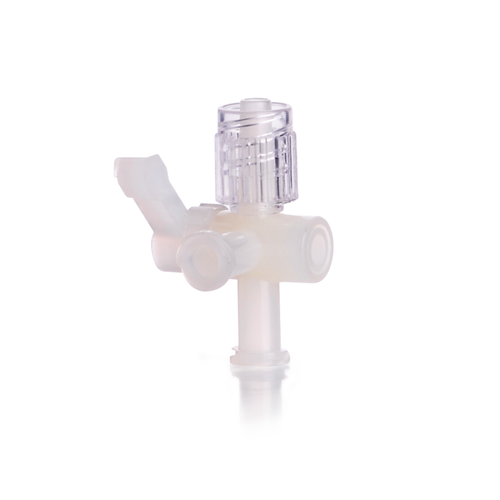
DWK 420163-4503 KIMBLE Three-Way Stopcock Valve

$111.56
SKU: 420163-4503 CASE 7 - 10 Business Days
(No reviews yet)
Availability:
7 - 10 Business Days
Shipping:
Calculated at Checkout

KIMBLE® 420163-4503 Three-Way Stopcock Valve - Nylon Body, Polyethylene Plug, 2 Female Luers to Male Luer, 10/Case

KIMBLE® 420163-4503 Three-Way Stopcock Valves from DWK Life Sciences are three-port plastic laboratory valves designed for controlling and directing liquid flow through compatible Luer-connected laboratory assemblies. Featuring a nylon valve body and polyethylene valve plug, these compact components are listed within the manufacturer's chromatography and laboratory fluid-handling accessories.

The valve incorporates two female Luer connections and one male Luer connection, providing a three-way interface for compatible laboratory fluid pathways. The manually operated stopcock plug controls communication through the valve, allowing the user to configure flow according to the available valve positions and the approved apparatus procedure.

DWK's current product specifications identify nylon as the valve body material and polyethylene as the plug material. The manufacturer's detailed KIMBLE chemistry catalog identifies the plug more specifically as high-density polyethylene (HDPE) and describes the male connection as a male Luer Lock. The product is supplied in a manufacturer case quantity of 10 valves.

Ordering note: Manufacturer part number 420163-4503 identifies the three-way nylon-body stopcock with polyethylene plug and two female-to-one-male Luer port configuration. The standard manufacturer selling unit is 10 valves per case. Tubing, Luer adapters, chromatography columns, reservoirs, and other fluid-system components are separate products. Confirm the male Luer Lock interface and any critical operating requirements for your application.

Specifications:
  • Manufacturer: DWK Life Sciences
  • Brand: KIMBLE®
  • Legacy Product Association: KONTES® chromatography accessories
  • Manufacturer Part Number: 420163-4503
  • Product Type: Three-way stopcock valve
  • Valve Configuration: Three-way; three fluid connection ports
  • Valve Body Material: Nylon
  • Valve Plug Material: Polyethylene
  • Detailed Manufacturer Catalog Plug Description: High-density polyethylene (HDPE)
  • Female Connections: Two female Luer ports
  • Male Connection: One male Luer port
  • Manufacturer Catalog Male Connection Description: Male Luer Lock
  • Operation: Manually operated stopcock plug
  • Primary Product Family: Chromatography fittings and laboratory fluid-handling accessories
  • Manufacturer Case Quantity: 10 valves
  • Purchase Unit: Case of 10
  • Connection Accessories: Separately selected as required
  • Operating Pressure Rating: Not specified in the reviewed manufacturer record
  • Maximum Operating Temperature: Not specified in the reviewed manufacturer record
  • Internal Flow Bore Diameter: Not specified
  • Supplied Sterility: No product-specific sterile designation established
Where KIMBLE Three-Way Stopcock Valves Fit in Laboratory Workflows

A three-way stopcock is used to manage communication among three fluid ports within an appropriate laboratory assembly. It can provide a compact manual control point where a workflow requires selecting between connected fluid lines or controlling the route of liquid movement.

DWK catalogs 420163-4503 with its chromatography fittings, including FLEX-COLUMN® accessories and components used in small laboratory liquid-handling assemblies. The valve's two female Luer connections and male Luer interface allow integration with appropriately matched connectors and tubing adapters.

The nylon body provides a rigid structural component, while the polyethylene plug serves as the internal movable flow-control element. Both polymers must be evaluated for chemical compatibility with the intended liquids, cleaning agents, temperature, and exposure duration.

Application qualification: The three-way connection arrangement does not establish a particular internal passage diagram, pressure rating, flow coefficient, or leakproof performance. Verify the actual valve positions and compatibility of the complete fluid assembly before use. This item is listed as laboratory chromatography hardware, not as a verified sterile medical stopcock.

About the Manufacturer: 

DWK Life Sciences manufactures laboratory glassware, plasticware, chromatography components, and specialty laboratory equipment under established brands including KIMBLE®, KIMAX®, WHEATON®, and DURAN®.

The KIMBLE/KONTES chromatography portfolio includes laboratory columns, Luer adapters, stopcock valves, tubing fittings, and related components. Different stopcock catalog numbers may vary by number of fluid pathways, body material, connector configuration, and manufacturer case quantity. Accurate SKU selection is important when maintaining or building a laboratory fluid-handling assembly.

KIMBLE 420163-4503 Features:
  • Three-way laboratory stopcock valve with three fluid connections
  • Two female Luer connections and one male Luer connection
  • Male Luer Lock configuration identified in the manufacturer's detailed chemistry catalog
  • Nylon valve body as specified by DWK
  • Polyethylene valve plug; detailed manufacturer catalog identifies HDPE
  • Manually operated plug for controlling laboratory fluid pathways
  • Part of the KIMBLE chromatography fitting and accessory portfolio
  • Compact plastic valve design for appropriately matched fluid assemblies
  • Manufacturer case quantity of 10 valves
  • Separate one-way stopcock configurations available under other KIMBLE part numbers
KIMBLE 420163-4503 Benefits:
  • Three-port versatility: A single stopcock provides a manual fluid-routing component for laboratory assemblies involving up to three connected lines.
  • Defined connection geometry: Two female Luer ports and one male Luer port simplify identification of compatible mating components.
  • Polymer construction: Nylon and polyethylene provide an all-plastic valve configuration for appropriately qualified laboratory applications.
  • Manual control: The stopcock permits operator selection of the available flow positions without requiring an electrically powered valve actuator.
  • Chromatography integration: DWK includes this valve among laboratory chromatography accessories.
  • Exact component replacement: The unique manufacturer part number supports purchasing and maintenance of an established apparatus configuration.
  • Consistent manufacturer packaging: The case of 10 supports laboratory stocking and planned assembly work.
Common Applications:
  • Small-scale laboratory chromatography fluid routing
  • KIMBLE/KONTES chromatography fitting assemblies
  • Compatible laboratory column and reservoir connections
  • Manually selected laboratory liquid-transfer pathways
  • Laboratory sample preparation assemblies using Luer connectors
  • Research laboratory fluid-handling setups
  • Replacement of identical stopcock components in existing apparatus
  • Laboratory equipment prototyping and fluid-path evaluation under approved operating conditions
Best-Practice Use:
  • Confirm manufacturer SKU: Verify 420163-4503 before replacing a component or constructing a new assembly.
  • Check port configuration: Ensure the required setup uses two female Luer connections and one male Luer connection.
  • Verify connection locking: Confirm the male Luer Lock detail and mating connector before relying on a threaded locking interface.
  • Review polymer compatibility: Evaluate both nylon and polyethylene against the intended fluid, temperature, concentration, and contact time.
  • Inspect before installation: Look for cracks, damaged ports, distorted plug components, or contamination.
  • Connect without excessive force: Align mating Luer connections correctly and avoid overtightening or bending the plastic body.
  • Identify actual flow paths: Check each functional handle position using an approved nonhazardous test fluid before introducing critical reagents.
  • Check for leakage: Verify the completed assembly at the approved operating conditions.
  • Avoid unsupported pressure or heat: Do not assume the valve is pressure-rated or autoclavable without product-specific confirmation.
  • Control contamination: Use appropriate handling and cleanliness procedures when the fluid path is part of a sensitive laboratory process.
  • Follow an approved replacement procedure: Remove the component from service if it becomes damaged, stiff, leaking, or chemically degraded.
Selection Notes (Three-Way vs. One-Way KIMBLE Valves)
  • 420163-4503: Three-way stopcock with nylon body, polyethylene/HDPE plug, two female Luers and one male Luer; 10/case.
  • 420163-4500: One-way stopcock with nylon body, HDPE plug, female Luer to male Luer Lock; cataloged 50/case.
  • 420163-0000: One-way stopcock with polycarbonate body and HDPE plug; female Luer to male Luer Lock; cataloged 50/case.
  • 420163-0001: Related one-way female-to-male Luer valve, cataloged 10/case; check current material and connection specification before substitution.
  • Three-Way vs. One-Way: A three-way valve provides three connection ports and a different functional fluid arrangement from an ordinary two-port one-way valve.
  • Nylon vs. Polycarbonate: Different body polymers have different chemical and physical properties; do not treat these products as equivalent solely because they use Luer connectors.
  • Polyethylene vs. PTFE: The 420163-4503 plug is polyethylene, not PTFE. Do not substitute PTFE stopcock specifications from unrelated glassware products.
  • Accessory Selection: Separate Luer barb fittings, tubing, columns, and reservoirs may be required for a complete assembly.
Important Chemical, Pressure & Connection Considerations

DWK specifies a nylon body and polyethylene plug. Because these components have different chemical-resistance characteristics, the complete wetted flow path must be checked against the intended solvent or reagent. Chemical exposure may cause swelling, deformation, cracking, or loss of mechanical integrity in unsuitable plastic components.

The reviewed manufacturer product listing does not establish a maximum working pressure, vacuum rating, maximum operating temperature, internal bore dimension, quantified flow rate, leakproof certification, or validated sterilization procedure. No universal reuse or reprocessing claim is established.

Although the detailed manufacturer catalog identifies a male Luer Lock interface, the current product page describes the connection more generally as a male Luer. Confirm the required mating connection before using this part in a system where locking geometry is critical.

This valve is presented by DWK within its laboratory chromatography products. It should not be marketed as sterile, medical-grade, suitable for direct patient connection, or approved for intravenous use without separate manufacturer documentation establishing those claims.

Manufacturer Documentation:

Plastic chemical resistance: DWK Chemical Resistance of Plastics — general guidance on material compatibility and multi-material assemblies.

Plasticware care, cleaning, and handling: DWK Care & Maintenance of Laboratory Plasticware.

Polymer and resin background: DWK Plastic Resins Technical Guide.

For product-specific chemical compatibility, current Luer Lock configuration, validated flow-path diagrams, or operational ratings, contact SOSCleanroom to request additional information from DWK Life Sciences. General material guides are not certification documents for this valve.

Other KIMBLE Chromatography Valves & Fittings

Related Stopcock Valves

  • 420163-4503: Three-way nylon-body valve, polyethylene plug, 2 female Luers to male Luer, 10/case
  • 420163-4500: One-way nylon-body stopcock, polyethylene/HDPE plug, 50/case
  • 420163-0000: One-way polycarbonate-body stopcock, HDPE plug, 50/case
  • 420163-0001: One-way female-to-male Luer stopcock, 10/case; confirm current body material before substitution

Related Laboratory Luer Fittings

  • 420408-0000: Polypropylene 1/16 inch ID tubing barb to female Luer, 10/case
  • 420412-0000: Polypropylene 1/16 inch ID tubing barb to male Luer, 10/case
  • 420411-0000: Polypropylene female Luer to female Luer fitting, 10/case
  • 420407-0000: Polypropylene female Luer to 1/4-28 threaded fitting, 10/case

All related products are separately cataloged and are not included with 420163-4503. Compatibility with the selected stopcock, tubing, and apparatus must be confirmed. Contact SOSCleanroom for availability, pricing, and technical sourcing assistance.

Notes: Looking for additional information about KIMBLE® 420163-4503 three-way stopcock valves? Open The Technical Vault for nylon versus polyethylene material considerations, Luer connector selection, three-way flow-path verification, chromatography applications, chemical resistance, and receiving guidance.

SOSCleanroom supports laboratory and critical-environment procurement with specialty product sourcing, technical identification, and responsive customer service. For pricing, availability, or additional manufacturer documentation, email Sales@SOSsupply.com or call (214) 340-8574.

Product page updated: October 29, 2026 (SOS Technical Staff)

© 2026 Specialty Optical Systems, Inc. (dba SOSCleanroom). All rights reserved.


The Technical Vault By SOSCleanroom
KIMBLE 420163-4503 Three-Way Nylon Body Polyethylene Plug 2 Female Luers 1 Male Luer Chromatography 10 / Case

KIMBLE 420163-4503: three-port fluid control for laboratory chromatography assemblies

The KIMBLE® 420163-4503 is a three-way plastic stopcock valve from DWK Life Sciences. It combines a nylon body, a polyethylene valve plug, and a three-port Luer configuration consisting of two female connections and one male connection.

DWK catalogs this stopcock within its KIMBLE/KONTES laboratory chromatography accessory family. The valve is intended for integration into compatible small-scale fluid-handling apparatus where manual control or selection of liquid pathways is required.

The current manufacturer web specifications identify the body as nylon and the plug as polyethylene. Detailed manufacturer catalog literature describes the plug as high-density polyethylene (HDPE) and the male Luer as a Luer Lock connection. The standard purchasing quantity is 10 valves per case.

Operations takeaway: Port quantity does not define a valve's complete performance. Before using a three-way stopcock, verify its actual internal flow passages, available switching positions, mating Luer connections, chemical compatibility, and operating limits. Those factors govern whether the component is suitable for the intended assembly.


Specifications (SKU controls for purchasing, maintenance, and SOPs)
  • Manufacturer: DWK Life Sciences
  • Current Brand: KIMBLE®
  • Legacy Product Association: KONTES® laboratory chromatography components
  • Catalog Number: 420163-4503
  • Product Type: Three-way laboratory stopcock valve
  • Number of Connection Ports: 3
  • Valve Body Material: Nylon
  • Valve Plug Material: Polyethylene
  • Detailed Catalog Plug Designation: High-density polyethylene (HDPE)
  • Female Luer Connections: 2
  • Male Luer Connections: 1
  • Detailed Catalog Male Connection: Male Luer Lock
  • Operating Principle: Manually positioned internal stopcock plug
  • Product Family: Chromatography fittings and liquid-handling accessories
  • Manufacturer Case Quantity: 10 valves
  • Purchase Unit: Case
  • Included Tubing: None identified as included
  • Included Additional Luer Adapters: None identified as included
  • Internal Bore Dimension: Not provided
  • Rated Flow Capacity: Not provided
  • Pressure / Vacuum Rating: Not provided
  • Maximum Operating Temperature: Not provided
  • Specific Valve Porting Diagram: Not published in the reviewed SKU listing
  • Supplied Sterility: Not established
  • Primary Intended Context: Laboratory chromatography and compatible fluid-routing assemblies

Specification control: The valve body and valve plug are different materials. Describe the assembly as a nylon-body valve with a polyethylene plug. Do not call the entire component HDPE, polypropylene, polycarbonate, glass, or PTFE.


How three-way stopcock valves work: port selection versus actual internal porting

A three-way stopcock has three external fluid ports and a movable internal element that changes how liquid can pass through the valve. Depending on internal passage geometry, different handle positions may connect selected ports or isolate parts of the fluid pathway.

The presence of three Luer connectors does not establish that all three ports are simultaneously connected or that every handle position provides a complete shutoff. Different stopcock designs can have different internal porting arrangements.

  • Three External Ports: Two female Luer connections and one male Luer connection.
  • Movable Plug: Controls the available liquid pathways.
  • Handle Orientation: Must be interpreted using the actual valve design, not a generic stopcock diagram.
  • Flow Direction: Confirm the required inlet, outlet, or diversion relationship before use.
  • Possible Closed Position: Do not assume a positive total-shutoff position without verification.
  • Functional Testing: Confirm actual port communication with a compatible nonhazardous test fluid under approved conditions.

Critical design boundary: DWK's reviewed SKU page does not include a model-specific flow-path diagram. Do not publish a port-switching map or assume that the handle pointer indicates a particular open or closed passage without manufacturer verification or an approved functional test.


Two female Luers to one male Luer: connection geometry and interface selection

The product's three external connections consist of two female Luer ports and one male Luer port. The Luer designation describes the type of mating fluid connector used in the laboratory assembly.

DWK's current online product family states "two female Luers to male Luer." Its detailed KIMBLE chemistry catalog identifies the specific valve as "two female Luers to male Luer Lock." This more specific description should be checked when a secure threaded locking connection is a requirement.

Connection Manufacturer designation Selection consideration
Female port 1 Female Luer Requires compatible mating male connection
Female port 2 Female Luer Requires compatible mating male connection
Male port Male Luer; detailed catalog says Luer Lock Confirm matching connector and locking geometry
Tubing interface Separate adapter if required Choose barb, threaded, or other fitting independently

Luer terminology alone does not establish that the component has been certified to a particular ISO connector standard or that it is medically approved. The actual male and female parts, any locking collar, and the application's mechanical requirements must be checked.

Connection checkpoint: Do not confuse a Luer connection with 1/4-28 threading or a hose barb. These are different interface types. If tubing or a threaded fitting is required, select and verify the necessary adapter separately.


Material construction: nylon body and polyethylene/HDPE valve plug

The KIMBLE 420163-4503 is a multi-material plastic assembly. DWK's current product table lists the valve body material as nylon and the plug material as polyethylene. The detailed catalog identifies the polyethylene plug as HDPE.

Nylon and polyethylene have different physical, thermal, and chemical resistance characteristics. The fact that one polymer may be suitable for a particular reagent does not establish compatibility of the other polymer or the complete valve.

  • Nylon: Structural valve body material.
  • Polyethylene: Manufacturer-listed valve plug material.
  • HDPE: Specific polyethylene grade identified in detailed catalog literature.
  • Plug Function: Movable internal component used to control port communication.
  • Complete Valve: Suitability is limited by the most restrictive exposed material and component.
  • Exact Nylon Grade: Not specified.
  • Resin Additives: Exact stabilizers, pigments, and formulation details not specified.
  • Other Wetted Components: No independent gasket or seal material specification identified in the reviewed listing.

Material qualification: The manufacturer's general plastic-resin descriptions may provide useful guidance, but generic polymer temperature limits and chemical resistance data are not finished-product ratings for 420163-4503. Obtain SKU-specific validation where required.

Review DWK Plastic Resin Technical Information


Chemical compatibility: evaluate both body and plug under actual operating conditions

DWK warns that unsuitable chemical exposure can degrade plasticware, potentially causing cracking, loss of strength, and reduced mechanical performance. A multi-polymer valve must be evaluated for all wetted and exposed materials, not just the material with the more favorable general resistance.

Chemical resistance depends on the complete reagent formulation, concentration, temperature, exposure duration, and physical stresses imposed on the valve. A polymer that is acceptable during brief ambient contact may behave differently under prolonged exposure or higher temperatures.

  • Identify the Reagent: Confirm every relevant solvent, acid, base, additive, and cleaning chemical.
  • Check Nylon: Evaluate the body separately for chemical attack and mechanical integrity.
  • Check Polyethylene: Evaluate the plug separately for swelling, deformation, and resistance.
  • Consider Concentration: Dilute and concentrated reagents can behave differently.
  • Consider Temperature: Compatibility may change under heating or cooling.
  • Consider Exposure Duration: Continuous contact may require stricter qualification than brief transfer.
  • Evaluate Connections: Mating adapters and tubing may introduce additional material limitations.
  • Perform a System Check: Confirm leak resistance and functionality under the approved laboratory process.

Compatibility rule: Do not describe the valve as universally solvent-resistant, acid-resistant, or suitable for all chromatography mobile phases. Consult the manufacturer for the specific liquid and conditions where failure would compromise sample integrity or operator safety.

Review DWK Chemical Resistance of Plastics


Chromatography use: separating flow routing from validated separation performance

The manufacturer's chemistry catalog lists 420163-4503 among chromatography fittings and accessories. A valve of this type can be considered as a manual liquid-path control component in an appropriately designed chromatography or small laboratory column system.

Chromatographic separation performance depends on more than a stopcock: stationary phase, solvent selection, column configuration, pressure conditions, flow stability, and sample preparation influence the result. The stopcock provides a fluid-handling function but does not independently establish a particular chromatographic efficiency or recovery.

  • Column Connections: Verify that the assembly uses compatible Luer fittings and tubing.
  • Liquid Routing: Confirm which valve positions connect the required fluid pathways.
  • Mobile Phase Compatibility: Evaluate both nylon and polyethylene.
  • Flow Restrictions: No SKU-specific internal bore or pressure-drop curve is published.
  • Leak Checking: Check the complete assembly at approved operating conditions.
  • Dead Volume: No certified internal volume is specified; evaluate potential sample carryover for sensitive methods.
  • System Qualification: Confirm reproducibility and suitability within the validated or approved analytical procedure.

Performance boundary: Being cataloged under chromatography does not establish an HPLC pressure rating, analytical recovery specification, low-dead-volume certification, or universal mobile-phase compatibility. Those characteristics require separate documentation.


Pressure, vacuum, heat, and mechanical operating limits

The current DWK 420163-4503 product specifications do not publish a maximum pressure, vacuum rating, maximum working temperature, or quantified connection-retention force.

Although DWK publishes general temperature ranges and properties for certain plastic resins, those values are material-level reference information and must not be assigned to an assembled nylon-body/HDPE-plug stopcock without manufacturer confirmation.

  • Positive Pressure: No product-specific maximum rating identified.
  • Vacuum: No product-specific rating identified.
  • Maximum Temperature: No finished-valve operating limit identified.
  • Thermal Cycling: No validated cycle count or conditions identified.
  • Luer Retention: No quantified connection strength identified.
  • Flow Capacity: No manufacturer-tested maximum flow rate identified.
  • Valve Service Life: No certified number of operating cycles identified.

Engineering qualification: Do not place this valve into a pressure-driven, vacuum, high-temperature, or otherwise hazardous system based solely on its Luer connections. Obtain operating-limit confirmation and complete an application-specific risk assessment first.


Installation and initial functional verification checklist

Before placing a three-way valve into service, confirm that the intended connections and the valve's actual internal configuration meet the requirements of the laboratory assembly.

  1. Identify the component: Confirm manufacturer number 420163-4503 and three-way configuration.
  2. Inspect the body: Check for cracks, distortion, contamination, or damaged connection ports.
  3. Inspect the plug: Confirm appropriate movement and absence of visible defects.
  4. Verify mating connectors: Match the two female Luer ports and male Luer port to compatible system fittings.
  5. Check locking requirements: Confirm the male Luer Lock configuration and mating hardware if critical.
  6. Confirm chemical compatibility: Check the full fluid path, including nylon, polyethylene, tubing, and adapters.
  7. Assemble without force: Avoid overtightening or stressing plastic connection points.
  8. Map the flow positions: Use an approved nonhazardous fluid to verify actual passage communication.
  9. Check for leaks: Test under safe, qualified operating conditions.
  10. Document the configuration: Record the valve positions required by the laboratory's procedure.
  11. Release for use: Use only after the applicable acceptance checks have passed.

Connection safety: Never apply excessive tightening force to a plastic Luer port. If a fitting does not engage smoothly, inspect its geometry and obtain the correct mating component rather than forcing the connection.


Cleaning, decontamination, and reuse considerations

DWK publishes general recommendations for care of laboratory plasticware, emphasizing material compatibility, nonabrasive cleaning, and avoidance of inappropriate heat exposure.

However, the 420163-4503 product page does not establish a validated cleaning process, reusable-service classification, maximum number of reuse cycles, or finished-valve sterilization method. A complex valve assembly may retain liquid in its internal passages or connections, so method-specific cleaning validation may be required.

  • Before Cleaning: Remove the valve safely from service and identify any residual reagent hazards.
  • Cleaning Chemistry: Use only chemicals compatible with the nylon body and polyethylene plug.
  • Abrasives: Avoid procedures that could scratch or deform sealing or mating surfaces.
  • Internal Passages: Account for trapped liquid, residue, and possible cross-contamination.
  • Mechanical Inspection: Check for stiffness, leakage, cracking, or plug deterioration.
  • Autoclaving: No finished-valve autoclave cycle is specified.
  • Chemical Disinfection: No SKU-specific validated disinfection method is specified.
  • Reuse Decision: Follow laboratory qualification and obtain manufacturer confirmation if repeated service is required.

Processing boundary: Do not transfer a generic 121°C polypropylene autoclave recommendation to this nylon/HDPE valve. The manufacturer has not established that the finished 420163-4503 assembly can withstand that process.

Review DWK Care & Maintenance of Laboratory Plasticware


KIMBLE 420163 series: three-way versus one-way stopcock alternatives

The manufacturer's chemistry catalog identifies several related valve catalog numbers. They differ in port configuration, material, Luer connection details, and packaging. These differences prevent them from being treated as automatic substitutes.

DWK SKU Valve Body Plug Case
420163-4503 Three-way Nylon Polyethylene / HDPE 10
420163-4500 One-way Nylon HDPE 50
420163-0000 One-way Polycarbonate HDPE 50
420163-0001 One-way Verify current grade Polyethylene 10

Historical manufacturer catalog tables do not consistently identify the body material for 420163-0001. Verify its currently supplied construction before using it as a material-compatible substitute. One-way and three-way designs have different fluid-path functionality and cannot be substituted without engineering approval.

Substitution warning: The critical differences are not limited to price or case quantity. Valve function, polymer construction, connector-locking arrangement, and operating suitability all require review.


Related FLEX-COLUMN Luer adapters: selecting separate fittings

DWK's KIMBLE chemistry catalog includes various Luer fittings and adapters that may be relevant when planning a laboratory fluid assembly. These are separate products, and their presence in the same catalog does not prove universal mechanical compatibility with every stopcock.

Catalog Number Fitting Description Material Case Qty.
420408-0000 1/16 inch ID barb to female Luer Polypropylene 10
420412-0000 1/16 inch ID barb to male Luer Polypropylene 10
420411-0000 Female Luer to female Luer Polypropylene 10
420407-0000 Female Luer to 1/4-28 thread Polypropylene 10

Tubing diameters and threaded interfaces are determined by the selected fitting, not by the three-way stopcock SKU. Verify the mating connector gender, retention method, polymer compatibility, and required operating pressure before assembly.


Sterility, medical use, and controlled-environment qualification

The KIMBLE 420163-4503 is described by DWK as a laboratory stopcock used with chromatography accessories. The product listing does not establish a supplied-sterile designation, a validated sterilization process, or a medical-device classification.

Luer connections are used in many different fluid-handling settings. Their presence on this valve does not independently establish approval for intravenous, patient-connected, pharmaceutical aseptic, or other regulated clinical applications.

  • Supplied Sterility: Not established.
  • Sterility Assurance Level: Not specified.
  • Endotoxin Limits: Not specified.
  • ISO Cleanroom Cleanliness: No SKU-specific rating identified.
  • Medical IV Use: No product-specific authorization established.
  • Patient Contact: No product-specific authorization established.
  • ISO Luer Standard Certification: Not stated for this SKU.
  • Extractables / Leachables: No finished-product quantitative data identified.
  • Validated Cleaning or Sterilization: No product-specific procedure identified.

Regulated-use boundary: Do not advertise this chromatography valve as a sterile medical stopcock, USP Class VI component, FDA-cleared device, or validated pharmaceutical single-use assembly unless specific current manufacturer documentation establishes the applicable claim.


Packaging, receiving, and inspection checklist

DWK specifies a manufacturer case quantity of 10 three-way stopcock valves for 420163-4503. Receiving inspections should focus on exact SKU identification, connector geometry, component integrity, and the expected package quantity.

  1. Verify Manufacturer SKU: Confirm 420163-4503 against the purchase order.
  2. Confirm Valve Type: Verify a three-way valve rather than a one-way stopcock.
  3. Confirm Port Count: Check for two female Luer ports and one male Luer port.
  4. Inspect Locking Geometry: Confirm the male Luer Lock arrangement where specified.
  5. Confirm Body Material: Nylon, according to the current DWK product record.
  6. Confirm Plug Material: Polyethylene, identified as HDPE in detailed catalog literature.
  7. Count Valves: Confirm a manufacturer package of 10.
  8. Inspect Packaging: Look for shipping damage or contamination.
  9. Inspect Valve Bodies: Check for cracking, malformed ports, or visibly defective plugs.
  10. Check Operation: Perform the laboratory's approved manual function and flow-path verification.
  11. Verify Supporting Components: Confirm the necessary fittings and tubing are available separately.
  12. Record Disposition: Release, quarantine, or reject according to the facility's receiving requirements.

Receiving checkpoint: Packaging, pressure limits, material compatibility, and connection geometry must be assessed separately. A case of 10 three-way valves should not be substituted with one-way valves merely because their catalog numbers share the 420163 prefix.


Technical FAQs

Is KIMBLE 420163-4503 a three-way stopcock?

Yes. DWK identifies it as a three-way laboratory stopcock valve with two female Luer connections and one male Luer connection.

What is the valve body made of?

The manufacturer specifies nylon for the valve body.

What material is the plug?

The current DWK website identifies polyethylene. The detailed KIMBLE chemistry catalog specifies high-density polyethylene (HDPE).

Is the plug made from PTFE?

No. The manufacturer specifies polyethylene for this SKU. PTFE plugs are used in certain other laboratory stopcock models.

Does the valve have a male Luer Lock?

The detailed manufacturer chemistry catalog identifies a male Luer Lock. The current webpage uses the shorter designation male Luer. Confirm current locking geometry if essential.

How many connection ports are provided?

Three: two female Luer ports and one male Luer port.

Does three-way mean all ports are always open?

No. Three-way identifies the three-port valve configuration. The actual internal flow paths depend on the stopcock design and handle position. A SKU-specific porting diagram was not identified.

Is this valve suitable for chromatography?

DWK catalogs it among KIMBLE chromatography fittings and accessories. Actual suitability depends on the laboratory apparatus, solvent system, flow requirements, and operating conditions.

Can this valve be used with any laboratory solvent?

No universal solvent compatibility is established. Both nylon and polyethylene must be evaluated for the specific chemicals and conditions.

What is the valve's maximum pressure rating?

No product-specific operating pressure or vacuum rating was found in the reviewed manufacturer listing.

Can it be used for HPLC?

The product is cataloged for chromatography, but no HPLC pressure rating, flow coefficient, or validated high-pressure compatibility is established. Do not assume suitability for a high-pressure system.

Is the stopcock autoclavable?

The reviewed 420163-4503 listing does not establish an approved autoclave cycle or finished-assembly processing rating.

Is the product supplied sterile?

No supplied-sterile designation was identified in the reviewed manufacturer product information.

Can it be used for an intravenous line?

This SKU is described as a laboratory chromatography accessory. No manufacturer authorization for intravenous or other patient-connected use was established.

Does it include tubing or adapters?

No separate tubing or Luer fitting accessories are identified as included. Select those parts independently based on the complete fluid assembly.

What is the difference between 420163-4503 and 420163-4500?

420163-4503 is a three-way valve with three Luer ports, supplied 10 per case. 420163-4500 is a separate one-way nylon-body valve cataloged 50 per case.

How many stopcocks are supplied per case?

DWK specifies a manufacturer case quantity of 10 valves.


Why purchase KIMBLE stopcock valves from SOSCleanroom
  • Exact manufacturer SKU identification: SOSCleanroom helps customers distinguish three-way and one-way stopcock configurations.
  • Technical sourcing assistance: Request help confirming polymer materials, Luer connection arrangements, and package quantities.
  • Laboratory chromatography procurement: Source specialty valve components, fittings, and related consumables through SOSCleanroom.
  • Manufacturer documentation support: Request assistance with additional compatibility or operating specifications when available.
  • Purchasing clarity: Confirm a manufacturer case quantity of 10 rather than accidentally ordering a different stopcock package or flow configuration.
  • Responsive service: Contact SOSCleanroom for formal quotations, current availability, and technical product identification.

Manufacturer documentation and technical references
  • DWK Chemical Resistance of Plastics: Review Plastic Chemical Resistance Guidance — general guidance on chemical compatibility for laboratory polymer components.
  • DWK Care & Maintenance of Laboratory Plasticware: Review Plasticware Handling and Care — handling precautions, cleaning practices, heating, and general processing limitations.
  • DWK Plastic Resins: Review Polymer Material Background — general descriptions of commonly used laboratory plastic resins.
  • Additional Manufacturer Specifications: Contact SOSCleanroom for assistance requesting current DWK information about the male Luer Lock connection, specific nylon formulation, internal flow geometry, and applicable operating limits.

The current DWK 420163-4503 product record confirms the nylon body, polyethylene plug, two-female-to-one-male Luer configuration, and case quantity of 10. DWK's detailed chemistry catalog identifies the plug as HDPE, the male connector as Luer Lock, and the valve as a chromatography accessory.

The linked manufacturer technical pages provide general plastic-material guidance, not product-specific performance certification. Operating conditions, pressure limits, and fluid-path requirements must be confirmed before using the valve in a critical assembly.


If you have any questions please email us at Sales@SOSsupply.com or give us a call at (214) 340-8574. For additional product guidance, use the SOSCleanroom AI ChatBot or contact our team for manufacturer documentation assistance. Technical insight: KIMBLE 420163-4503 is a three-way nylon-body valve with a polyethylene/HDPE plug and two female-to-one-male Luer connection arrangement. Proper use depends on verified flow paths, compatible mating fittings, appropriate reagent chemistry, and confirmed operating limits. Last updated: October 29, 2026 © 2026 SOSCleanroom. All rights reserved.