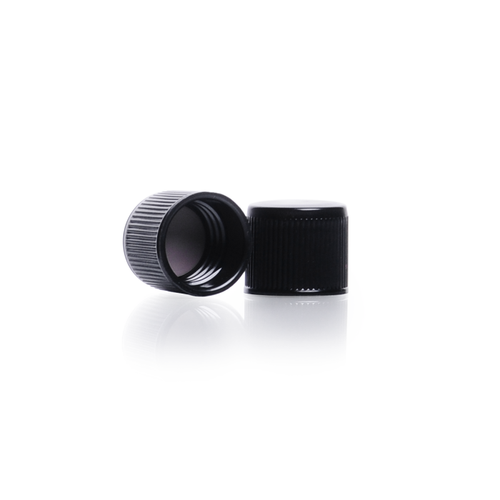
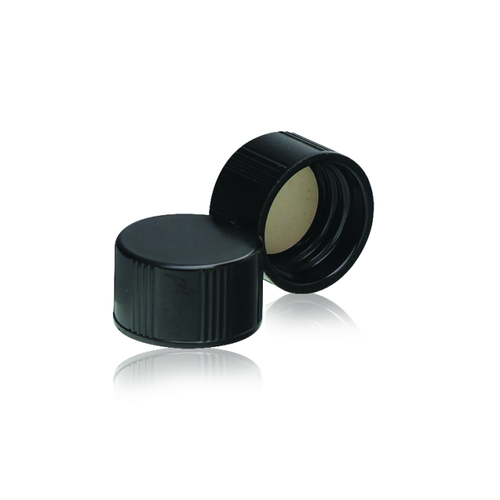
DWK 45066C-15 KIMBLE Black Phenolic Screw Thread Caps, PTFE-Faced Rubber, 15-415

$476.09
SKU: 45066C-15 CASE 7 - 10 Business Days
(No reviews yet)
Availability:
7 - 10 Business Days
Shipping:
Calculated at Checkout

KIMBLE® 45066C-15 Black Phenolic Screw Thread Cap - 15-415, PTFE-Faced Rubber Liner, Solid Top, 300/Case

KIMBLE® 45066C-15 Black Phenolic Screw Thread Caps from DWK Life Sciences are 15-415 threaded laboratory closures featuring a black phenolic resin cap and a PTFE-faced white rubber liner. Designed for general laboratory use, these solid-top screw caps provide a chemically resistant sample-facing surface and a compressible liner for properly matched laboratory tubes and containers.

Each cap has a manufacturer-specified 16 mm height, a 15-415 screw-thread finish, and a solid top without an access opening. The PTFE facing helps limit contact between container contents and the underlying rubber liner, while the rubber provides the flexibility needed to seat against a compatible container rim.

DWK describes the specially formulated phenolic resin and liner adhesive as designed to withstand the effects of repeated autoclaving. The manufacturer also references ASTM Specification E982, Class A requirements for this closure family. Actual processing conditions, chemical compatibility, and sealing performance must be evaluated for the complete cap-and-container assembly.

The standard manufacturer package contains 300 caps per case. DWK additionally identifies 45066C-15 as a replacement closure for its 15 mL KIMBLE 410090-0015 reusable centrifuge tube. Bottles, tubes, and other laboratory containers are sold separately.

Ordering note: Catalog 45066C-15 is the 15-415 black phenolic cap with PTFE-faced rubber liner, supplied 300 caps per case. Confirm the exact 15-415 neck finish and required liner chemistry before ordering. This is not a 15-425 cap, an unlined closure, or a rubber-only liner. Compatible tubes and bottles are separate purchases.

Specifications:
  • Manufacturer: DWK Life Sciences
  • Brand: KIMBLE®
  • Manufacturer Part Number: 45066C-15
  • Product Type: Screw-thread laboratory cap
  • Cap Material: Phenolic resin
  • Cap Color: Black
  • Thread Finish: 15-415
  • Cap Height: 16 mm
  • Cap Style: Solid top
  • Liner Material: PTFE-faced rubber
  • Liner Facing: Polytetrafluoroethylene (PTFE)
  • Liner Backing: General-purpose white rubber
  • Liner Attachment: Manufacturer-described liner adhesive
  • Autoclave Design: Phenolic cap and liner adhesive formulated to withstand repeated autoclaving
  • Manufacturer Standards Reference: ASTM E982, Class A requirements, as identified by DWK
  • Compatible Finish: Properly matched 15-415 screw-thread laboratory container
  • Documented Replacement Application: KIMBLE 410090-0015 reusable centrifuge tube
  • Manufacturer Case Quantity: 300 caps
  • Purchase Unit: Case of 300
  • Tube or Bottle Included: No; closure only
  • Supplied Sterility: Not established by the reviewed manufacturer specification
  • Validated Sterilization Cycle: No SKU-specific cycle published in the reviewed product record
Where KIMBLE 45066C-15 Fits in Laboratory Workflows

Laboratory screw-thread caps are used to close compatible glass or plastic containers during sample preparation, handling, processing, and storage. Correct closure selection depends on the container's actual neck finish, the liner material, the contents, and the operating conditions.

The KIMBLE 45066C-15 combines a mechanically rigid phenolic cap with a compressible rubber liner protected by a PTFE sample-facing surface. This construction is intended to provide a laboratory closure option where chemical resistance at the sealing interface is important.

DWK's manufacturer documentation also identifies this cap as a replacement component for the KIMBLE 410090-0015 reusable centrifuge tube, a 15 mL conical glass tube with a 15-415 threaded closure. When used as a replacement, the cap should be matched to the exact tube and the laboratory's handling procedure.

Closure-system qualification: The cap alone does not guarantee an airtight, leakproof, pressure-resistant, or sterile assembly. The container rim, neck threads, liner compression, application torque, chemical exposure, and operating conditions all affect performance.

About the Manufacturer: 

DWK Life Sciences manufactures laboratory glassware, plasticware, containers, and closure systems under established brands including KIMBLE®, KIMAX®, WHEATON®, and DURAN®.

KIMBLE laboratory closures are offered in multiple thread finishes and liner configurations to support different chemical, thermal, and container requirements. The 45066C series combines black phenolic screw caps with PTFE-faced rubber liners, while related products use alternative rubber, vinyl-faced pulp, or polymer cone liners.

KIMBLE 45066C-15 Features:
  • Black phenolic resin screw-thread laboratory cap
  • 15-415 thread finish for compatible laboratory containers
  • 16 mm manufacturer-specified cap height
  • Solid-top closure design without a dispensing or septum opening
  • PTFE-faced white rubber liner supplied with the cap
  • PTFE-facing material selected for broad resistance to many laboratory chemicals
  • Compressible rubber backing to support sealing against an appropriate container rim
  • Specially formulated phenolic resin and liner adhesive designed to withstand repeated autoclaving
  • ASTM E982, Class A requirements referenced in the DWK product-family description
  • Manufacturer-identified replacement cap for KIMBLE 410090-0015
  • 300 caps per manufacturer case
KIMBLE 45066C-15 Benefits:
  • Chemically resistant liner surface: PTFE facing helps isolate the underlying rubber from direct contact with compatible laboratory contents.
  • Compressible sealing interface: Rubber backing helps the liner conform to the rim of a properly matched tube or container.
  • Thermal-processing design: The manufacturer formulates the phenolic resin and liner adhesive for resistance to repeated autoclaving, subject to approved assembly and processing conditions.
  • Defined thread finish: The 15-415 designation supports exact replacement and selection for compatible container necks.
  • Solid-top coverage: Provides a closed cap surface without a puncture opening or dispensing port.
  • Replacement-part availability: Identified by DWK for the KIMBLE 410090-0015 reusable centrifuge tube.
  • Laboratory purchasing consistency: A 300-count manufacturer case supports inventory control and recurring replacement requirements.
Common Applications:
  • Replacement closure for KIMBLE 410090-0015 reusable centrifuge tubes
  • General laboratory tube and container closure applications
  • Laboratory sample preparation and temporary holding in compatible containers
  • Research and development laboratory workflows
  • Laboratory reagent and specimen storage where the full container system is suitable
  • Applications requiring a PTFE-faced liner rather than direct rubber contact
  • Laboratory processing workflows involving manufacturer-permitted autoclaving
  • Maintenance of established 15-415 threaded laboratory container assemblies
Best-Practice Use:
  • Verify the neck finish: Confirm the container is designed for a 15-415 cap. Do not substitute a 15-425 or another thread finish based on nominal diameter alone.
  • Inspect the cap: Check the phenolic body for cracking, deformation, damaged threads, or contamination.
  • Inspect the liner: Verify the PTFE-facing surface is intact and the rubber backing remains properly seated.
  • Check chemical compatibility: Evaluate PTFE, rubber, adhesive, cap body, and container material for the intended contents.
  • Apply correctly: Engage the screw threads without cross-threading or excessive tightening.
  • Use method-defined torque: Follow the container or process manufacturer's application guidance when a torque requirement exists.
  • Confirm sealing performance: Qualify the assembled cap and container for the intended storage, handling, or testing conditions.
  • Prepare for autoclaving: Follow validated laboratory procedures and applicable container guidance to prevent hazardous pressure buildup.
  • Inspect after processing: Check for liner displacement, adhesive degradation, cracking, or loss of sealing performance.
  • Avoid unsupported pressure conditions: Do not assume the cap-and-container system is pressure-rated or vacuum-rated.
  • Store appropriately: Protect unused caps from contamination, impact, and conditions that can damage the liner.
Selection Notes (45066C-15 vs. Other KIMBLE Caps)
  • 45066C-15: Black phenolic, 15-415, PTFE-faced rubber liner, 16 mm height, 300/case; this product.
  • 45066B-15: Black phenolic, 15-415, white rubber liner without the specified PTFE facing, 16 mm height, 300/case.
  • 73802-15415: Black phenolic 15-415 cap with PTFE-faced rubber liner, 500/case; separate manufacturer catalog number and package configuration.
  • 45066C-13: PTFE-faced rubber liner, 13-415 thread, 14 mm height, 300/case.
  • 45066C-18: PTFE-faced rubber liner, 18-415 thread, 18 mm height, 225/case.
  • 45066C-24: PTFE-faced rubber liner, 24-410 thread, 19 mm height, 150/case.
  • PTFE-Faced Rubber vs. Rubber Only: The PTFE facing changes the material exposed at the sealing surface; the different liner constructions should not be substituted without review.
  • 15-415 vs. 15-425: These are different thread designations and should not be treated as universally interchangeable.
  • Closure Only: The cap is sold separately from the laboratory tube or bottle.
Important Chemical, Autoclaving & Sealing Considerations

The PTFE-facing material provides broad chemical resistance, but the finished cap is a multi-material assembly. Its rubber backing, liner adhesive, and phenolic body must also be evaluated for chemical exposure, heat, cleaning methods, and mechanical conditions.

DWK states that the phenolic resin and liner adhesive are formulated to withstand repeated autoclaving. This does not establish a specific validated sterilization temperature, cycle duration, maximum number of cycles, or sterility assurance level for every cap-and-container assembly. Follow approved processing procedures for the exact vessel and closure.

The reviewed product specifications do not provide a guaranteed leak rate, certified pressure limit, maximum application torque, vapor transmission rating, or universal chemical compatibility chart for 45066C-15.

DWK references ASTM E982, Class A requirements in its closure-family description. That manufacturer reference should not be interpreted as proof of an independent, lot-specific compliance certificate, an ISO/IEC 17025 calibration certificate, or validation for a particular regulated laboratory application.

Manufacturer Documentation:

Closure liner materials and selection: DWK Closure Liner Guide — technical background on PTFE-faced rubber and alternative liner constructions.

Chemical compatibility: DWK Chemical Resistance of Plastics — general polymer compatibility guidance.

Laboratory plasticware handling and autoclaving: DWK Care & Maintenance of Laboratory Plasticware — general precautions for cleaning and thermal processing.

General DWK technical guides describe material families and selection principles. For current product-specific rubber formulation, PTFE facing thickness, permitted autoclave cycle, or certificate documentation, contact SOSCleanroom for manufacturer assistance.

Other KIMBLE Phenolic Screw Caps

PTFE-Faced Rubber Liner Series

  • 45066C-13: 13-415 black phenolic cap, 14 mm height, 300/case
  • 45066C-15: 15-415 black phenolic cap, 16 mm height, 300/case
  • 45066C-18: 18-415 black phenolic cap, 18 mm height, 225/case
  • 45066C-24: 24-410 black phenolic cap, 19 mm height, 150/case

Other Liner or Package Options

  • 45066B-15: 15-415 black phenolic cap with white rubber liner, 300/case
  • 73802-15415: 15-415 black phenolic cap with PTFE-faced rubber liner, 500/case

Every catalog number is a separate manufacturer product. Thread finish, liner chemistry, and package quantity must be confirmed before selecting an alternative. Contact SOSCleanroom for pricing, current availability, and compatible laboratory container sourcing.

Notes: Looking for technical information about KIMBLE® 45066C-15 caps? Open The Technical Vault for PTFE-faced rubber liner construction, 15-415 thread selection, phenolic material properties, autoclaving limitations, chemical compatibility, and closure-system qualification.

SOSCleanroom supports laboratory and critical-environment procurement with specialty product sourcing and responsive customer service. For pricing, availability, or manufacturer documentation, email Sales@SOSsupply.com or call (214) 340-8574.

Product page updated: October 29, 2026 (SOS Technical Staff)

© 2026 Specialty Optical Systems, Inc. (dba SOSCleanroom). All rights reserved.


The Technical Vault By SOSCleanroom
KIMBLE 45066C-15 15-415 Thread Black Phenolic PTFE-Faced Rubber Solid Top 16 mm Height Autoclave-Resistant Design 300 / Case

KIMBLE 45066C-15: a chemically resistant laboratory screw-cap closure

The KIMBLE® 45066C-15 is a black phenolic resin laboratory screw cap from DWK Life Sciences. It features a 15-415 thread finish, 16 mm cap height, solid-top construction, and a PTFE-faced white rubber liner.

The cap is designed for compatible screw-thread laboratory containers where mechanical closure, liner compression, and chemical resistance at the sealing interface are important. DWK describes its phenolic cap material and liner adhesive as formulated to withstand the effects of repeated autoclaving.

The manufacturer supplies this configuration in cases of 300 individual caps. The cap is also identified in KIMBLE catalog literature as a replacement for the 410090-0015 reusable centrifuge tube.

Operations takeaway: This is a multi-material closure, not a solid PTFE component. Selection and qualification must account for its phenolic body, PTFE-facing layer, rubber backing, liner adhesive, container finish, and actual processing conditions.


Specifications (SKU controls for purchasing, SOPs, and receiving)
  • Manufacturer: DWK Life Sciences
  • Brand: KIMBLE®
  • Catalog Number: 45066C-15
  • Product Family: Black Phenolic Screw Thread Caps with PTFE-Faced Rubber Liners
  • Cap Body: Phenolic resin
  • Color: Black
  • Thread Finish: 15-415
  • Cap Height: 16 mm
  • Cap Style: Solid Top
  • Liner: PTFE-faced rubber
  • Liner Facing: Polytetrafluoroethylene (PTFE)
  • Underlying Liner: White rubber
  • Liner Bonding: Manufacturer-described adhesive
  • Autoclave Design: Specially formulated cap resin and liner adhesive to withstand effects of repeated autoclaving
  • ASTM Reference: ASTM E982, Class A requirements, as described by DWK
  • Closure Application: Compatible 15-415 threaded laboratory tubes and containers
  • Documented Replacement Use: KIMBLE 410090-0015 centrifuge tube
  • Case Quantity: 300 caps
  • Purchase Unit: Case
  • Cap Outer Diameter: Not provided in the reviewed SKU listing
  • Liner Thickness: Not provided for this specific SKU
  • Specific Rubber Compound: Not identified in the reviewed SKU record
  • Application Torque: No product-specific value identified
  • Pressure / Vacuum Rating: Not established
  • Supplied Sterility: Not established
  • Validated Autoclave Cycle: No specific cycle published for the assembled container system

Specification rule: The 15-415 designation identifies a screw-thread finish. The 16 mm value is the manufacturer's cap height. Do not confuse either specification with the cap's unlisted outside diameter or the tube's nominal volume.


PTFE-faced rubber construction: what each layer contributes

The liner consists of a PTFE-facing surface supported by rubber. This design combines the chemical resistance characteristics of PTFE at the product-facing surface with the resilience and compressibility of an elastomeric backing.

When a compatible cap is tightened onto a properly matched container finish, the backing material compresses against the rim and helps establish the sealing interface. The PTFE surface reduces direct sample contact with the rubber.

  • PTFE Facing: The primary material presented toward the container contents.
  • White Rubber Backing: Provides elasticity and compression under the cap.
  • Liner Adhesive: Retains the liner assembly within the phenolic cap.
  • Phenolic Shell: Supplies the screw-thread structure and mechanical retention.
  • Container Rim: Provides the mating surface for liner contact.
  • Complete Seal: Depends on the combination of all components and the applied closure conditions.

Material distinction: The manufacturer specifies PTFE-faced rubber, not a solid PTFE disc, a PTFE-faced silicone liner, or an LDPE cone liner. These constructions have different compression, chemical, and processing characteristics.

DWK's general Closure Liner Guide describes multiple PTFE-faced elastomer systems. It does not establish the exact PTFE thickness or rubber formulation used in the specific 45066C-15 catalog item.

Review DWK Closure Liner Guide


15-415 thread finish: why exact neck compatibility matters

Laboratory containers use a variety of screw-thread finishes. A 15-415 closure must match the compatible 15-415 neck geometry, including the appropriate thread form, finish height, and sealing rim.

The numerical thread designation is not the complete physical specification of every closure component. It does not establish cap outside diameter, interior depth, or confirmed compatibility with every bottle or tube described only as 15 mm.

Attribute 45066C-15 Selection consideration
Thread finish 15-415 Requires an appropriately matched container neck
Cap height 16 mm Helps identify closure dimensions; not outer diameter
Top style Solid No needle-access or dispensing opening
Liner PTFE-faced rubber Must match chemical and sealing needs
Container rim Separate component Must allow correct liner seating

Thread selection: A 15-415 closure is not automatically interchangeable with 15-425, 13-415, 18-415, or another finish. Verify the exact container catalog number or drawing before making a substitution.


Confirmed replacement application: KIMBLE 410090-0015 centrifuge tube

Manufacturer catalog documentation identifies 45066C-15 as the replacement PTFE-lined phenolic cap for KIMBLE 410090-0015, a reusable conical centrifuge tube with a 15-415 thread finish.

The tube is separately cataloged as a 15 mL laboratory glass centrifuge product. Its container dimensions, capacity, and operating requirements are distinct from the replacement cap specifications.

  • Replacement Cap: 45066C-15
  • Associated Tube: 410090-0015
  • Associated Tube Capacity: 15 mL
  • Associated Thread: 15-415
  • Cap Liner: PTFE-faced rubber
  • Cap Case: 300 closures
  • Tube Included with Cap Case: No

Application boundary: Identifying a cap as a replacement for a centrifuge tube does not establish a universal centrifugation speed, pressure limit, or authorization to centrifuge with the cap tightened. Follow the centrifuge and tube manufacturer's instructions for the complete assembly.


Autoclaving: manufacturer formulation versus validated processing conditions

DWK describes the cap's specially formulated phenolic resin and liner adhesive as designed to withstand the effects of repeated autoclaving. This is a product-family feature that distinguishes this closure from several other cap and liner constructions that are not suitable for the same processing approach.

However, a general autoclave-resistant construction does not establish a validated sterilization program for every container, sample, or closure assembly. Temperature, pressure, processing duration, container contents, cap position, and cooldown can affect safety and sealing performance.

  • Cap Formulation: Described by DWK as resistant to the effects of repeated autoclaving.
  • Exact Cycle: No SKU-specific time and temperature schedule supplied in the reviewed product record.
  • Processing a Closed Vessel: Follow approved pressure-equalization and container safety requirements.
  • Cap Tightness: Observe the container manufacturer's instructions; tightly closed vessels can develop pressure differentials.
  • Liner Condition: Inspect for distortion, delamination, or degradation after processing.
  • Closure Reapplication: Recheck proper fit and seating after cooldown, as specified by the laboratory procedure.
  • Repeated Cycles: No guaranteed lifetime or maximum cycle count established for this SKU.
  • Actual Sterility: Depends on a validated sterilization procedure and the complete assembly.

Autoclave safety: Do not interpret a cap's autoclave-resistant formulation as permission to steam-process a tightly closed or pressure-sensitive container. Follow the vessel's instructions, the manufacturer's applicable precautions, and the laboratory's validated SOP.

Review DWK Care & Maintenance of Laboratory Plasticware


Chemical resistance: evaluate PTFE, rubber, adhesive, and phenolic together

PTFE is selected for its broad chemical resistance, and DWK describes its PTFE-faced rubber liner family as highly resistant to chemical effects. Nevertheless, the completed closure contains materials other than PTFE.

Chemical compatibility should be evaluated for the actual sample composition, concentration, temperature, vapor exposure, and contact time. Additional requirements may arise when the container is shaken, heated, transported, or stored for extended periods.

  • PTFE Surface: Generally resistant to a broad range of laboratory chemicals.
  • Rubber Backing: May have different resistance and swelling characteristics from PTFE.
  • Adhesive: Must remain suitable for the intended thermal and chemical exposure.
  • Phenolic Body: Requires its own compatibility evaluation, especially under splash or vapor exposure.
  • Container Material: Glass or plastic vessel compatibility must be evaluated separately.
  • Reagent Mixtures: Mixed chemicals can behave differently from individual components.
  • Volatile Compounds: Vapor transmission and retention must be qualified for the specific assembly.
  • Extended Storage: Requires appropriate testing of the finished container closure system.

Compatibility boundary: The chemical resistance of PTFE is not proof that the entire cap can withstand every acid, solvent, base, or formulation. Verify the complete system, particularly where chemical exposure is prolonged or the sample is valuable or hazardous.

Review DWK Closure Liner Guide


Liner selection: PTFE-faced rubber versus alternative laboratory closures

DWK offers multiple cap liner systems because different applications require different material-contact, sealing, and thermal characteristics. The PTFE-faced rubber liner in 45066C-15 should be distinguished from rubber-only, PTFE-faced silicone, pulp/vinyl, and polyethylene cone configurations.

Liner Type Key Construction Selection Consideration
PTFE-Faced Rubber PTFE-facing layer over rubber backing Chemical-resistant facing plus compressible backing; specified for 45066C-15
White Rubber Rubber without specified PTFE facing Different sample-contact material and chemical resistance
PTFE-Faced Silicone PTFE surface supported by silicone elastomer Different elastic and temperature characteristics
Pulp/Vinyl Vinyl-faced paper-based liner Different chemical and autoclaving suitability
LDPE Cone Molded polyethylene sealing cone Different geometry and container interaction

Substitution rule: Two caps with the same 15-415 finish can have different liner materials and package configurations. Matching thread finish alone does not establish chemical or processing equivalence.


ASTM E982 reference: manufacturer design statement versus independent certification

DWK states that the KIMBLE black phenolic PTFE-faced rubber closure family is identified with ASTM Specification E982, Class A requirements. The manufacturer presents this as part of its laboratory closure design and application description.

A reference to an ASTM specification does not automatically mean that an individual package was independently certified or tested by ASTM. It also does not establish sterile status, container closure integrity, or suitability for every regulated application.

  • Manufacturer Statement: ASTM E982, Class A requirements referenced for the product family.
  • Independent Test Certificate: Not established by the reviewed individual SKU listing.
  • Lot-Specific Certificate: Not automatically supplied or established in the reviewed specification.
  • Sterile Certification: Not established.
  • Pressure or Leakproof Certification: Not established.
  • Customer Quality Requirements: Request the appropriate current manufacturer documentation where formal confirmation is required.

Documentation checkpoint: Do not represent this cap as ASTM-certified by an independent testing organization, ISO 17025-calibrated, sterile, or validated for a specific regulatory application without documentation explicitly supporting the claim.


Closure application: seating, torque, liner compression, and leak verification

A threaded cap seals properly only when its liner makes the intended contact with the container rim. The correct relationship between cap threads, container finish, liner compression, and application force is important to maintaining a consistent closure.

Undertightening may leave the liner inadequately compressed, while overtightening can damage the cap, threads, or liner. The reviewed DWK listing does not establish a universal application torque for 45066C-15.

  1. Identify the container: Verify that its neck finish is compatible with 15-415.
  2. Inspect the rim: Look for chips, cracks, damage, or contamination on the sealing surface.
  3. Inspect the liner: Confirm it is properly seated and the PTFE facing is intact.
  4. Align threads: Avoid cross-threading or applying force to an incompatible finish.
  5. Apply the cap: Use the method-defined application procedure and torque, if one is specified.
  6. Check seating: Verify the expected closure fit and absence of visible damage.
  7. Verify performance: Perform any required leak, retention, or closure-integrity checks for the application.
  8. Document the result: Record relevant receiving and process data under the facility's quality program.

Sealing boundary: A cap can be chemically suitable and properly threaded without necessarily meeting a particular leak-resistance requirement. For critical applications, qualify the assembled container rather than assuming the cap alone guarantees performance.


Sterility, pharmaceutical use, and cleanroom qualification

The reviewed product listing does not identify KIMBLE 45066C-15 as supplied sterile or ready-to-use in an aseptic environment. A closure formulated to withstand autoclaving is not the same as a closure that has already undergone a validated sterilization process.

PTFE is widely used in laboratory applications, but a PTFE-facing material does not establish low extractables, endotoxin-control performance, sterile packaging, or container closure integrity for an individual finished cap.

  • Supplied Sterility: Not established by the reviewed SKU record.
  • Sterility Assurance Level: No product-specific SAL identified.
  • Endotoxin Limits: No SKU-specific quantitative specification identified.
  • ISO Cleanroom Classification: No finished-product cleanliness rating identified.
  • Extractables / Leachables: No finished-cap test results established by the listing.
  • Pharmaceutical Container Closure Integrity: Not independently established for all containers.
  • Validated Autoclave Cycle: Requires a suitable procedure for the actual assembly.
  • Regulated Use: Subject to applicable process and material qualification requirements.

Controlled-environment boundary: Do not automatically advertise the cap as supplied sterile, USP Class VI, FDA-approved, pharmaceutical ready-to-use, or cleanroom certified. Such claims require current product-specific support.


Cleaning, handling, and inspection after repeated use

Laboratory phenolic caps and elastomeric liners must be handled carefully to preserve the mechanical and sealing properties of the closure. Repeated use may introduce wear, contamination, chemical exposure, or liner damage.

DWK publishes general laboratory plasticware care guidance, but the specific cleaning method and permitted reuse conditions for a completed 45066C-15 assembly should follow the laboratory's approved procedure and applicable manufacturer advice.

  • Cap Body: Inspect for cracks, deformation, thread wear, or discoloration.
  • PTFE Facing: Check for scratches, punctures, tearing, or deformation.
  • Rubber Backing: Look for loss of resilience, swelling, or damage.
  • Liner Adhesive: Check for loosening or delamination.
  • Cleaning Agents: Verify compatibility before use.
  • Abrasive Cleaning: Avoid damaging the liner or closure surfaces.
  • Heat Exposure: Follow approved processing limits and inspect after cooling.
  • Replacement: Remove closures from service when sealing integrity or material condition is questionable.

Maintenance rule: A cap originally designed for repeated autoclaving is not automatically suitable for unlimited reuse. Replace damaged or degraded closures and follow the laboratory's defined service-life or inspection criteria.


KIMBLE 45066C series: thread sizes, heights, and case quantities

DWK lists several black phenolic screw-thread caps with PTFE-faced rubber liners. The cap height and manufacturer package count vary according to the thread finish.

DWK SKU Thread Finish Height Liner Case Qty.
45066C-13 13-415 14 mm PTFE-faced rubber 300
45066C-15 15-415 16 mm PTFE-faced rubber 300
45066C-18 18-415 18 mm PTFE-faced rubber 225
45066C-24 24-410 19 mm PTFE-faced rubber 150

These sizes are not interchangeable. Select the manufacturer's exact thread designation and liner configuration, then verify compatibility with the required laboratory container.


Same 15-415 finish: PTFE-faced liner, rubber-only liner, and alternate case count

Products with the same nominal thread finish may differ in the material of the sample-facing liner and the standard manufacturer selling quantity.

SKU Thread Liner Case
45066C-15 15-415 PTFE-faced rubber 300
45066B-15 15-415 White rubber only 300
73802-15415 15-415 PTFE-faced rubber 500

Purchasing checkpoint: 73802-15415 shares the published 15-415 PTFE-faced rubber description but is a separate 500-count catalog product. Do not assume all details or manufacturer packaging are identical without confirmation.


Packaging and receiving: 300 caps per manufacturer case

DWK specifies 300 caps per case for 45066C-15. The reviewed product record does not establish a separate inner-pack count, individually wrapped configuration, or sterile packaging claim.

  1. Verify Manufacturer SKU: Confirm 45066C-15 on the purchase and receiving documents.
  2. Confirm Thread: Check the 15-415 designation.
  3. Confirm Liner: Verify PTFE-faced rubber rather than rubber-only or another liner.
  4. Confirm Cap Style: Verify black solid-top phenolic construction.
  5. Check Package Quantity: Confirm a case of 300 caps.
  6. Inspect Packaging: Check for transit damage, contamination, or disturbed packaging.
  7. Inspect Representative Caps: Look for cracks, malformed threads, or liner damage.
  8. Verify Container Fit: Confirm an approved 15-415 container or the specified replacement application.
  9. Retain Lot Information: Record available traceability information under the facility's quality procedure.
  10. Document Disposition: Accept, quarantine, or reject according to receiving requirements.

BigCommerce control: List the manufacturer's standard sale quantity as 300 caps per case. Do not advertise individual caps, a 100-count pack, or a different inner-pack configuration without confirmation from SOSCleanroom.


Technical FAQs

What is the thread finish of KIMBLE 45066C-15?

The manufacturer specifies a 15-415 screw-thread finish. Confirm that the mating laboratory tube or container has a compatible neck.

How tall is the cap?

DWK lists a cap height of 16 mm. This is not the outside diameter of the cap.

Is the cap made from PTFE?

No. The cap body is black phenolic resin. Its liner has a PTFE-facing surface over rubber backing.

Is the liner solid PTFE?

No. It is a PTFE-faced rubber liner, combining a fluoropolymer surface with an elastomeric backing.

What type of rubber is used?

DWK identifies general-purpose white rubber for this product family. The reviewed individual SKU listing does not provide a specific rubber formulation or compound grade.

Is the phenolic cap suitable for repeated autoclaving?

DWK describes the phenolic cap resin and liner adhesive as specially formulated to withstand the effects of repeated autoclaving. The exact process conditions must still be appropriate for the full assembly.

What is the maximum autoclave temperature?

The reviewed 45066C-15 record does not provide a product-specific maximum processing temperature or validated cycle duration.

Does the cap arrive sterile?

The reviewed manufacturer record does not establish supplied sterility. An autoclave-resistant design does not mean the cap has already been sterilized.

Which KIMBLE centrifuge tube uses this replacement cap?

DWK catalog documentation identifies 410090-0015, the 15 mL reusable centrifuge tube with a 15-415 thread finish.

Will this cap fit a 15-425 bottle?

Do not assume so. The product is specified for a 15-415 finish, and 15-425 is a different thread designation.

Can the cap be used with organic solvents?

The PTFE facing has broad chemical resistance, but compatibility of the full closure depends on the rubber, adhesive, phenolic body, solvent mixture, and operating conditions. Verify the exact application.

Is it suitable for a leakproof container?

No independent universal leakproof rating is provided. Confirm the assembled cap-and-container system using the applicable method and acceptance criteria.

Does the manufacturer reference ASTM E982?

Yes. DWK's product-family description references ASTM E982, Class A requirements. A SKU-specific certificate is not established by the listing.

What is the difference between 45066C-15 and 45066B-15?

Both are black phenolic 15-415 caps. The C version has a PTFE-faced rubber liner; the B version has a white rubber liner without the specified PTFE facing.

What is the difference between 45066C-15 and 73802-15415?

Both are described as 15-415 phenolic caps with PTFE-faced rubber liners, but they have separate manufacturer catalog numbers and case quantities: 300 versus 500.

How many caps come in a case?

The standard DWK manufacturer case contains 300 caps.


Why purchase KIMBLE phenolic caps from SOSCleanroom
  • Exact manufacturer SKU control: SOSCleanroom helps distinguish 15-415 caps with PTFE-faced rubber from alternative liner and thread configurations.
  • Replacement-part identification: Request assistance confirming closure compatibility with KIMBLE reusable tubes and other laboratory containers.
  • Technical sourcing: Our team can help identify available material documentation and related laboratory closures.
  • Case-quantity clarity: Confirm the 300-count manufacturer case before establishing purchasing or replenishment requirements.
  • Laboratory procurement support: Source laboratory closures, containers, and related consumables through SOSCleanroom.
  • Responsive service: Contact our team for pricing, current availability, and manufacturer information.

Manufacturer documentation and authoritative technical references
  • DWK Closure Liner Guide: Review Liner Materials & Selection Guidance — general properties and selection considerations for PTFE-faced rubber, PTFE-faced silicone, polyethylene, and other liner systems.
  • DWK Chemical Resistance of Plastics: Review Polymer Chemical Compatibility Information — general guidance on selecting plastics for particular reagents and operating conditions.
  • DWK Care & Maintenance of Laboratory Plasticware: Review Cleaning & Autoclaving Precautions — general handling, cleaning, and thermal-processing guidance.
  • Product-Specific Documentation: Contact SOSCleanroom for assistance requesting 45066C-15 material details, processing limits, current product specifications, and any available certificate documentation from DWK Life Sciences.

The individual manufacturer SKU listing confirms the phenolic body, PTFE-faced rubber liner, black color, 15-415 thread, 16 mm height, solid top, and 300-count case. The manufacturer family description also supports the repeated-autoclaving formulation and ASTM E982 reference.

Manufacturer technical guides describe general material families and laboratory practices. They are not individual product test reports or validated instructions for every specific cap-and-container combination.


If you have any questions please email us at Sales@SOSsupply.com or give us a call at (214) 340-8574. For additional product guidance, use the SOSCleanroom AI ChatBot or contact our team for manufacturer documentation assistance. Technical insight: KIMBLE 45066C-15 combines a black phenolic cap with a PTFE-faced rubber liner. Correct performance depends on a matched 15-415 container finish, suitable chemical exposure, adequate liner compression, safe thermal processing, and appropriate closure qualification. Last updated: October 29, 2026 © 2026 SOSCleanroom. All rights reserved.