The Technical Vault
By SOSCleanroom
13-425 Thread
Black Phenolic
14B Rubber Liner
Solid Top
Autoclavable
200/Case
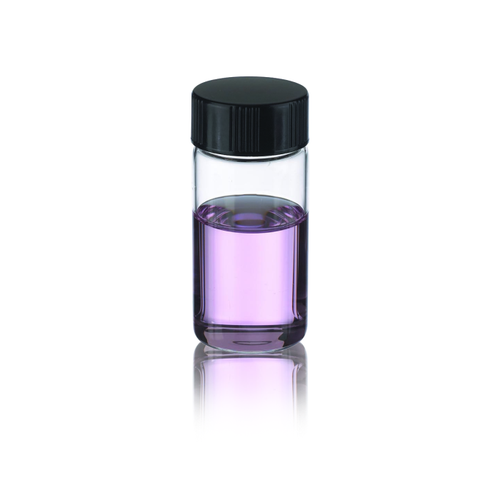
WHEATON 240208: Understanding the Cap, Thread Finish, and 14B Rubber Liner
WHEATON® 240208 is a
13-425 black phenolic screw cap
with a solid top and an
integrated white 14B styrene-butadiene
rubber liner. It is designed as a
laboratory closure for appropriately
matched containers.
Three factors should guide selection:
the 13-425 thread finish,
the phenolic cap body,
and the rubber sealing interface.
Each contributes to compatibility and
performance of the final container assembly.
Technical takeaway:
SKU 240208 contains a
plain 14B rubber liner.
It does not contain PTFE facing,
a polyethylene cone liner,
or a needle-access septum.
Core Product Specifications
| Attribute |
WHEATON 240208 |
| Manufacturer |
DWK Life Sciences |
| Brand |
WHEATON® |
| Manufacturer SKU |
240208 |
| Product category |
Caps and closures |
| Closure type |
Screw-thread cap |
| Cap material |
Phenolic |
| Cap color |
Black |
| Thread finish |
13-425 |
| Cap style |
Solid top |
| Liner material |
14B rubber |
| Liner composition |
White sulfur-cured styrene-butadiene rubber (SBR) |
| PTFE-faced liner |
No |
| Autoclavable |
Yes, per manufacturer product specifications |
| Case quantity |
200 caps |
| Ordering unit |
Case |
| Container included |
No |
| Country of origin |
United States, per manufacturer item data |
The manufacturer does not list a
product-specific outer cap diameter,
cap height, application-torque range,
liner thickness, or universal
leak-rate specification
in the reviewed 240208 records.
Understanding the 13-425 Thread Finish
The 13-425 designation
identifies the closure's nominal
screw-thread finish. It is used
to match caps to containers with
a corresponding compatible neck.
Thread-finish selection must consider
both the nominal diameter designation
and the thread configuration.
A closure bearing a different
designation, such as 13-415,
should not be assumed interchangeable.
Even when the thread finish matches,
proper liner compression and
sealing performance depend on
the container rim, thread engagement,
tightening conditions, and
component tolerances.
Compatibility note:
A 13-425 finish is not proof of
interchangeability across every
vial manufacturer or every
container design. Confirm
the complete assembly before
substituting closures.
What Is 14B Styrene-Butadiene Rubber?
DWK's technical liner guide identifies
14B as a white,
homogeneous, sulfur-cured
styrene-butadiene rubber (SBR).
The manufacturer states that
it is not natural rubber.
According to the manufacturer,
the material has good resilience
and moisture-vapor resistance
and is suitable for many
moderate chemical exposures.
WHEATON identifies its rubber-lined
screw caps as useful in certain
cell culture applications.
This manufacturer application
description should not be treated
as a product-specific biocompatibility
certificate or supplied-sterility claim.
Material distinction:
The statement that 14B is not
natural rubber describes the
manufacturer's liner formulation.
It does not independently establish
a finished-product latex-free
certification or allergen-control
qualification.
Chemical Compatibility and Rubber-Liner Limitations
The liner is one of the most
important selection factors
for this closure. DWK describes
14B rubber as acceptable for
many moderate chemical exposures,
while identifying limitations
with certain materials.
| Material or Condition |
General DWK Guidance |
| Moderate chemical exposures |
Generally satisfactory; specific formulation must be evaluated |
| Moisture-vapor transmission |
Manufacturer describes useful resistance; no numeric transmission rate established for 240208 |
| Oils |
Not recommended for plain 14B rubber |
| Strong acids |
Not recommended for plain 14B rubber |
| Hydrocarbons |
Not recommended for plain 14B rubber |
Chemical compatibility depends on
the specific substance,
concentration, temperature,
exposure duration, and
contact conditions.
General rubber-resistance
statements do not establish
sample stability or sealing
performance for an assembled vial.
Plain 14B Rubber vs. PTFE-Faced Rubber
WHEATON offers multiple
13-425 laboratory closure
configurations. The primary
difference may be the liner
material rather than the
cap's external appearance.
| Manufacturer SKU |
Closure / Liner |
Case Quantity |
| 240208 |
13-425 black phenolic solid-top cap; plain 14B rubber liner |
200 |
| 240408 |
13-425 black phenolic solid-top cap; PTFE/14B rubber liner |
200 |
| W240820 |
13-425 black phenolic solid-top cap; PTFE/14B rubber liner |
250 |
| W240821 |
13-425 black phenolic solid-top cap; PTFE/14B rubber liner |
1,000 |
The PTFE-faced versions provide
a different sample-contact
surface and may be appropriate
for applications requiring
greater chemical resistance.
The alternative liner must
still be tested for the
intended formulation and
container combination.
Replacement caution:
These are distinct manufacturer
catalog numbers. Differences
in liner material and case
quantity matter even when the
nominal 13-425 cap finish
is the same. Contact SOSCleanroom
before changing an approved
closure configuration.
Solid-Top vs. Open-Top Laboratory Closures
SKU 240208 features a
solid-top cap.
The cap is not designed as
an open-top access closure.
Open-top caps and septum
closures are separately
cataloged products intended
for workflows requiring
needle access to the contents.
The presence of rubber beneath
a solid cap does not establish
that the liner can be pierced
with a syringe or will reseal
after puncture. Select
the appropriate closure
style for the method.
Leak Resistance, Liner Compression, and Tightening
A screw cap's performance
depends on how the liner
contacts the container mouth.
The finished seal is affected
by the cap, rim geometry,
thread engagement, application
torque, liner condition, and
intended storage environment.
DWK recommends testing a
selected liner before use
in leak-resistant applications.
The reviewed 240208 specifications
do not publish a universal
leakproof designation or
application-torque value.
- Inspect the rim: Check for damage or material that could interrupt the liner interface.
- Inspect the liner: Confirm correct seating and no visible deterioration.
- Match the thread: Confirm the intended 13-425 closure fit.
- Control tightening: Use the approved procedure for the selected container.
- Verify containment: Test under actual filling, storage, and handling conditions when required.
Autoclavability and Sterility Considerations
DWK lists WHEATON 240208
as autoclavable.
Its technical liner guide
also describes 14B
styrene-butadiene rubber
as autoclavable.
This manufacturer designation
does not establish a
product-specific validated
cycle for every container,
closure condition, filled
sample, or repeated processing
sequence.
The complete assembly should
be evaluated for any
heat-related changes in liner
condition, closure integrity,
or subsequent sealing performance.
Important distinction:
Autoclavable does not mean
supplied sterile.
No finished-product sterility
assurance level, validated
autoclave cycle, or
supplied-sterile claim
is established by the
reviewed 240208 specifications.
Cell Culture and Controlled-Environment Considerations
DWK describes its white
14B rubber-lined phenolic
caps as suitable for certain
cell culture work.
Application compatibility
should still be evaluated
using the actual container,
sample, and process.
The reviewed 240208 record
does not provide a product-specific
cell-culture validation report,
endotoxin limit, particle-release
specification, or ISO cleanroom
classification.
Where a facility requires
sterile, low-bioburden,
low-extractables, or controlled
particle performance, request
appropriate technical documentation
and qualify the final closure
assembly before use.
Receiving and Inspection Checklist
- Verify identification: Confirm WHEATON 240208 and the 13-425 thread finish.
- Check quantity: Confirm 200 caps per case.
- Inspect cap condition: Check for cracked phenolic material or damaged screw threads.
- Verify liner: Confirm the white rubber liner is present and appropriately seated.
- Confirm liner specification: Ensure plain 14B rubber is the approved material, not a PTFE-faced substitute.
- Verify container fit: Confirm that the intended vial or bottle accepts the selected closure.
- Assess processing: Follow qualified cleaning, autoclaving, and sealing requirements.
- Document acceptance: Apply the facility's material traceability and inspection procedures.
Technical FAQs
What is the cap material?
Black phenolic, with
a solid-top construction.
What does 13-425 mean?
It is the nominal screw-thread
finish specification used
to match the cap to a
compatible container.
What material is the liner?
White 14B styrene-butadiene
rubber. DWK describes
the formulation as
sulfur-cured SBR.
Is the liner PTFE-faced?
No. SKU 240208 contains
plain 14B rubber.
PTFE-faced closures have
different part numbers.
Is 14B rubber natural rubber?
DWK identifies 14B
as styrene-butadiene
rubber, not natural rubber.
Can the cap be used with oils or hydrocarbons?
DWK's liner guide identifies
plain 14B rubber as
unsuitable for oils,
strong acids, and
hydrocarbons. Evaluate
an alternative liner.
Is the cap suitable for cell culture?
WHEATON describes its
rubber-lined phenolic caps
as useful for certain cell
culture applications.
The actual workflow
requires compatibility
and cleanliness qualification.
Is WHEATON 240208 autoclavable?
Yes. DWK lists this SKU
as autoclavable, but
the laboratory must qualify
the complete assembly
and processing conditions.
Does it provide a leakproof seal?
No universal leakproof
guarantee is established.
DWK recommends testing
the selected liner
for leak-resistant applications.
Are caps supplied sterile?
The reviewed manufacturer
records do not establish
a supplied-sterile designation.
Are vials included?
No. This is a closure-only
product. Compatible containers
must be selected separately.
How many caps come in a case?
200 black phenolic
screw caps per case.
Manufacturer Technical Documentation
The following DWK resource
is a technical information
guide, not a manufacturer
product-ordering page.
Documentation limitation:
General material data do not
constitute a finished-cap
leakproof certificate,
product-specific sterility
certificate, or universal
chemical compatibility approval.
Request additional documentation
through SOSCleanroom
when needed.
Technical Assistance and Ordering Support
SOSCleanroom can help identify
13-425 compatible sample
containers, replacement caps,
alternate liner configurations,
and supporting manufacturer
specifications.
Need help selecting a closure?
Contact SOSCleanroom for
pricing, availability,
product compatibility,
and technical documentation.
Email:
Sales@SOSsupply.com
Phone:
(214) 340-8574
For product specifications,
ordering, availability, or
application support, contact
SOSCleanroom at Sales@SOSsupply.com
or (214) 340-8574.
Technical insight:
Proper cap selection requires
more than matching a thread finish.
Confirm the liner material,
container geometry, contents,
and required seal performance.
Last updated:
October 23, 2026
© 2026 Specialty Optical Systems, Inc.
(dba SOSCleanroom). All rights reserved.