The Technical Vault
By SOSCleanroom
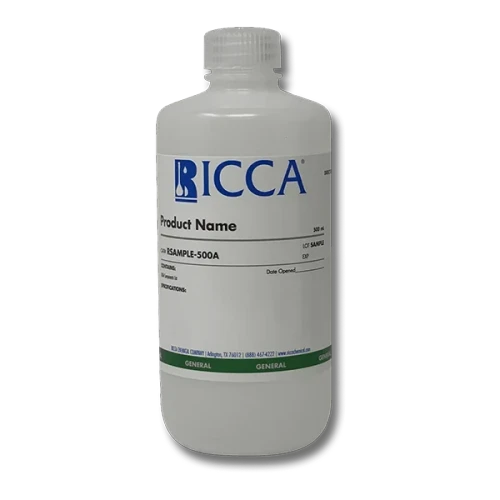
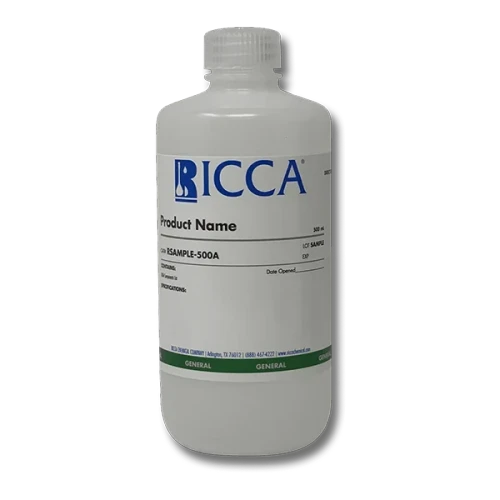
500 mL HDPE
Wide Mouth
53-410 PP Closure
Linerless Double Seal
48 per Case
Not Autoclavable
WHEATON 209549: selecting a 500 mL bottle as a complete container-and-closure system
The WHEATON® 209549 combines a natural
HDPE bottle, a wide-mouth opening, and a polypropylene
screw closure. Its intended applications include general
laboratory use and the packaging, storage, and
transportation of compatible liquids.
Capacity alone is not enough to select a laboratory
container. Review the bottle material, cap material,
seal, contents, temperature, exposure time, cleanliness
requirements, and handling conditions together.
Operations takeaway:
The 209549 is a 500 mL, 48-per-case configuration.
It uses a different closure finish and larger bottle
dimensions than the 250 mL 209548. Neither the size
change nor the manufacturer's water-based leak test
removes the need to qualify the filled assembly.
Core product data for purchasing and receiving
| Attribute |
209549 specification |
| Manufacturer / brand |
DWK Life Sciences / WHEATON® |
| Catalog number |
209549 |
| Nominal capacity |
500 mL; manufacturer ounce-size designation 16 oz |
| Bottle material / color |
Natural HDPE |
| Mouth / thread finish |
Wide mouth / 53-410 |
| Closure |
Included polypropylene screw cap; linerless double-seal design |
| Bottle dimensions |
72 mm diameter; 164 mm height |
| Packaging |
48 bottles per case; inner-pack quantity 12 |
| Autoclavable |
No |
| Country of origin |
United States in the manufacturer 2026 setup record |
Capacity interpretation:
The 16 oz entry is a manufacturer size designation,
not an exact conversion of 500 mL. The reviewed records
do not establish a brimful capacity, working-fill
recommendation, or volumetric accuracy for this bottle.
500 mL 209549 versus 250 mL 209548
| Attribute |
209549 |
209548 |
| Nominal capacity |
500 mL |
250 mL |
| Thread finish |
53-410 |
43-410 |
| Diameter |
72 mm |
61 mm |
| Height |
164 mm |
125 mm |
| Inner-pack quantity |
12 |
12 |
| Bottles per case |
48 |
72 |
Substitution checkpoint:
Recheck storage clearances, holders, labeling space,
closure inventory, and purchasing quantities when
changing capacity. The two catalog numbers do not
use the same cap finish.
Linerless double seal, thread finish, and tamper-evidence provision
DWK describes a linerless double-seal closure. Preserve
the intended bottle-and-cap pairing when evaluating
leak resistance. A cap that fits the threads is not
automatically equivalent to the supplied closure's
sealing design.
The 53-410 designation identifies the neck finish;
it does not establish the clear internal opening.
The reviewed item documents do not provide application
torque, removal torque, or a verified number of
closure-reuse cycles.
Tamper-evidence distinction:
The molded bead provides a location for a shrink
band. A bead alone is not evidence that the bottle
has been sealed against tampering. Confirm a
compatible band and approved application method
when tamper evidence is required.
Understanding the water-based leak-test statement
DWK's product literature references pressure leak
testing, including 95 kPa, and
explicitly identifies water as
the test liquid. It advises evaluating other
liquids and the intended storage and transport
conditions.
Qualify the actual filled assembly using the
specified closure procedure, fill level, orientation,
storage duration, and temperature cycle. Obtain
the relevant test report when a procurement
requirement calls for a defined pressure-test method.
Test boundary:
A leakage test is not a continuous working-pressure
rating, vacuum rating, centrifuge rating, or
authorization to use the bottle as a pressure vessel.
Those applications are not established by the
reviewed product documentation.
Chemical compatibility: evaluate HDPE and PP separately
The HDPE body and polypropylene cap are different
materials. Screen both against the proposed contents,
including concentration, contact temperature, exposure
time, and any mixed formulation.
DWK's compatibility calculator provides separate
polymer ratings at 20°C and 50°C. Use it
as a screening resource, then obtain application
confirmation where the contents or method require it.
Review DWK's Chemical Compatibility Calculator
Sample-quality checkpoint:
Determine whether the application also requires
extractables, adsorption, permeation, light-protection,
or analytical-recovery evidence. No universal
compatibility or sample-stability claim is assigned here.
Freezing and temperature limits: distinguish resin guidance from assembly approval
The product literature states HDPE suitability for
freezing at -100°C. DWK's
separate general resin guide lists
-20°C as the lower end of
its generic polypropylene range.
These statements do not establish a complete
low-temperature protocol for the filled HDPE
bottle with its supplied PP cap. Obtain
application-specific confirmation for the intended
temperature, headspace, handling, and freeze-thaw cycle.
Explicit restriction:
WHEATON 209549 is not autoclavable.
Do not apply generic polypropylene autoclaving
guidance to the complete HDPE bottle. The
reviewed records do not establish liquid-nitrogen
immersion suitability.
Read DWK's general plastic resin guidance
Laboratory packaging, bulk packaging, and cleanroom introduction
The 209549 item is the 48-count, cap-included
configuration. DWK's family description separately
discusses bulk packs with bottles and closures
bagged apart, double bagging, and twist ties.
Do not assume those bulk-pack features apply to
this laboratory-pack item. Confirm the supplied
packaging when bag layers, closure presentation,
or controlled-area material transfer are
purchasing requirements.
The reviewed records do not establish a supplied
sterile designation, sterility assurance level,
endotoxin limit, or quantified particle and
extractables specification. Qualify preparation,
packaging, and transfer procedures for the intended
controlled environment.
Transport use: distinguish the bottle from the finished shipping package
DWK identifies primary-receptacle transport applications
for this bottle family. The bottle's leak-testing
statement does not independently certify a complete
shipment of a particular chemical or specimen.
For regulated shipments, have the responsible
shipping specialist confirm the contents classification,
required primary and secondary containment, outer
packaging, markings, and documentation. Do not treat
the bottle alone as an approved transport kit.
Receiving, filling, and storage checkpoints
- Confirm identity: Match the order to 209549, 500 mL, natural HDPE, 53-410 cap, and 48 bottles per case.
- Inspect the assembly: Look for deformation, cracks, damaged threads, sealing-surface defects, and contamination.
- Define preparation: Use a cleaning or preparation method approved for the non-autoclavable bottle and the intended contents.
- Control filling and closure: Establish working volume, headspace, and the closure procedure for the actual application.
- Verify containment: Evaluate the filled assembly under the intended orientation, duration, and temperature conditions.
- Maintain traceability: Record contents, preparation, and any identification required by the laboratory's procedures.
These are facility qualification checkpoints, not
a universal manufacturer operating procedure.
The 2026 item setup record lists room-temperature
shipping and storage for the supplied empty product.
That entry does not determine the storage conditions
or stability period of a filled sample.
Technical FAQs
Is the cap included?
Yes. The 209549 configuration includes the
polypropylene screw cap with a 53-410 finish.
Is 500 mL a calibrated measurement?
It is the nominal container capacity. The reviewed
records do not establish a volumetric accuracy,
a calibrated fill line, or a measurement tolerance
for this bottle.
Can the bottle be autoclaved?
No. DWK identifies this HDPE bottle as
not autoclavable.
Is it leakproof with every liquid?
No universal claim is supported. DWK's testing
is water-based and its instructions call for
qualification of other liquids and conditions.
Is a shrink band supplied?
The molded bead accommodates a shrink band,
but the reviewed configuration does not list
a band as included.
How does the case differ from the 250 mL version?
The 500 mL 209549 contains 48 bottles per case
and uses a 53-410 closure. The 250 mL 209548
contains 72 per case and uses a 43-410 closure.
Manufacturer documentation and technical references
Source basis:
Catalog-specific information was cross-checked against
manufacturer-supplied product-information and 2026
item-setup records. General resin guidance is
identified separately. Application checkpoints
are facility-selection guidance, not additional
product certifications.
If you have any questions please email us at Sales@SOSsupply.com
or give us a call at (214) 340-8574.
For additional product guidance, use the SOSCleanroom AI ChatBot
or contact our team for manufacturer documentation assistance.
Technical insight:
Qualify the bottle, cap, contents, and handling conditions
together. Capacity, polymer type, and water-based leak
testing are important inputs, but they do not establish
every application requirement.
Last updated: October 22, 2026
© 2026 SOSCleanroom. All rights reserved.